
Questions to Ask Before Buying a Tocotrienol Supplement (Purity, Ratio, Testing)

TL; DR: When choosing a tocotrienol supplement, check that the source is clearly disclosed and that tocotrienols are the primary vitamin E form. The label should list individual tocotrienol types with exact milligram amounts, avoid proprietary blends, and confirm third-party testing and cGMP-compliant manufacturing to support product quality and safety.
Tocotrienols are a form of vitamin E that has gained increased attention in the supplement space. However, many products use the term without clearly explaining their formulation or quality. Labels often highlight “tocotrienols” while failing to disclose key details such as source, composition, or testing standards: factors that affect safety and effectiveness.
Before purchasing a tocotrienol supplement, asking the right questions can help you separate well-formulated products from those relying on marketing claims. This guide breaks down what to look for, FDA dietary supplement labeling guidelines, and real consumer needs.
What Are Tocotrienols? Why Label Details Matter?
Vitamin E is not a single ingredient. It is a group of eight fat-soluble compounds:
Alpha, beta, gamma, and delta tocopherols
Alpha, beta, gamma, and delta tocotrienols
Tocotrienols differ from tocopherols, and they are studied for their role in:
Supporting cellular protection from oxidative stress
Supporting cardiovascular and metabolic health
Supporting healthy aging at the cellular level
These are functional roles because tocotrienols behave differently in the body depending on their form and source; label transparency is essential. [1]
Tocotrienols V/S Tocopherols: How They Differ?
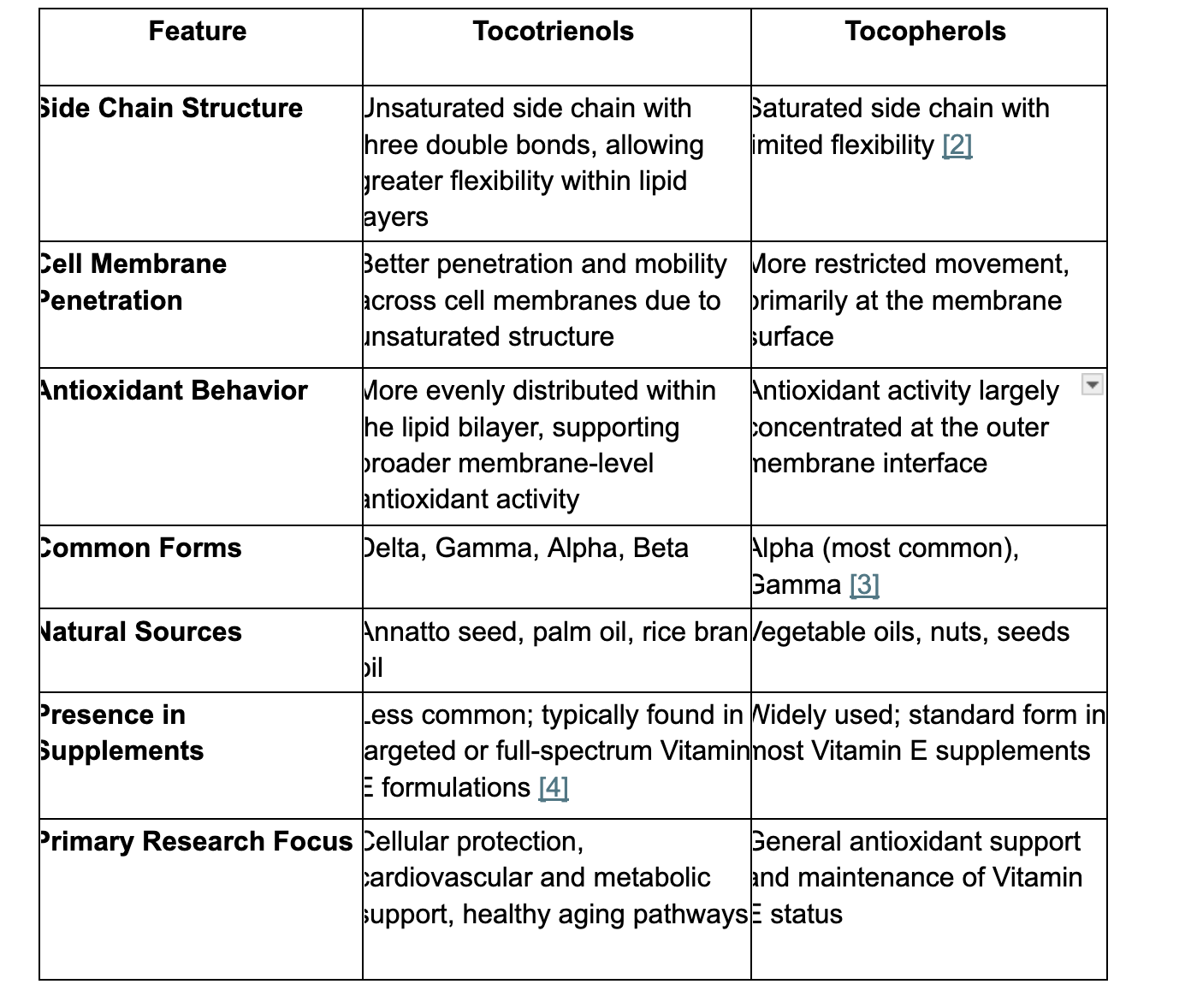
What does this difference signify?
Tocotrienols, with their flexible unsaturated side chain, penetrate deeper into cell membranes, enabling broader and more dynamic antioxidant protection.
In contrast, tocopherols mainly support baseline antioxidant defense at the membrane surface, offering more limited intracellular reach.
7 Questions to Ask Before Buying a Tocotrienol Supplement
Not all tocotrienol supplements are formulated the same way. Asking the right questions before buying can help you understand product quality, label transparency, and safety standards.
1. What Is the Source of the Tocotrienols?
The source determines both purity and tocotrienol composition. The common tocotrienol sources are:
Annatto seed: Primarily delta and gamma tocotrienols; naturally free from tocopherols
Palm oil: Mixed tocotrienols and tocopherols
Rice bran: Lower tocotrienol concentration; mixed vitamin e forms
A high-quality label should show:
The exact plant source clearly named
No vague phrases such as “natural vitamin E complex”
Disclosure of whether tocopherols are present
Different sources have diverse tocotrienol profiles, which may influence absorption and functional outcomes. Products that do not disclose the source limit your ability to assess quality.
Ideal Form: Annatto seed–derived tocotrienols are generally preferred because they provide high levels of delta and gamma tocotrienols without tocopherols. This allows better absorption clarity and cleaner formulation transparency.
2. What Is the Tocotrienol-to-Tocopherol Ratio?
Many products are marketed as tocotrienol supplements, which contain a higher proportion of tocopherols. A few important things to consider are:
High levels of alpha-tocopherol may reduce tocotrienol bioavailability
Tocotrienol-dominant formulations are often preferred for targeted supplementation
On the label, look out for the following things:
Tocotrienols listed as a primary ingredient
Tocopherols listed separately, if present
Clear ratios or milligram amounts instead of combined totals
Avoid products where tocotrienols and tocopherols are together under a single “Vitamin E” line without explanation.
3. Are Individual Tocotrienol Forms Clearly Listed?
Each tocotrienol subtype has a distinct biological activity. A Transparent Supplement Label Should Include:
Delta-tocotrienol (mg per serving)
Gamma-tocotrienol (mg per serving)
Alpha or beta tocotrienol, if included
Look for these red flags:
Proprietary blends that do not disclose individual quantities
Phrases like “advanced tocotrienol complex” without breakdown
Clear listing allows consumers to understand what they are taking and compare formulations accurately.
4. Is the Dosage Clearly Defined and Appropriate?
Dosage clarity is essential for safe use. Look for:
Serving size clearly stated
Tocotrienol content expressed in milligrams (mg)
Total tocotrienols per serving disclosed
A few FDA-friendly best practices to consider are:
Avoid exaggerated language such as “mega dose” or “pharmaceutical strength”
No implication of disease prevention or treatment
Dosage aligned with nutrition research rather than therapeutic claims
Fun fact: When it comes to tocotrienols, more isn’t always better. Most studies explore benefits within the 50–300 mg daily range, which is why transparent dosing matters.
5. Has the Supplement Been Third-Party Tested?
Dietary supplements are not pre-approved by the FDA. Independent testing adds a critical layer of quality assurance. [5]
Look for Statements Such As:
Third-party tested for purity and potency
Tested for heavy metals, microbes, and contaminants
Additional indicators of quality are:
Manufactured in a cGMP-certified facility
Compliance with FDA 21 CFR Part 111 regulations
Brands that invest in testing are more likely to deliver consistent, reliable products.
6. What Other Ingredients Are Included?
Because tocotrienols are fat-soluble, formulation quality matters, prefer supplements that:
Use minimal, functional excipients
Avoid artificial colors, synthetic dyes, and preservatives
Disclose carrier oils and capsule materials
Be cautious if you notice:
Hydrogenated oils
Excess fillers with no functional role
Undisclosed flavoring or coloring agents
Cleaner formulations reduce unnecessary exposure and support better product stability.
7. Are the Claims FDA-Compliant and Realistic?
Claims should focus on supporting normal physiological functions. A few acceptable function claims are as follows:
Supports antioxidant activity
Supports cellular health
Supports cardiovascular wellness
Claims that violate FDA guidelines are:
Treats, cures, or prevents disease
Replaces prescription medication
Guarantees specific clinical outcomes [6]
Key Takeaway
Choosing a tocotrienol supplement requires more than checking the front label. Product quality depends on transparent sourcing, a tocotrienol-dominant formulation, clearly stated dosages, and verified third-party testing. Supplements that disclose individual tocotrienol forms, follow cGMP manufacturing standards, and use FDA-compliant structure claims to provide greater confidence in both safety and formulation of integrity.
Disclaimer: This blog is intended for informative purposes only and should not be considered medical advice. The content does not make any claims regarding the prevention, cure, diagnosis, or treatment of any health condition. Always consult your healthcare provider before adding anything to your healthcare routine.
FAQs
1. What should I look for in a high-quality tocotrienol supplement?
Look for a clearly disclosed source, individual tocotrienol forms listed in milligrams, minimal tocopherols, third-party testing, and FDA-compliant labeling.
2. Are tocotrienols better than tocopherols?
Tocotrienols and tocopherols are both forms of vitamin E, but the effectiveness depends on formulation, ratio, and individual nutritional needs.
3. How do I know if a tocotrienol supplement is pure?
Check whether the label lists individual tocotrienol types, avoids proprietary blends, discloses the source, and mentions third-party testing for purity and contaminants.
4. Does tocotrienol dosage matter?
Yes. The dosage should be clearly stated in milligrams per serving. Avoid products that use vague terms like “high concentration” without providing exact amounts.
5. Are tocotrienol supplements FDA-approved?
Dietary supplements are not FDA-approved, but they must comply with FDA labeling and manufacturing regulations. Look for cGMP compliance and the required FDA disclaimer on the label.