
The Yogi's Complete Guide to Sauna: Unlock Deeper Recovery, Enhance Flexibility, and Build Mental Resilience
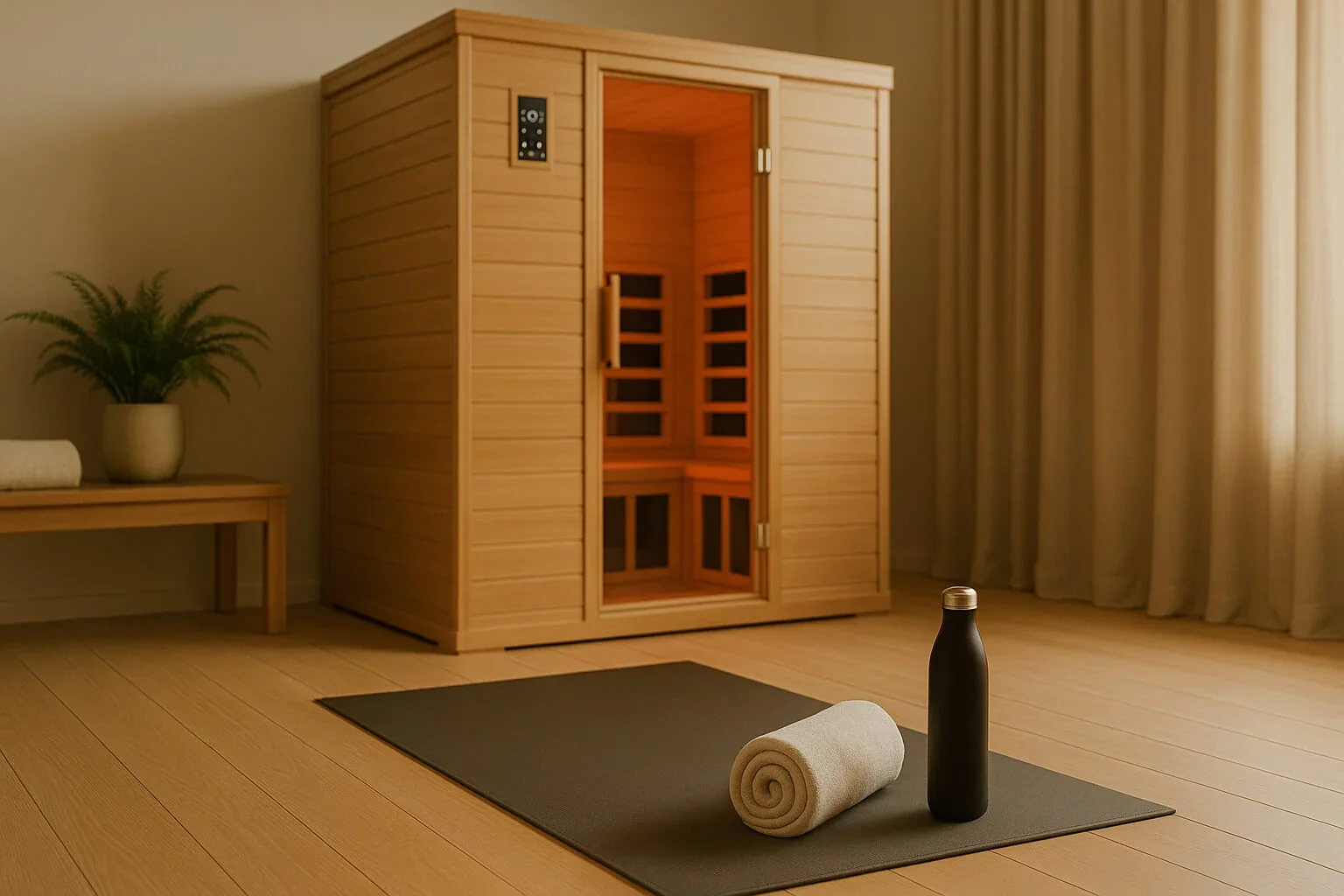
Imagine your body as a high-functioning system, and your yoga practice as the fine-tuned engine built for balance, endurance, and awareness. For the dedicated practitioner—especially those immersed in the profound journey of teacher training—this engine runs hot. We push our limits, hold poses to build fiery discipline (Tapas), and diligently work to rewire our patterns.
But what happens when we step off the mat?
We often encounter a post-practice plateau. We feel the deep muscle soreness that signals growth but also limits our next day's practice. We experience the mental fatigue of absorbing so much new information. We feel our fascia "snap back," seeming to erase the new flexibility we just worked so hard to find.
This is where fusing ancient practice with modern recovery science becomes a necessity.
While your asana practice builds strength, your progress is equally dependent on the quality of your recovery. For those who already embrace the power of heat in a Hot Yoga class, there is a powerful counterpart for post-practice recovery: the sauna.
The sauna is not a luxury or a simple indulgence. It is the other half of your heat practice—the half dedicated to stillness, integration, and profound physiological repair. It is the bridge that carries you from the active fire of Tapas to the complete stillness of Savasana.
This guide will be your definitive resource on the synergy between yoga and sauna. We will explore the science-backed benefits for your body, the parallels for your mind, and the precise protocols to accelerate your recovery and transform your practice.
The Physical Synergy: How Sauna Amplifies Your Asana
Your time on the mat is a conversation with your body. A sauna session is how you help your body process and integrate that conversation. The physical benefits are profound and align perfectly with the goals of any serious yogi.
Accelerated Muscle Recovery & Inflammation Reduction
Anyone who has endured Day 3 of a yoga teacher training knows Delayed Onset Muscle Soreness (DOMS). This is the deep ache that comes from micro-tears in your muscle fibers—the very process that builds strength. However, too much soreness can hinder your consistency.
This is where the sauna becomes a critical tool. The intense heat of a sauna triggers a powerful physiological response:
Increased Circulation: Your heart rate increases, and your blood vessels dilate, pumping nutrient-rich blood to your tired muscles and extremities.
Flushing Byproducts: This flood of new blood efficiently flushes out metabolic byproducts, like lactic acid, that accumulate during an intense Vinyasa or Hot Yoga session.
Heat Shock Proteins (HSPs): This is the "biohacking" component. When your cells are exposed to thermal stress, your body produces Heat Shock Proteins. Think of these as a tiny, internal repair crew. They rush to the sites of cellular damage (like those micro-tears) to repair proteins, reduce oxidative stress, and clear out cellular debris.
The result? A dramatic reduction in DOMS, less inflammation, and a body that is ready to return to the mat sooner with resilience rather than resistance.
A Breakthrough in Flexibility: Heat, Fascia, & Connective Tissue
For many yogis, flexibility is a primary goal. We work deep in our poses to hydrate and release our fascia—the dense web of connective tissue that wraps around every muscle and organ. However, this fascia is stubborn; it often wants to "snap back" to its old, shortened state hours after your practice.
A post-yoga sauna session helps you keep the flexibility you earn.
The deep, penetrating heat makes your connective tissues more pliable and viscous. When you enter a sauna after you've already stretched and lengthened your fascia on the mat, the heat helps your body's tissues "settle" and "re-form" in this new, longer state. It’s the difference between molding cold clay and molding warm, pliable clay.
This is especially relevant for Yin Yoga practitioners. Yin is a practice specifically designed to stress our connective tissues. Pairing a Yin session with a sauna (especially an infrared sauna) can amplify the release, hydrating deep fascial layers and promoting lasting gains in your range of motion.
Detoxification as an Act of Saucha (Cleanliness)
In the Yogic path, the Niyamas are our guides for personal observance. The first Niyama is Saucha, or cleanliness, which applies to our body, mind, and environment.
We practice Saucha internally through pranayama (breathwork) and asana. The sauna offers one of the most powerful methods for external purification. The deep, profuse sweat it induces is a core part of its power. This isn't just water; this sweat helps your body expel toxins that have accumulated, purifying you from the outside in. It's a physical act that perfectly mirrors the mental and energetic cleansing you just cultivated on the mat.
The Mental & Energetic Synergy: A Tool for Dhyana & Prana
Your yoga practice isn't just a physical workout, and your sauna session shouldn't be either. The most profound benefits come from its effect on your mind and nervous system.
The Sauna as a Modern "Meditation Cave"
In ancient yogic traditions, aspirants would retreat to a cave to escape distraction. The goal was to practice Pratyahara—the withdrawal of the senses. This is the fifth limb of yoga, and it's the gateway to true meditation (Dhyana).
In our modern world, your phone, your email, and your to-do list are the opposite of this. A sauna is one of the few places in the modern world where you are truly unreachable.
It is, in effect, a "meditation cave." It is dark, quiet, warm, and free of digital distractions. Your senses are naturally drawn inward. You are left with nothing but the sensation of the heat and the sound of your own breath. This is a perfect, contained environment to practice mindfulness, mantra, or simple breath awareness, turning your recovery time into a powerful meditative practice.
From 'Fight or Flight' to 'Rest and Digest'
An active, strong yoga practice is a healthy stressor. It activates your sympathetic nervous system ("fight or flight"), building energy, focus, and power. However, many of us get "stuck" in this active state, leading to chronic stress and poor sleep.
The transition to a "rest and digest" state (parasympathetic nervous system) is where all healing and integration happen. A sauna protocol is one of the most effective ways to force this transition.
In the Sauna (Active): Your body is in a sympathetically-driven state. Your heart rate is up, and your body is working hard to cool itself.
The Cold Plunge/Shower (The Switch): A brief, intentional blast of cold water after the heat causes a powerful "vasoconstriction" (tightening of blood vessels) and a surge of norepinephrine.
The After-Rest (The Result): As you rest after the cold, your body rebounds with a massive parasympathetic response. You are flooded with a sense of calm and clarity.
By practicing this "heat, cold, rest" cycle, you are actively training your nervous system's resilience. You are improving your "vagal tone" and Heart Rate Variability (HRV), which are key "biohacking" metrics for a body that can gracefully handle stress on and off the mat.
Building Mental Stamina: The Discipline of Heat
Evolation's focus on Hot Yoga teaches the mind to find stillness within intensity. Holding a challenging pose for five breaths teaches you to stay present, to breathe, and to observe your mind's desire to flee.
The sauna is a seated meditation in that same fire of Tapas (discipline). When the heat becomes intense, your mind will want to bolt. Your "to-do" list will suddenly seem urgent. Your practice is to sit. To breathe. To notice the sensations without reacting. To be the calm "witness" to the fire. This builds a profound mental resilience that you will carry with you long after you leave the sauna.
The Yogi's Sauna Protocol: A Practical "How-To" Guide
When and how you use a sauna is critical. A poorly-timed session can be counter-productive, while a well-structured ritual can be transformative.
Sauna Before or After Yoga: Which is Better?
This is the most common question, and the answer is clear: Post-yoga is far superior and safer.
Pre-Yoga Sauna: It may feel good to enter a yoga class "warmed up," but you are stretching muscles that are artificially loose from external heat, not from your own internally-generated prana. This can lead to a false sense of flexibility and dramatically increase your risk of overstretching or injury.
Post-Yoga Sauna: This is the ideal protocol. You use your asana practice to build real strength and stability. You work your muscles "cold" to generate your own internal heat. Then, you use the sauna to flood those hard-worked muscles with blood, remove byproducts, and safely deepen the flexibility you just earned.
Hot Yoga vs. Sauna: Aren't They the Same?
This is an excellent question, especially for practitioners dedicated to a hot practice. The answer is no; they serve completely different purposes.
Hot Yoga is Active Heat: You are moving, working, and generating internal energy within a heated room. The heat is an external stressor that facilitates Tapas (discipline) and loosens muscles during the practice. The goal is Asana, Prana, and building strength through effort.
Sauna is Passive Heat: You are still, surrendering, and receiving heat in an enclosed space. The heat is a recovery tool. The goal is rest, detoxification, nervous system regulation, and integration after the effort is over.
Think of it this way: Hot Yoga is the workout. The Sauna is the repair session.
They are not redundant; they are two halves of a complete thermal practice. One is work, the other is rest. Using a sauna after your hot yoga practice (once you've cooled down and rehydrated) is the ultimate way to accelerate your recovery from the intense work you just did.
Your Step-by-Step Recovery Ritual
Hydrate: The #1 rule. Start hydrating before your yoga practice. After your asana, drink at least 16oz of water, ideally with electrolytes or a pinch of sea salt, before you enter the sauna.
Cool Down: Do not go from your final asana (or a hot room) straight into the sauna. Take your full 5-10 minute Savasana in a normal-temperature room first. Let your heart rate come down and your mind become still.
The Sauna (15-20 Mins): Enter the sauna. This is not an endurance contest. Listen to your body's signals (Ahimsa - non-harming). Focus on long, deep, diaphragmatic breathing.
The Contrast (1-3 Mins): After your session, step into a cold shower. This is the other half of Hatha yoga (Ha = Sun/Heat, Tha = Moon/Cold). The contrast is what creates the true health benefit, flushing your entire system. Start with 30 seconds and build up.
Rest & Integrate (5-10 Mins): After the cold, do not rush to your next task. Put on a robe, lie down, and simply be for 5-10 minutes. This is where your nervous system settles and the profound "yoga glow" meets the post-sauna bliss.
Infrared vs. Traditional Sauna: A Guide for Yogis
The type of sauna you use can align with the type of practice you had.
Traditional (Finnish) Sauna: This is the Vinyasa of Saunas. It uses high air temperatures (180°F - 200°F) to create an intense, purifying sweat. It's a powerful experience that builds mental Tapas and is excellent for a deep cardiovascular workout and detoxification, especially after a strong Vinyasa or Hot Yoga class.
Infrared Sauna: This is the Yin Yoga of Saunas. It uses lower air temperatures (120°F - 150°F) because the infrared light waves heat your body directly, not just the air. This heat penetrates 1.5-2 inches into your tissues, making it unparalleled for targeting deep fascial layers, soothing joint pain, and promoting deep muscle release. It's the perfect pairing for a Yin or Restorative practice and allows for longer, more meditative sessions.
From Public Ritual to Private Practice
Using the sauna at your studio or gym is a fantastic tool. But as any serious yogi knows, consistency is the key to transformation. This public ritual is often broken by the logistics of reality: the gym's limited hours, the noisy environment, the commute, or the simple lack of a sacred feeling. You cannot practice Pratyahara when you are listening to small talk.
The true transformation happens when your recovery is as sacred and consistent as your practice. The ability to move seamlessly from your mat in your living room to a personal sanctuary—a space dedicated to your healing and stillness—is the final step.
This is the power of a home sauna recovery routine, which makes profound recovery an accessible, everyday part of your practice. It moves recovery from an afterthought to a core, integrated part of your wellness.
Building Authority: Your Sauna & Yoga Questions, Answered
This is your comprehensive guide, so let's address the most common questions to help you build your practice safely and effectively.
What are the contraindications for sauna use?
This practice is powerful, but it is not for everyone. Always consult your healthcare provider before beginning any new sauna practice, especially if you have pre-existing conditions. Be particularly cautious or avoid sauna use if you:
Are pregnant
Have unstable angina, high-risk hypertension, or severe cardiovascular conditions
Have low blood pressure or are prone to fainting
Are taking medications that can be affected by heat or dehydration
Are ill or have a fever
Can I sauna on my Yin or Restorative yoga days?
Absolutely. In fact, it is an ideal pairing. On these days, the goal is not to build Tapas but to cultivate surrender. A gentle session in a low-temperature infrared sauna after your practice can be a beautiful extension of that surrender, helping your nervous system drop into its deepest state of rest and in turn allowing your connective tissues to release more fully.
What's the difference between a sauna and a steam room?
Steam Room (Wet Heat): Uses a generator to fill a room with 100% humidity. It's excellent for the respiratory system, loosening mucus, and hydrating the skin.
Sauna (Dry Heat): Uses a stove (traditional) or emitters (infrared) to create high heat with low humidity. This dry heat promotes a deeper, more profuse sweat and is generally considered more effective for deep muscle relaxation, detoxification, and cardiovascular benefits.
What should I do inside the sauna?
Don't just scroll on your phone (in fact, you shouldn't bring it in). Use this time as a practice.
Practice Pranayama: Focus on your breath. A simple 4-count inhale and 6-count exhale will immediately trigger your parasympathetic nervous system.
Practice Dhyana: Meditate. Observe your thoughts, the sensations of the heat, and the sound of your breath without attachment.
Gentle Stretches: This is a good time for gentle, non-aggressive stretches like neck rolls, shoulder rolls, or a seated Gomukhasana (cow-face) arm bind. Do not attempt your peak asana; this is for gentle release.
Practice Ahimsa: Listen to your body. When it tells you it's "done," honor that. Do not push to beat a timer.
What should I eat or drink after my practice & sauna?
Hydration is paramount. Your body has lost a significant amount of water and minerals. Replenish with:
Water with a pinch of high-quality sea salt and a squeeze of lemon.
Coconut water (which is full of natural electrolytes, especially potassium).
A light, nourishing meal or smoothie. Avoid a heavy, complex meal, as your body is in a state of repair. Think of simple, sattvic (pure) foods like a fruit smoothie with protein, a light soup, or a small bowl of kitchari.
How does a sauna help with sleep (like 'Yoga for Insomnia')?
This is one of the most powerful benefits. A deep, natural sleep is regulated by your core body temperature. To fall asleep, your body temperature needs to drop.
When you sit in a sauna, you artificially raise your core body temperature. When you get out, your body works overtime to cool itself down, leading to an exaggerated drop in your core temperature 1-2 hours later. This profound drop is one of the most powerful biological signals you can send to your brain to produce melatonin and initiate a deep, restorative sleep.
Conclusion: Completing the Circle of Your Practice
A sauna is not an indulgence or an add-on. For the serious yogi, it is an essential tool for completing the energetic and physical cycle of your practice.
It's the Savasana to your Asana, providing the space for integration. It's the Saucha to your Tapas, providing the purification after the fire. And it's the Rest that allows you to Digest your practice, your food, and your life.
You have dedicated yourself to the hard work on the mat. Now it's time to elevate the recovery that supports and amplifies that work. If you’re ready to integrate this transformative ritual into your life, you can explore a collection of tools perfectly suited for a home sauna recovery routine.
Your practice deserves a recovery that is just as intentional.
