
Gut-Friendly Yoga: Poses and Practices for Better Digestion Before Race Day
Digestive stress can feel overwhelming before a race. The mix of nerves, meals, and changing routines creates tension in the gut. As such, yoga offers a practical way to calm that response. Gentle movement supports smoother digestion and helps ease bloating or tightness.
Ideal Yoga Poses and Practices Before Race Day
Digestive patterns shift before a race because nerves, disrupted routines, and altered meal timing place extra pressure on the gut. As such, some runners feel bloated, others feel unsettled, and many notice that digestion slows or speeds up unpredictably.
Supporting the digestive system through nutrition helps create more stability and comfort during this window. For example, high-carb gels from Maurten provide quick fuel in a form the stomach can handle more comfortably, which helps reduce the risk of cramping or urgency when nerves are already high. Another helpful approach is pre-race yoga. Here are poses and practices for digestive relief.
Supine or Seated Twist
A twist supports digestion by gently redirecting blood flow toward the core and releasing stiffness around the lower abdomen. The rotation helps the internal organs shift slightly, which can ease the heavy, stuck feeling that sometimes appears before a race. Keeping the shoulders relaxed and the spine long helps the body settle into the shape without strain.
Slow breathing matters here. Each inhale expands the ribs and creates space, while each exhale lets the torso soften deeper into the rotation. The breath guides the movement rather than force.
Using a pillow or folded towel under the knees creates a softer angle for the lower back and makes the twist easier to hold without discomfort. In the seated variation, keeping the twist upright prevents compression from becoming sharp or uncomfortable.
Wind-Relieving Pose
This pose targets the lower abdomen, where digestive discomfort often settles before a race. Gently drawing the knee toward the chest applies light pressure to the intestines, which can help release trapped gas and encourage movement. The pressure should feel steady but never sharp. If the hip or belly feels tense, easing the knee slightly forward helps the body soften into the pose.
Inhale to create space in the belly, and exhale to let the knee settle a little closer without forcing depth. The nervous system responds to the slow breath, and that response helps digestion work more smoothly. Holding the pose for six to ten slow breaths gives the body time to adjust and respond.
Placing a folded blanket under the head or hips brings comfort and reduces tension in the lower back. Practicing this pose after a warmup and twist feels natural because the abdominal area is open and receptive.
Bridge Pose
Raising the hips creates a gentle lift through the abdomen and boosts circulation around the digestive organs. It helps the gut feel more awake and supported, not heavy or sluggish. Keep the feet grounded and the neck relaxed to settle into the shape with ease.
Breathing slowly through the nose supports the effect. The inhale expands the ribs and front body, and the exhale softens the glutes and belly. You can hold the pose for five to eight slow breaths or repeat small lifts with the breath if holding feels challenging. Placing a block or pillow under the sacrum turns the pose into a restorative version that still stimulates digestion while reducing effort.
Supported Forward Fold
Folding forward with support invites the belly to soften, which can ease pre-race digestive tension. The light pressure across the abdomen gives the gut gentle feedback that helps settle nerves and reduce the fluttery, unsettled feeling common before competition. The fold shouldn’t feel like a stretch goal but more like a resting place that the body can relax into.
Using support under the forehead, hands, or chest creates comfort and makes the posture easier to maintain. Breathing becomes deeper and slower as the body settles, and that shift helps digestion move toward a calmer rhythm. Holding the pose for eight to ten soft breaths gives the nervous system time to respond.
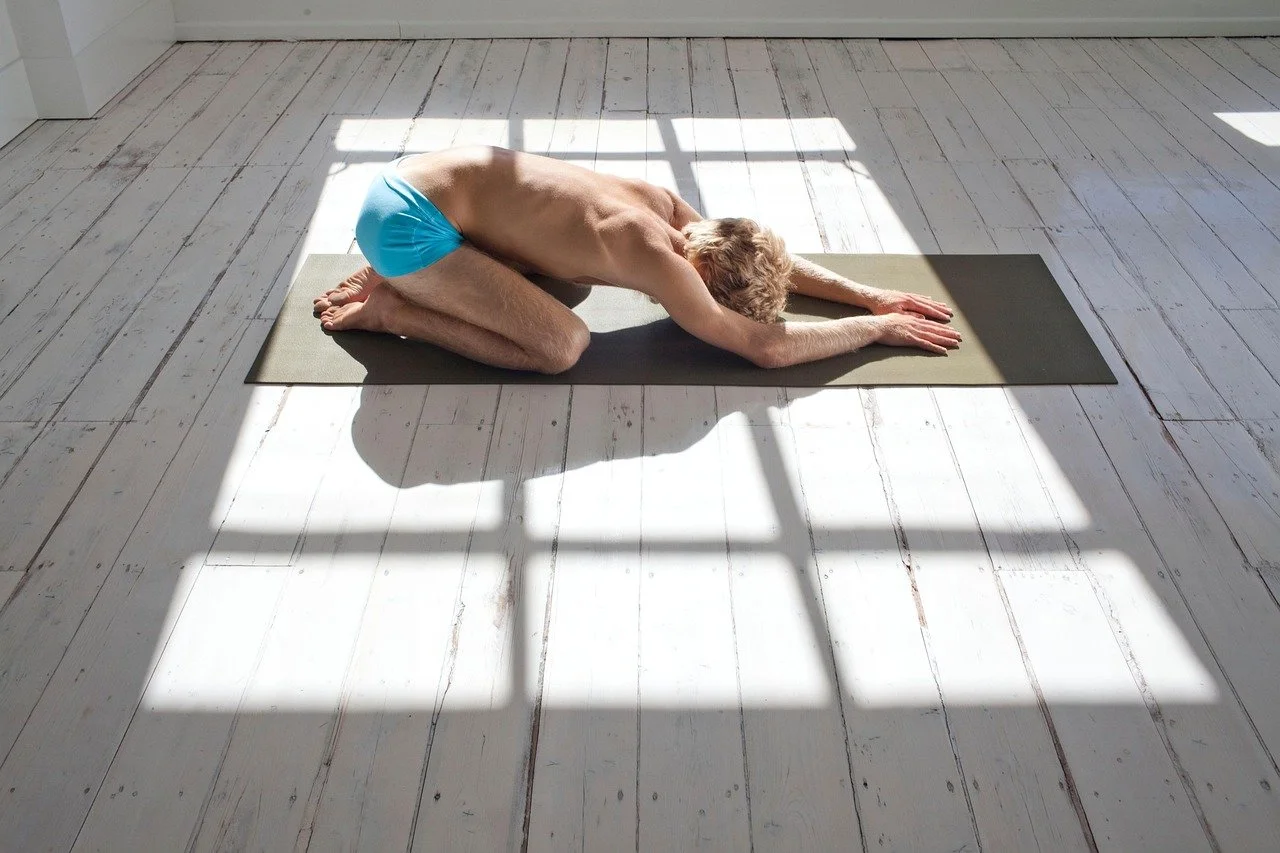
Child’s Pose
Many runners experience digestive discomfort when adrenaline rises, and this pose helps counter that response by quieting the nervous system. Resting the head on a mat or pillow reinforces a grounded feeling, which helps settle nausea or fluttering sensations. Breathing slowly in this position encourages the diaphragm to expand in all directions, which supports the organs beneath it.
Cat-Cow Spinal Flow
Cat-Cow works well because it gently wakes up the digestive system without pressure or intensity. As the spine moves through flexion and extension, the abdominal wall shifts with it, creating a small internal massage that encourages movement through the intestines. It feels helpful before a race because the gut often slows down when nerves rise. Breathing through the nose keeps the pace steady and supports a calmer internal state.
Each inhale lifts and expands the belly, giving space for organs to move, while each exhale softens the abdomen and releases tension. Moving slowly for eight to twelve rounds helps the body settle instead of forcing activation. This pacing signals safety rather than urgency, which supports digestion in a steady, predictable way.
Conclusion
A calm digestive system gives you a stronger start on race day. Gentle yoga supports that outcome by easing tension in the abdomen and helping the gut move with more rhythm. For example, slow spinal movement and soft compression poses encourage the digestive organs to function without pressure or discomfort. In addition, breath-based practices help settle nerves and prevent adrenaline from disrupting digestion.
