
5 Ways Tarot Can Enhance Your Meditation Practice
Tarot cards hold powerful symbols that can change how you meditate. People usually think tarot is just for reading fortunes. These 78 cards work surprisingly well for daily meditation though.
Combining tarot with meditation gives your brain something to latch onto. The pictures keep you from drifting off into random thoughts. Your sessions feel different. More grounded. You start noticing things about yourself you hadn't picked up on before.
Use Tarot Cards as Visual Focus Points
Your mind wanders during meditation. Everyone's does. You sit down ready to be all zen, then boom, you're mentally replaying that weird conversation from yesterday. Tarot cards actually fix this problem pretty well.
Pick one card before sitting down. Place it right where you can see it. When your brain starts wandering, the artwork snaps you back. Way better than staring at a wall and hoping your thoughts stay quiet.
Cards with simple images work best at first. The Five of Cups shows someone staring at three spilled cups. Three other cups stand upright behind them, but they're not looking at those. You can spend ten minutes just absorbing this one scene. The figure's dark cloak. Those upright cups they're ignoring. The bridge stretching across the background. Each element becomes something to return to when your mind wanders.
Start with just five minutes. Look at your card without straining your eyes. Your thoughts will drift. They always do. When you notice, just glance back at the image. That's the whole practice right there.

Photo by Los Muertos Crew
Build Intention Setting Rituals
Meditation without direction can feel pretty aimless. You finish and wonder if you actually accomplished anything. Tarot solves this by giving you a specific focus point upfront.
Pull one card each morning before you meditate. Let its meaning shape what you're working on that session. The Two of Swords might push you toward balancing two conflicting ideas. The Ace of Wands could get you thinking about that side project you keep putting off.
Studies from the National Center for Complementary and Integrative Health show meditation works better with clear objectives. Tarot basically hands you those objectives. You don't need to believe cards predict the future. They just work as really good thought prompts.
Keep a small journal for this. Write down which card you pulled and your intention. Note anything that comes up during meditation. After a month, patterns start jumping out at you. Certain cards will hit different than others.
Create Themed Meditation Sessions
Tarot's structure gives you built-in themes. The deck splits into suits and major arcana. Each group takes you in a different direction.
You can theme your sessions lots of ways:
Work with Cups cards for a week, digging into emotions and relationships
Move through the Major Arcana in sequence, exploring life's bigger shifts
Use all four Aces to think about starting fresh in different areas
Pick court cards matching people you know, working on compassion toward them
The Cups suit pairs really well with emotional meditation work. These 14 cards map out feelings from celebration to grief. Two weeks going through them, one per day, gives your practice clear structure without feeling rigid.
Choose your theme Sunday night. Line up the cards you'll use. Snap a quick photo or leave them on your dresser. This prep makes mornings so much easier. You already know what you're focusing on instead of standing there deciding.
Track Emotional Patterns Over Time
Meditation helps you understand what's going on inside your head. Tarot adds a tracking layer to that. The cards become a visual diary of sorts.
Keep a basic log of cards you pull. Write the date and any feelings that showed up strong. Flip back through after a month. You might notice Pentacles dominated during that stressful project deadline. Or Sword cards kept appearing when you were making career decisions.
This tracking catches things you'd otherwise miss. The Three of Swords showing up three times in ten days? That's telling you something. Probably about grief or loss you haven't fully processed. The cards reflect what's actually happening under the surface.
Most meditation apps only count minutes. They don't capture what those minutes felt like or what came up. Tarot journaling bridges that gap. You get the data plus the story.
Block out ten minutes weekly to review your notes. Watch for repeating cards. See which suits cluster during different weeks. This reflection adds depth that sitting in silence alone might not give you.
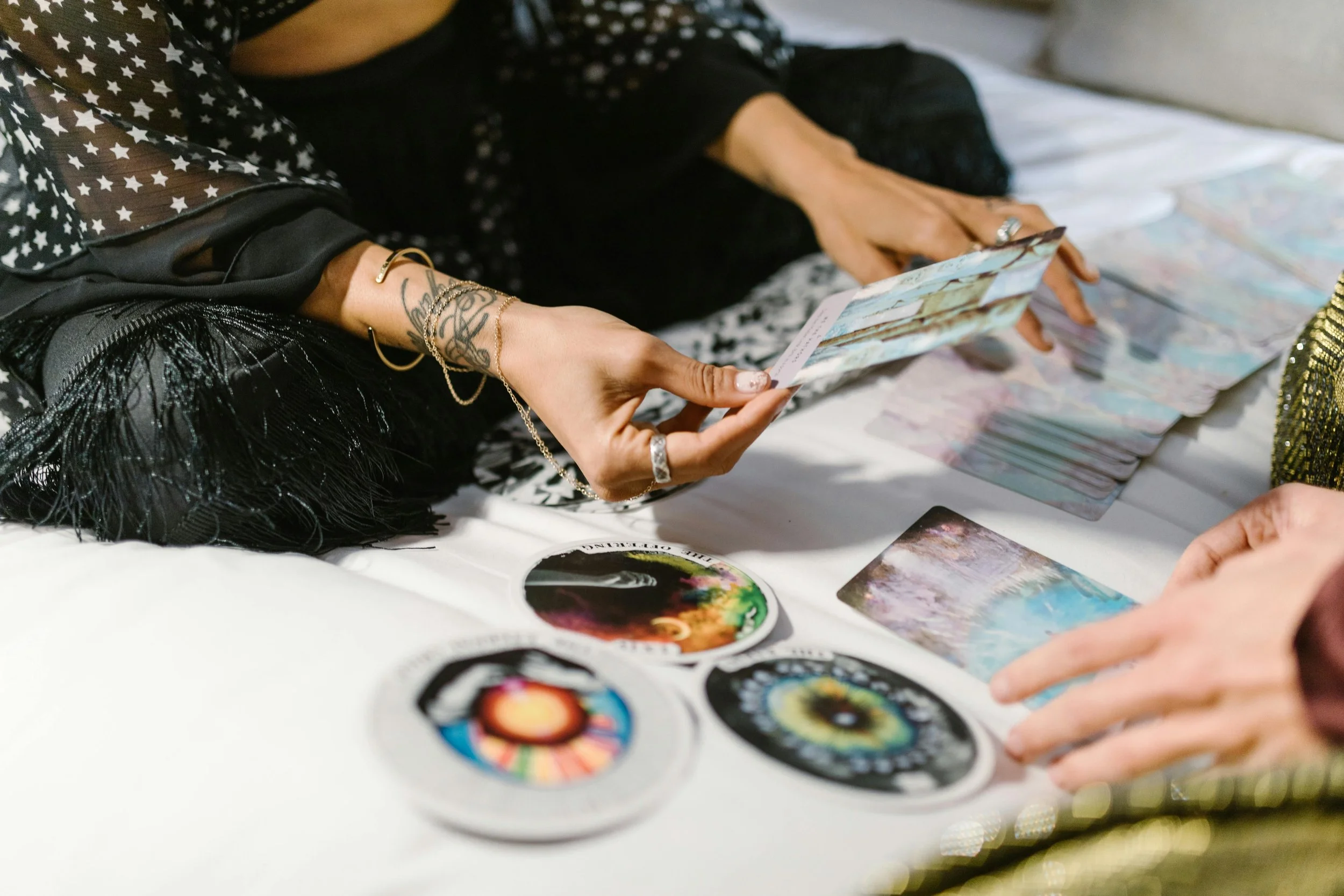
Photo by RDNE Stock project
Deepen Self-Reflection Through Symbolism
Each card contains layers you can peel back over time. The same card reveals completely different things depending on where you're at. This keeps practice from getting boring.
Look at the Hermit card. Shows a robed person holding a lantern up high. One session might center on needing solitude right now. Next week, that card could spark thoughts about what's actually guiding your decisions. A third time, you might focus on the mountain beneath the Hermit's feet. Mountains don't climb themselves. Neither does personal growth.
The American Psychological Association reports meditation improves emotional regulation and self-awareness. Tarot symbols accelerate this. The images bypass your logical brain and speak directly to the part that thinks in pictures.
Work with one card for a full month. Your interpretation shifts as you sit with it repeatedly. Week one gives you surface meanings. Week four reveals details you completely overlooked before. Same card, totally different experience. Meditation works exactly like this too. You do the same practice, but discoveries keep changing.
Making This Practice Your Own
You don't need much to start this. A tarot deck and wherever you usually meditate. Five minutes works fine to begin. Pull a card, set it down, and notice whatever you notice.
Some sessions will feel powerful. Others will feel kind of pointless. Both types matter. Showing up consistently beats having perfect experiences. Even rushed morning sessions build momentum over time.
Remember starting yoga? Probably felt awkward at first. Maybe you couldn't touch your toes or hold poses very long. Regular practice changed that. Tarot meditation follows the same pattern. You get better by doing it, not by overthinking it.
Experiment freely with this. Different cards speak to different people. Session length varies by day. How you use the images can shift around. You'll find what works for your brain and schedule. Cards are just tools. They get more useful the more you practice with them.
