
Mindful Resistance: Blending Yoga Breathwork with Reformer Pilates for Total Body Balance
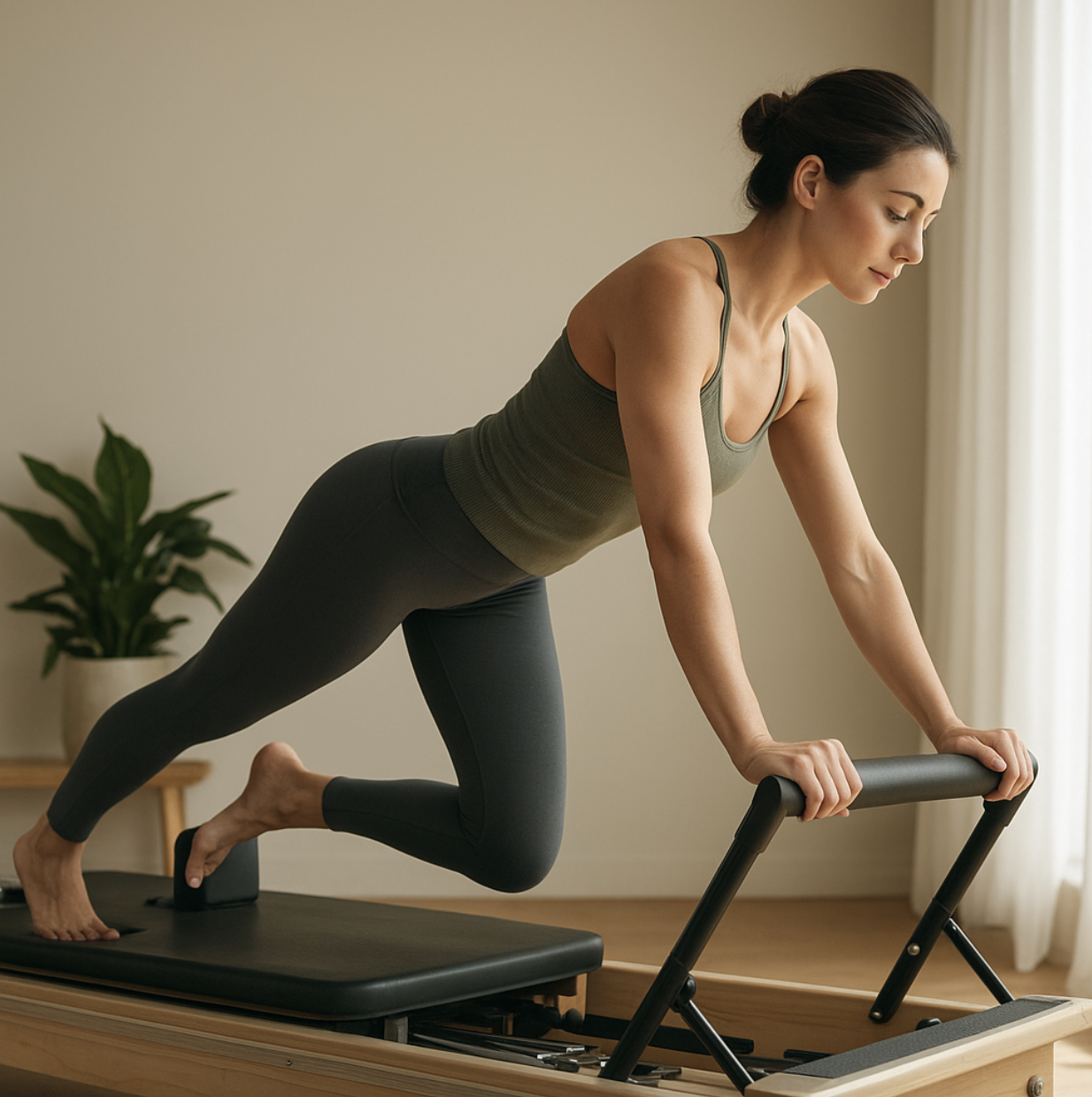
“Change happens through movement, and movement heals.”
Joseph Pilates
Yoga and Pilates: Mindfulness and Strength
Every yoga practice begins with a silence, the silence before the first breath, the silence before the movement. If you know where to look, strength training also exhibits this presence.
The first time you lie on a reformer, you'll discover this. Your breath will be timed with every regulated pull, and it will feel more like a moving meditation than a workout.
Pilates teaches you how to move with intention, while yoga teaches you how to remain in the present. Together, they demonstrate how resistance and awareness can lead to a stronger body and a more balanced life.
The Reformer as a Mindfulness Tool
The reformer Pilates machine for home usage is more than sleek equipment; it’s a teacher of patience and precision. Because each spring and strap reacts precisely to your effort, you cannot push through. The system alerts you when you lose concentration and prompts you to return.
It’s a yoga with feedback.
When you engage your core on the carriage, or lengthen through your spine while pressing the footbar, you’re practicing the same awareness that yoga brings to your mat, grounding through your breath, aligning through your center.
Unlike repetitive gym routines, reformer work keeps you fully engaged. You adjust, realign, and rediscover your balance every second. That’s the beauty of mindful resistance: its strength that asks for attention, not speed.
Comparison
Yoga and Pilates both begin with a breath. Together, they will help you build internal endurance and teach you self-control and peace.
Lateral breathing will support your spine and help you use your deep core muscles in Pilates, while yoga (pranayama) will help you focus and focus your energy. Your movement will be anchored by your breathing when you combine these techniques.
Here’s how they compare:
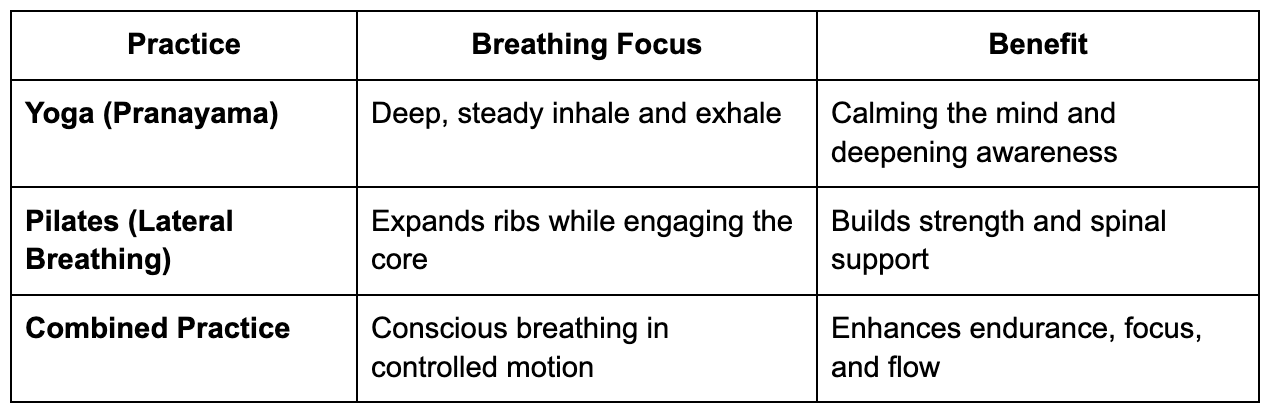
Try this in your next reformer session: take one slow, full breath before every movement. Pay attention to how your ribs expand and your body settles into the motion. Instantly, every repetition is a moving meditation.
Reformer Movement Meets the Yoga Mindset
Approaching a reformer practice with a mindset of a yogi has a calming effect. You begin to pay attention to how your body flows through space instead of striving for the ideal shape.
The following cues will immediately change your reformer experience:
Breathe before you move – let the exhale guide your effort.
Keep your gaze soft – focus inward rather than on the mirror.
Move like water – smooth transitions over sharp contractions.
Stay centered – awareness starts from the core.
With time, this method not only enhances coordination but also rewires your body and mind to react to resistance. When movement becomes mindful, progress follows naturally.
How the Reformer Complements Yoga Practice
Every day yoga will help you build flexibility, balance, and mental clarity. The reformer adds something equally important, dynamic strength through controlled resistance.
To strengthen their joints, support their hips, and protect their spine during advanced poses or inversions, athletes, dancers, and even lifelong yogis have resorted to reformer training. Those pursuing a reformer Pilates certification often gain deeper insight into how mindful resistance and precise alignment can enhance flexibility and prevent injury—skills that translate beautifully into yoga and other movement practices.
By providing tension that challenges without strain, the springs and pulleys enable muscles to develop strength without sacrificing flexibility.
And here’s where reformer pilates accessories that fit smaller spaces come into play. Small tools like rings, straps, and resistance bands will transform a basic stretch into a deep alignment exercise. You will target minor stabilizers, improve form, and discover new ranges of motion with these easy-to-use yet effective enhancements.
Reformer practice gets the body ready for yoga with more elegance and control, whether that means strengthening your legs for balance poses or expanding your shoulders before a backbend.
How to Create Your Own Hybrid Practice
You don’t need to give up yoga to embrace Pilates; they’re perfect partners. The key is balance.
Here’s a sample weekly blend:
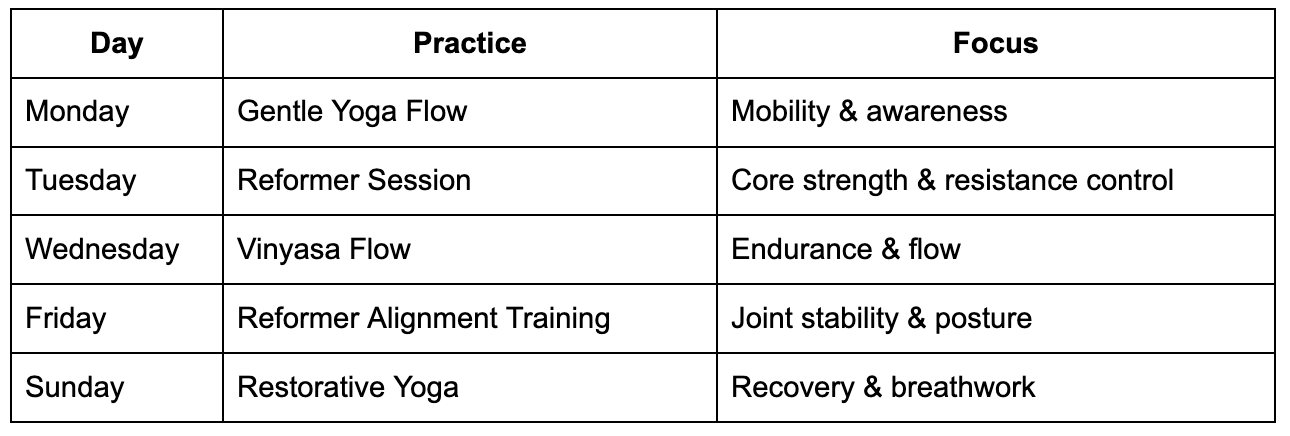
Even two reformer sessions a week can completely shift how your yoga practice feels lighter, more aligned, and supported from the inside out.
The Art of Intentional Movement
Strength comes naturally when movement is intentional. One breath at a time, you guide your body to its limitations rather than pushing it.
Finding balance between form and flow is the key to combining yoga with reformer training. One sharpens your control, while the other centers your mind. Every stage of life is supported by the foundation they create together.
Mindful resistance serves me as a daily reminder to take my time, pay attention, and move with a purpose. Balance, mindfulness, and strength that feel as good as they look are the same objectives whether I'm sliding onto a reformer or walking onto a mat.
