
Adapting Yoga for Children: A Comprehensive Guide to Meeting Kids' Physical, Emotional, and Developmental Needs
Yoga for children is more than a simplified version of adult poses. It is a holistic, developmentally appropriate practice that integrates movement, mindfulness, and fun to nurture the whole child—body, mind, and spirit. This guide offers an in-depth look at how to adapt yoga to suit the diverse needs of children at different ages and stages, both in group classes and individualized settings.
Why Modify Yoga for Kids?
Children are not miniature adults. Their cognitive, emotional, and physical capacities require specially tailored approaches to movement and breathwork. Yoga for kids must be dynamic, imaginative, and engaging while subtly incorporating the foundational benefits of traditional yoga practice—self-regulation, concentration, physical balance, and emotional resilience.
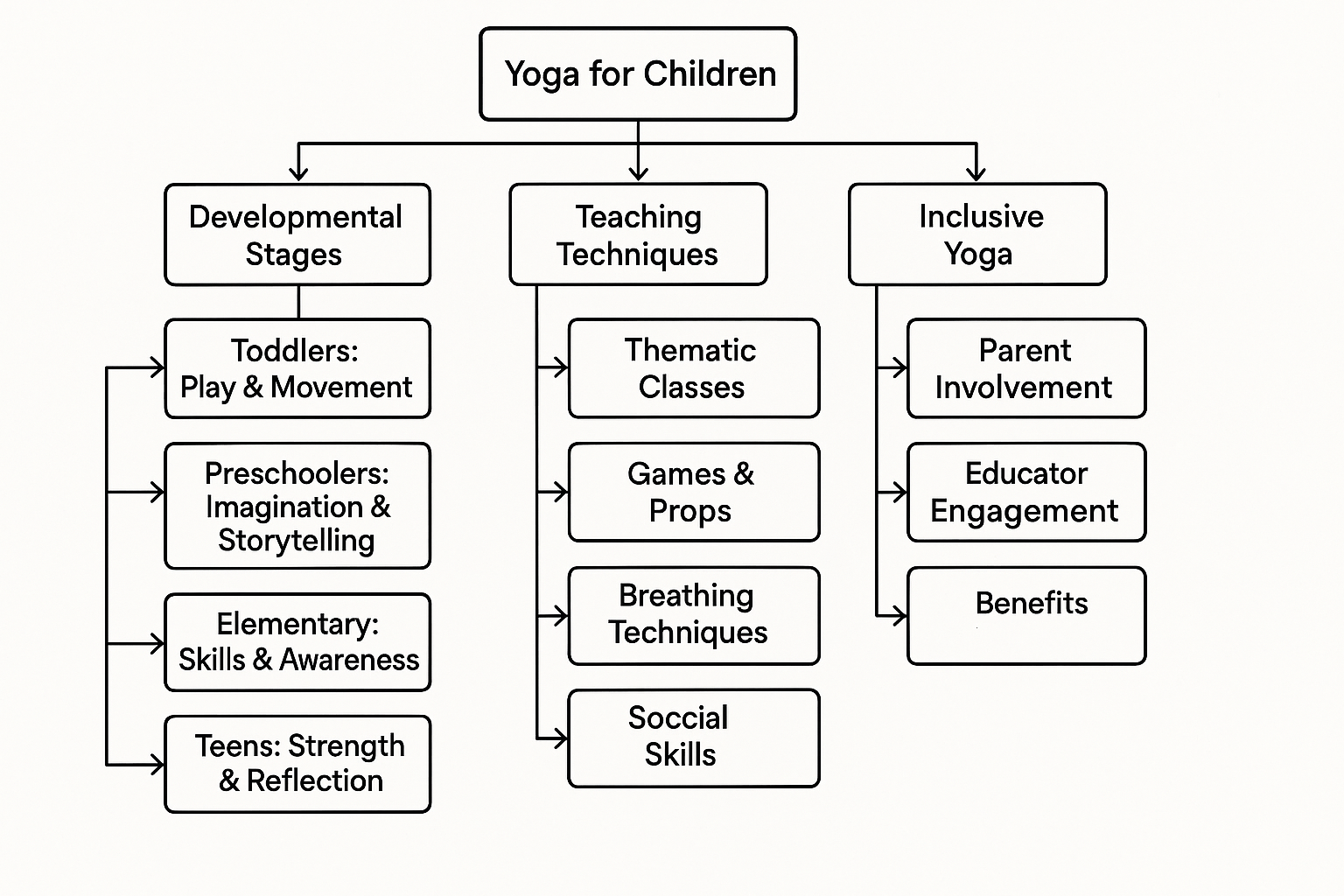
Understanding Developmental Stages and Yoga
Toddlers (Ages 2–4): Movement as Expression
At this stage, movement is exploratory and non-linear. Yoga for toddlers involves:
Simple animal poses (e.g., cat, cow, butterfly)
Rhymes and songs to encourage participation
Very short attention spans—5 to 10 minutes per activity
Focus on imitation and play, not precision
Preschool and Early Elementary (Ages 4–7): Learning Through Imagination
Children in this age group benefit from:
Story-based yoga sessions
Creative visualization during relaxation
Introduction to breathing games (e.g., feather breathing)
Development of basic motor skills through gentle sequencing
Late Elementary (Ages 8–11): Building Skills and Emotional Awareness
At this level, yoga can become:
More structured, with short flows and sun salutations
A tool for emotional literacy (e.g., recognizing tension, practicing letting go)
A practice that includes journaling or discussion of feelings
Cooperative partner poses and group games
Tweens and Teens (Ages 12+): Independence and Inner Focus
Yoga for adolescents shifts toward:
Strength-building and alignment awareness
Mindfulness meditation and breathwork for stress relief
Body image positivity and self-acceptance
Safe space for emotional expression and mental clarity
Essential Elements of a Child-Friendly Yoga Practice
1. Thematic Sequencing
Design classes around themes—seasons, animals, emotions, or moral values like kindness and patience. This fosters a sense of meaning and connection.
2. Play-Based Movement
Incorporate games like yoga freeze dance, yoga obstacle courses, or pose memory challenges to maintain engagement and joy.
3. Visualization and Guided Imagery
Guided imagery enhances relaxation and internalization of lessons. For example, imagine floating on a cloud or growing roots like a tree for grounding.
4. Breathing Techniques Made Simple
Teach calming breathwork with relatable props:
Bubble breathing (imagine blowing bubbles slowly)
Teddy bear breathing (watching a stuffed animal rise and fall on the belly)
Snake breath (long hissing exhale)
5. Mindfulness Activities
Short, age-appropriate mindfulness techniques include:
Listening to a sound until it fades
Savoring one bite of food mindfully
Walking slowly while noticing sensations
Teaching Tips: Yoga Instructors Working with Children
Create a Consistent Structure
Predictability provides safety. Begin each session with a welcome circle, then movement, breathing, relaxation, and a closing ritual.
Use Visual and Tactile Aids
Props such as yoga cards, mats with footprints, and storytelling dice can guide and inspire participation.
Observe and Adapt
Each child has unique needs, including those with congenital ear differences or other physical conditions. Use trauma-informed practices, avoid physical corrections, and adapt activities based on each child’s comfort and abilities.
Yoga for Neurodivergent and Special Needs Children
Yoga can be a powerful support for children with ADHD, autism spectrum disorder, sensory processing challenges, and other needs. Consider:
Repetitive sequences for predictability
Use of weighted blankets or body socks for proprioception
Gentle transitions and clear, visual cues
Emphasis on self-regulation over perfect pose executionIn some cases, thoughtful discussion around adhd prescription may be relevant when working with parents and healthcare professionals to holistically support a child’s neurological needs.
In some cases, thoughtful discussion around adhd prescription may be relevant when working with parents and healthcare professionals to holistically support a child’s neurological needs.
The Role of Parents and Educators
Yoga is not confined to studios. Encourage parents and educators to reinforce yoga at home or school by:
Practicing simple breathing together
Sharing yoga-themed bedtime stories
Creating a quiet corner with yoga cards and calming tools
Leading mini-sessions during transitions or after high-energy activities
Benefits of Yoga for Children
Physical: Improves flexibility, coordination, and posture
Mental: Boosts focus, self-discipline, and memory
Emotional: Fosters resilience, empathy, and self-awareness
Social: Enhances cooperation, communication, and conflict resolution
Yoga for Children Overview
Conclusion: A Lifelong Practice Begins in Childhood
Yoga, when adapted thoughtfully for children, lays the foundation for a lifetime of health, mindfulness, and inner peace. By respecting developmental needs, integrating fun and imagination, and fostering a nurturing environment, we empower the next generation to grow with grace, strength, and self-awareness.
Yoga for kids is not about achieving a perfect pose—it's about planting the seeds of presence and joy.
