
Why Every Serious Tennis Player Should Be Practicing Yoga
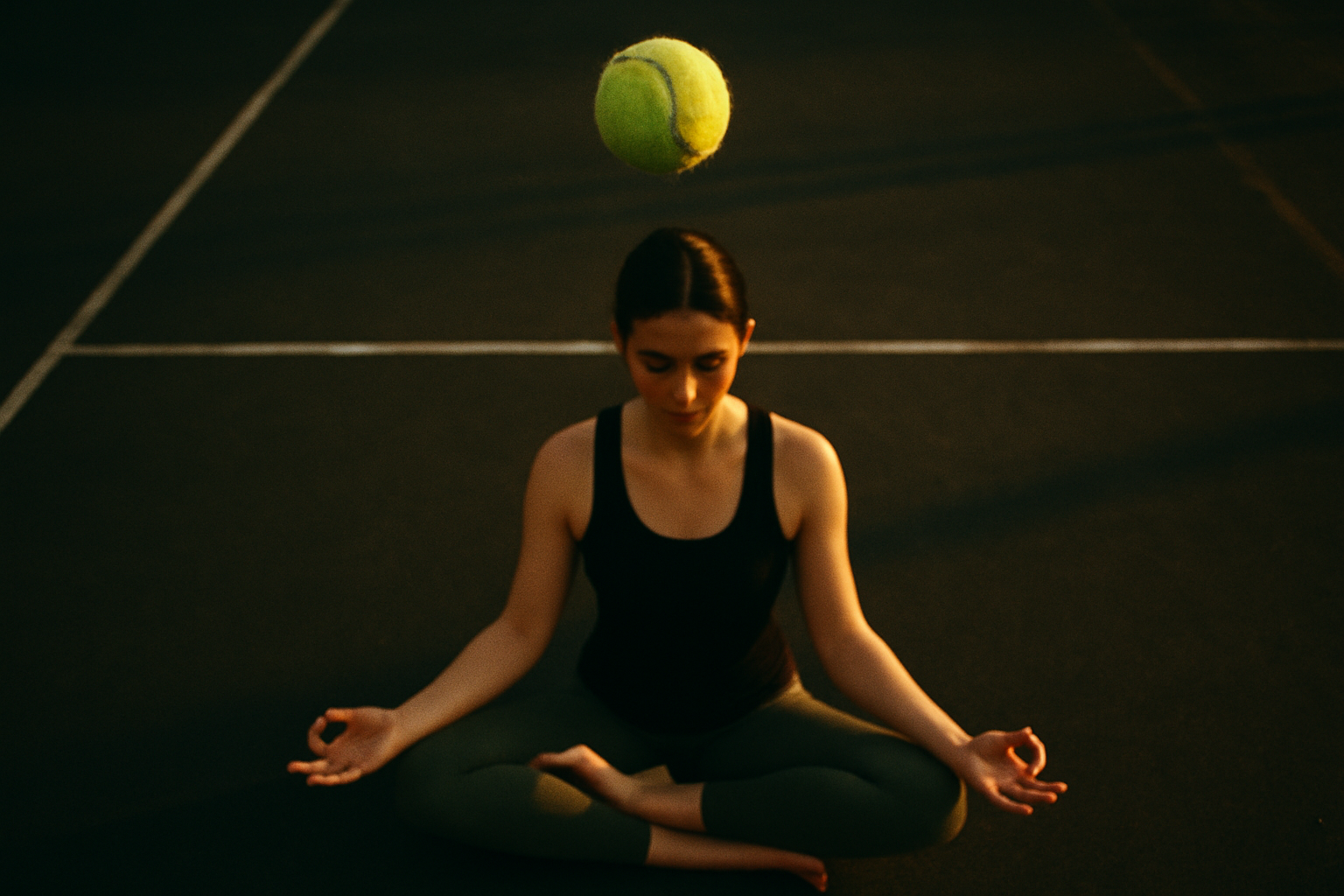
Tennis is a beautiful paradox: fluid yet explosive, elegant yet brutal on the body. As a competitive player and longtime yoga practitioner, I’ve experienced firsthand the toll of high-intensity rallies, repetitive serving, and abrupt lateral movements, not just on muscles and joints, but on the nervous system, breath, and mind.
Modern tennis requires far more than raw athleticism. It demands symmetry in an asymmetrical game, power rooted in mobility, and clarity under pressure. This is where yoga becomes not just helpful, but essential. Yoga supports the complete athlete, enhancing flexibility, reinforcing balance, fine-tuning breath control, and cultivating the kind of internal steadiness that wins matches in tie-breaks, not just in training.
Understanding Tennis Through the Lens of Biomechanics
Tennis doesn’t wear the body down evenly. The dominant side takes the brunt, shoulders, hips, wrists, knees, and spine are all subjected to torque, compression, and repetition. Add in hours of training and match play, and the result is predictable: imbalance, inflammation, and injury.
Some of the most common afflictions, tennis elbow (lateral epicondylitis), rotator cuff strain, lumbar compression, and tight hip flexors, are directly related to these biomechanical demands.
Yoga offers a unique remedy: it’s one of the few practices that restores symmetry in an inherently asymmetrical sport. Through breath-driven, mindful movement and functional alignment, yoga builds resilience exactly where tennis players need it most.
How Yoga Makes You a Better Tennis Player
1. Flexibility Where It Matters
Yoga enhances range of motion in key areas that become tight from repeated swings: hamstrings, hip flexors, shoulders, and calves. This not only reduces risk of strain but improves access to fluid, full-body strokes. Postures like Downward Dog and Triangle Pose aren’t just stretches, they’re functional resets for the tennis athlete.
2. Core Stability & Rotational Strength
A stable core is the engine behind every powerful serve or groundstroke. Yoga trains deep, stabilizing musculature through dynamic balance poses like Boat, Revolved Crescent Lunge, and Side Plank, which mimic the rotation and load transfer patterns tennis relies on.
3. Injury Prevention & Recovery
Yoga strengthens stabilizer muscles often ignored in traditional gym work. Eagle, Bridge, and Warrior III target the ankles, knees, glutes, and shoulders—building joint integrity and neuromuscular coordination. Long-term, this means fewer injuries and faster post-match recovery.
4. Mental Clarity & Breath Mastery
The breath is an athlete’s secret weapon. Pranayama techniques train the nervous system to remain calm under pressure, increase oxygen efficiency, and buffer against mental fatigue. In a sport where a few bad points can spiral into a lost match, breath control is tactical, not just spiritual.
The Best Yoga Poses for Tennis Players
PoseTarget AreaKey BenefitDownward Dog (Adho Mukha Svanasana)Hamstrings, shouldersFull-body lengthening & decompressionLow Lunge (Anjaneyasana)Hip flexors, quadsReleases hips, improves mobilityTriangle (Trikonasana)Hips, spineEnhances torso rotation & reachRevolved Crescent Lunge (Parivrtta Anjaneyasana)Obliques, spineBuilds rotational strengthEagle (Garudasana)Shoulders, hips, anklesImproves joint mobility & focusBridge (Setu Bandha Sarvangasana)Glutes, backStrengthens posterior chainBoat (Navasana)CoreBoosts isometric strength for stability
10-Minute Pre-Match Warm-Up Flow
Before stepping on court, this dynamic yoga sequence primes the body and centers the mind:
Breath Awareness (1 min) → Cat-Cow (1 min) → Downward Dog (1 min) → Low Lunge with Twist (1 min per side) → Standing Forward Fold (1 min) → Warrior II into Reverse Warrior (2 min) → Box Breathing (2 min)
This flow awakens key movement chains while sharpening focus—a far cry from static stretching.
15-Minute Post-Match Recovery Routine
After intense play, this restorative series helps flush lactic acid and reset the nervous system:
Legs-Up-the-Wall (Viparita Karani) – 5 min
Supine Spinal Twist (Supta Matsyendrasana) – 1 min/side
Happy Baby (Ananda Balasana) – 2 min
Reclining Pigeon (Supta Kapotasana) – 1 min/side
Savasana + Deep Breathing – 5 min
This isn’t optional. It’s recovery science disguised as stillness.
Sample Weekly Yoga Plan for Tennis Players
DayFocusTimeExample PosesMondayCore & Balance30 minBoat, Side Plank, EagleWednesdayFlexibility45 minLow Lunge, Triangle, Forward FoldFridayBreath & Recovery20 minUjjayi, Legs-Up-the-Wall, SavasanaSaturdayStrength & Stability30 minChair, Bridge, Warrior Series
Even 20–30 minutes, done consistently, creates measurable changes in power, control, and longevity.
Pranayama Techniques for Competitive Advantage
Ujjayi Breathing: Boosts endurance and mental stamina
Box Breathing (4–4–4–4): Calms anxiety pre-match
Kapalabhati: Energizes and clears mental fog between sets
Mastering the breath means mastering the moment.
How to Integrate Yoga into Your Tennis Regimen
Pre-match: Use dynamic yoga to warm up, not static stretching
Post-match: Commit to restorative poses, even if it’s just 10–15 minutes
Weekly: Aim for 3–4 sessions, mixing flow, recovery, and breathwork
Long-term: Use yoga to assess imbalance, fatigue, and joint health over time
Yoga becomes a diagnostic and maintenance tool as much as it is training.
Mistakes to Avoid
Skipping warm-ups and forcing deep poses
Treating yoga like a checklist—without breath awareness
Over-prioritizing flexibility at the expense of control
Using random YouTube flows not built for athletes
Seek out programs or teachers familiar with sport-specific demands and body mechanics.
Final Takeaway
Yoga isn’t just for flexibility, it’s a complete performance system. It balances what tennis unbalances, builds what tennis neglects, and steadies what tennis shakes. For the serious player, yoga isn’t a side gig. It’s part of the training.
Whether you’re chasing a title or just want to keep playing pain-free for years to come, the mat is where the smart players recover, rebuild, and refocus.
Tags: Yoga for Tennis Players, Tennis Performance, Injury Prevention, Tennis Flexibility, Core Stability, Breathwork for Athletes, Sports Recovery, Yoga Science
Next Reads:
