
Practical Ways to Integrate Pranayama Into Your Yoga Classes
Breath is the gateway between body and mind. In yoga, Pranayama—the control and extension of breath—unlocks deeper states of awareness, enhances physical vitality, and brings clarity to the mental field. To teach meaningful classes that go beyond the physical postures, integrating pranayama into your yoga sessions is essential.
Why Pranayama Belongs in Every Yoga Class
We cannot separate breath from yoga. Ancient texts like the Hatha Yoga Pradipika and Patanjali’s Yoga Sutras emphasize pranayama as a core limb of the yogic path. While asana prepares the body, pranayama refines the nervous system and lays the groundwork for meditation.
Benefits include:
Enhanced lung capacity and oxygenation
Nervous system regulation (sympathetic/parasympathetic balance)
Emotional stability and stress reduction
Improved focus and mindfulness
Detoxification through optimized breath cycles
Structuring Your Class With Pranayama
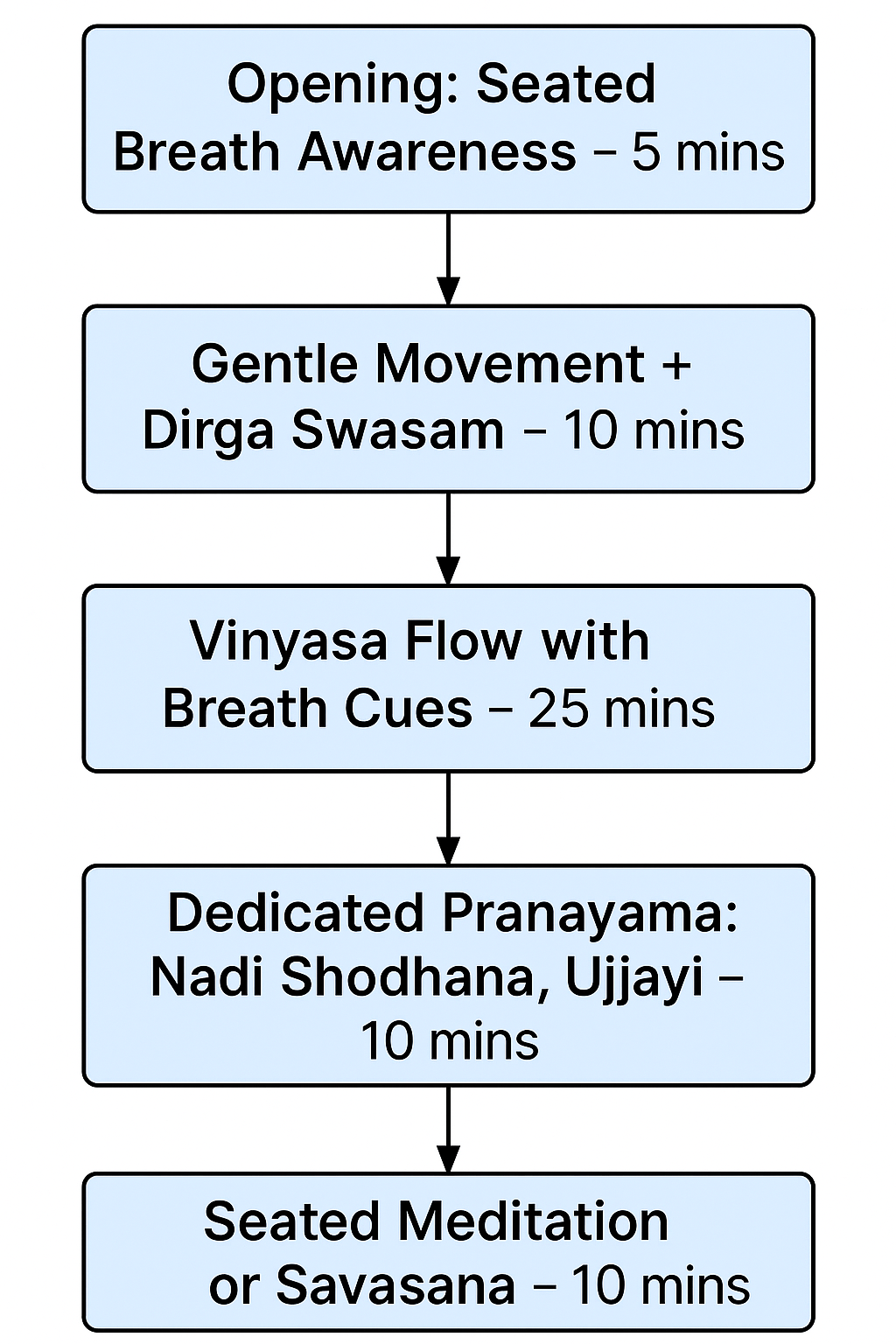
1. Begin With Awareness: Breath Observation as a Grounding Tool
Start the class with 2–5 minutes of breath awareness in a comfortable seated or supine posture. Invite students to observe:
The natural rhythm of their inhalation and exhalation
Sensation of air at the nostrils
Movement of the chest, ribs, and abdomen
This builds mindfulness and transitions the practitioner into a parasympathetic state. No control—just pure awareness.
2. Warm-Up With Gentle Breath Regulation
Once the class has settled, begin with simple controlled breathing:
Dirga Swasam (Three-Part Breath): Inhale into belly, ribs, chest. Exhale in reverse.
Equal Breath (Sama Vritti): Inhale and exhale for 4–6 counts.
These practices expand the lung's range and harmonize the breath with movement.
3. Weave Breath Into Asana Sequences
Throughout the physical practice:
Cue breath with each movement (e.g., inhale arms up, exhale fold forward)
Use breath to regulate pace and intensity
Encourage nasal breathing during dynamic and static poses
Use breath retention (Kumbhaka) after mastering smooth, even breath
This reinforces the mind-body connection and avoids shallow, erratic breathing.
4. Insert a Dedicated Pranayama Segment
Reserve 5–10 minutes mid or post-asana for a dedicated pranayama section. Suggested sequence:
Nadi Shodhana (Alternate Nostril Breathing):
Balances the left and right hemispheres, calms the mind.Ujjayi (Victorious Breath):
Slight constriction of the throat creates heat and internal awareness.Bhramari (Humming Bee Breath):
Vibrational breath to reduce anxiety and mental chatter.Kapalabhati (Shining Skull Breath):
An energizing kriya best taught to intermediate/advanced students.Sheetali or Sheetkari (Cooling Breaths):
Excellent for summertime or after vigorous flows.
⚠️ Always assess students’ readiness. Avoid forceful pranayama for beginners or during pregnancy unless modified appropriately.
5. Close With Stillness and Silence
After pranayama, guide students into meditation or savasana. This transition allows the subtle effects of breathwork to integrate. Instruct them to:
Notice the after-effects of breath regulation
Let go of control and rest in stillness
Observe sensations without judgment
The breath has done its work—now the mind can rest.
Pranayama Class Flow Example (60 Minutes)
Cueing Language for Teaching Pranayama
“Let the inhale rise naturally, like the tide.”
“Breathe in through the nose like sipping air through a straw.”
“Pause at the top of your inhale, like holding a moment of stillness.”
“Exhale completely, feeling the ground beneath you.”
“Observe the breath like a silent witness—no judgment, just awareness.”
Avoid over-instruction. Let breath lead the experience, not dominate it.
Adapting for Levels and Environments
Beginner Classes: Focus on observation, Sama Vritti, and Dirga breath.
Intermediate: Introduce Nadi Shodhana, Ujjayi, and gentle Kumbhaka.
Advanced: Explore bandhas, Kapalabhati, and longer retention.
Hot Yoga: Use Ujjayi sparingly to retain moisture. Avoid heating techniques like Kapalabhati.
Yin/Restorative: Longer breath retention and Bhramari enhance parasympathetic tone.
Online/Hybrid Classes: Offer clear verbal cues and mirror movements onscreen.
Common Challenges and How to Overcome Them
ChallengeSolutionShallow chest breathingUse three-part breath drillsBreath-holding discomfortExtend exhale, shorten holdsAnxiety during pranayamaStick to Nadi Shodhana and humming breathStudents distractedIncorporate counting and mantra to anchor the mind
Closing Thoughts
Pranayama is not an add-on, it is the heart of yoga. When seamlessly integrated, it enriches the physical practice, deepens inner awareness, and creates transformative classes that stay with students long after they roll up the mat.
Let the breath lead. Let it teach. Let it transform.
