
How to Balance Patient Care and Admin Work Without Burning Out

Healthcare workers today face an impossible choice between caring for patients and managing endless paperwork. The overwhelming administrative burden consuming valuable hours weekly has created a crisis where dedicated professionals are leaving the field they once loved. This isn't just about individual stress, it's about the survival of quality healthcare.
Effective strategies exist to reclaim your time and passion while maintaining excellent patient outcomes and staying compliant with necessary documentation requirements.
The Hidden Cost of Administrative Overload on Patient Care Quality
While these statistics paint a concerning picture, understanding the specific mechanisms by which administrative overload impacts patient outcomes is crucial for developing targeted solutions. Let's examine the measurable ways excessive paperwork is quietly undermining the very care we're working so hard to provide.
Electronic health records promised efficiency but often delivered the opposite. Many systems require multiple clicks for simple tasks, turning what should be quick notes into time-consuming documentation marathons. The average physician now spends two hours on administrative tasks for every hour of patient care.
When administrative tasks start affecting your patient interactions, it's time to act. You might notice rushing through conversations to catch up on documentation or feeling distracted during examinations because you're thinking about pending paperwork.
Patient care burnout often begins subtly. Perhaps you're staying late every night to finish notes, or you've stopped making eye contact with patients because you're focused on data entry. These behavioral shifts indicate that admin overload is undermining your clinical effectiveness.
Using practice management software can help track these patterns, making it easier to identify when the time spent on documentation begins to routinely exceed clinical interaction time. With this valuable data in hand, you can proactively make changes before burnout takes a more severe toll.
Early Intervention Checkpoints for Preventing Burnout in Healthcare Professionals
Smart healthcare professionals establish personal warning systems. Set specific time limits for documentation tasks, and when you consistently exceed them, it's time to reassess your approach. Track your energy levels throughout the day, administrative fatigue often peaks in late afternoon.
Preventing burnout in healthcare professionals requires proactive monitoring. Weekly time audits reveal where administrative tasks are consuming disproportionate energy, allowing for targeted interventions before stress becomes overwhelming.
Science-Based Strategies for Streamlining Administrative Tasks
Recognizing these warning signs is the first step, but healthcare professionals need concrete, evidence-backed methods to reclaim their time and focus. The following strategies have been proven to reduce administrative burden by up to 40% while maintaining compliance and care quality.
Time-Blocking Techniques Designed for Healthcare Settings
The 25-5-5 method revolutionizes clinical documentation. Spend 25 minutes on direct patient care, five minutes on immediate documentation, then five minutes preparing for the next patient. This rhythm prevents documentation backlogs while keeping you mentally present during patient interactions.
Protected admin time works differently than you might expect. Instead of saving all paperwork for the end of the day, schedule 15-minute documentation blocks between every three patients. This prevents the cognitive overload that comes from trying to remember details from eight different encounters.
Leveraging Technology for Maximum Efficiency
Advanced systems integrate seamlessly with existing healthcare workflows, reducing manual data entry by up to 60%. The key lies in choosing platforms that adapt to your specific specialty rather than forcing you to adapt to generic templates. See it in action yourself with an EHR demo online, a tool that emphasizes intuitive workflows, unified charting, and built‑in features supporting documentation, orders, ePrescribing, and referral management, all without excessive clicks or redundant screens.
Voice recognition technology has finally reached the accuracy threshold where it saves more time than it costs. Modern systems learn your speaking patterns and medical vocabulary, allowing you to dictate notes while maintaining eye contact with patients. With eye contact AI, practitioners can stay focused on patient interaction even during digital documentation. Meanwhile, an online teleprompter can assist in delivering consistent and confident video consultations or educational content.
AI Documentation Tools That Actually Work
Privacy-compliant AI tools can now generate initial documentation drafts from brief voice memos. You speak key findings into your phone between patients, and the system creates structured notes you can review and approve later.
These tools excel at routine documentation while flagging complex cases that need your personal attention. The technology handles the repetitive aspects of record-keeping, freeing your mental energy for critical thinking and patient connection.
Building Resilience While Maintaining Care Excellence
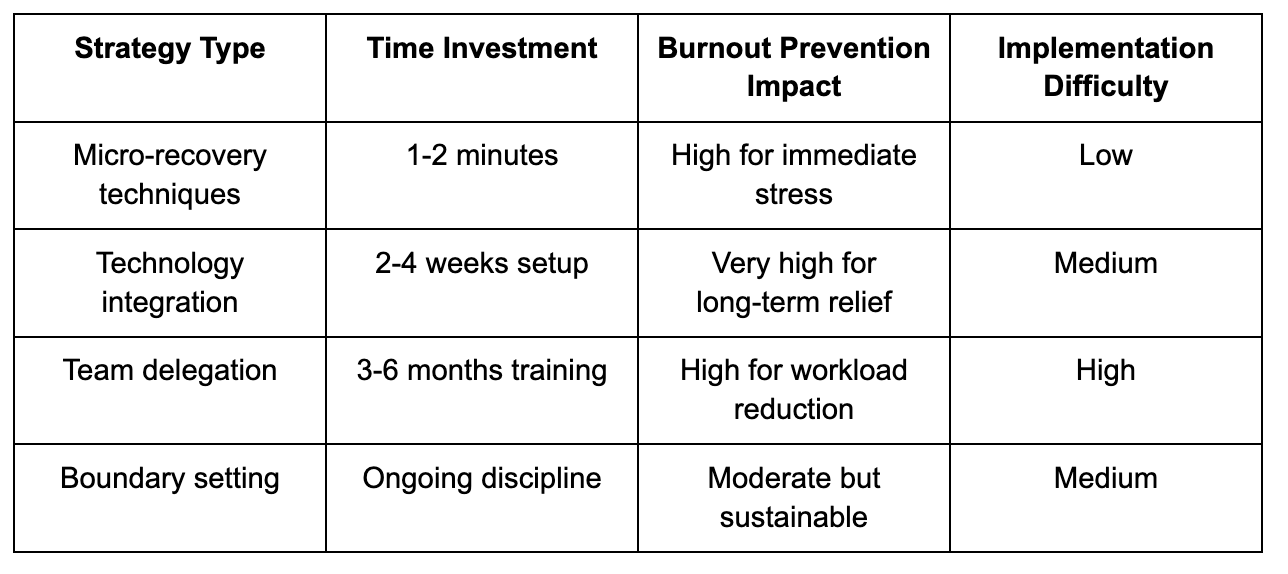
Even with streamlined administrative processes in place, the demanding nature of healthcare requires building personal resilience to handle inevitable stress peaks. These micro-recovery and team-based approaches work in tandem with your new efficiency systems to create sustainable practice patterns.
Micro-Recovery Techniques Between Patient Encounters
Studies show interventions as simple as having regular check-ins with employees can lower reported anxiety by 35%. Managing stress in healthcare doesn't require hour-long meditation sessions—60-second reset protocols prove remarkably effective.
Try the "reset breath" technique: three deep breaths while mentally shifting from the previous patient to the next. This simple practice prevents emotional residue from one encounter affecting another.
Physical micro-movements between patients combat the sedentary aspects of documentation. Shoulder rolls, neck stretches, or a quick walk to the water fountain can reset your physical state and mental clarity.
Team-Based Care Models That Reduce Individual Workload
Effective delegation transforms balancing patient care and admin work from an individual struggle into a team effort. Train medical assistants to handle routine documentation elements, allowing you to focus on complex clinical decisions. Integrating an urgent care EMR further streamlines this workflow by automating key documentation tasks, ensuring your team stays coordinated and efficient during high-volume hours.
Cross-training creates flexibility when staff members are unavailable. When everyone can handle basic administrative tasks, the burden doesn't fall entirely on one person during busy periods or staff shortages.
Creating Boundaries Without Compromising Patient Access
Smart scheduling prevents back-to-back patient overload while maintaining accessibility. Buffer appointments allow for complex cases that run long without derailing your entire day. Emergency slots remain available without forcing routine patients into impossibly tight schedules.
After-hours documentation elimination requires discipline but pays huge dividends. Commit to finishing notes before leaving, even if it means seeing fewer patients initially. This boundary protects your personal time and prevents burnout from bleeding into your home life.
Advanced Recovery and Prevention Protocols
While working toward systemic improvements, you need personalized protocols to manage your current reality and prevent future burnout episodes. These advanced strategies provide both proactive prevention and crisis intervention tools tailored to healthcare professionals.
Personalized Burnout Prevention Plans
Individual risk assessment helps identify your specific vulnerabilities. Some professionals struggle more with emotional demands, while others find administrative tasks more draining. Understanding your pattern allows for targeted prevention strategies.
Monthly check-ins with yourself or a trusted colleague can catch problems early. Rate your job satisfaction, energy levels, and work-life balance on a simple scale. Consistent downward trends signal the need for intervention before crisis hits.
Measuring Success and Long-Term Sustainability
Armed with these comprehensive strategies and measurement tools, you're ready to implement sustainable changes—but practical questions often arise during the transition process. These frequently asked questions address the most common implementation challenges healthcare professionals face.
Track meaningful metrics beyond patient satisfaction scores. Monitor your energy levels at the end of each shift, time spent on documentation versus patient care, and your overall job satisfaction. These personal indicators often predict burnout more accurately than external measures.
Regular assessment prevents regression into old patterns. Schedule quarterly reviews of your administrative efficiency and stress levels. What's working? What needs adjustment? This ongoing evaluation ensures your strategies evolve with changing demands.
Your Most Common Questions About Managing Healthcare Stress
How to avoid staff burnout?
Organizations should develop well-being "coaches," and managers should encourage team members to use available resources. Help your team manage stress and anxiety by encouraging them to keep well-being top of mind while recognizing achievements.
How can you ensure professionalism when working with difficult patients?
Create suitable environments, schedule appropriate time, listen carefully, express empathy, identify problem causes, establish clear boundaries, ask colleagues for help when needed, and focus on repairing relationships rather than winning arguments.
What's the fastest way to reduce documentation time?
Implement voice-to-text software, use template shortcuts for routine cases, complete notes immediately after each patient encounter, and delegate appropriate documentation tasks to trained support staff whenever possible.
Moving Forward with Confidence
Balancing patient care and admin work isn't just possible—it's essential for both your well-being and your patients' outcomes. The strategies outlined here aren't theoretical concepts but practical tools used successfully by thousands of healthcare professionals. Start with one or two techniques that resonate most strongly with your situation.
Remember, small changes compound over time. You don't need to revolutionize your entire practice overnight. Choose sustainable improvements that align with your values and work environment. Your future self—and your patients—will thank you for taking action today.
