
Hot Yoga and Sauna: How Consistent Heat Exposure Transforms Your Body
You have probably felt the soothing effects of heat. Stepping into a sauna or pushing through a hot yoga class feels different. But if you are only doing such activity occasionally, you are missing out on significant health benefits. Consistent heat exposure doesn't just help you relax after a long day. It actually rewires how your body handles stress, pumps blood, and even fights off disease. Here's what the research says about making heat a regular habit.
What Heat Actually Does to Your Body
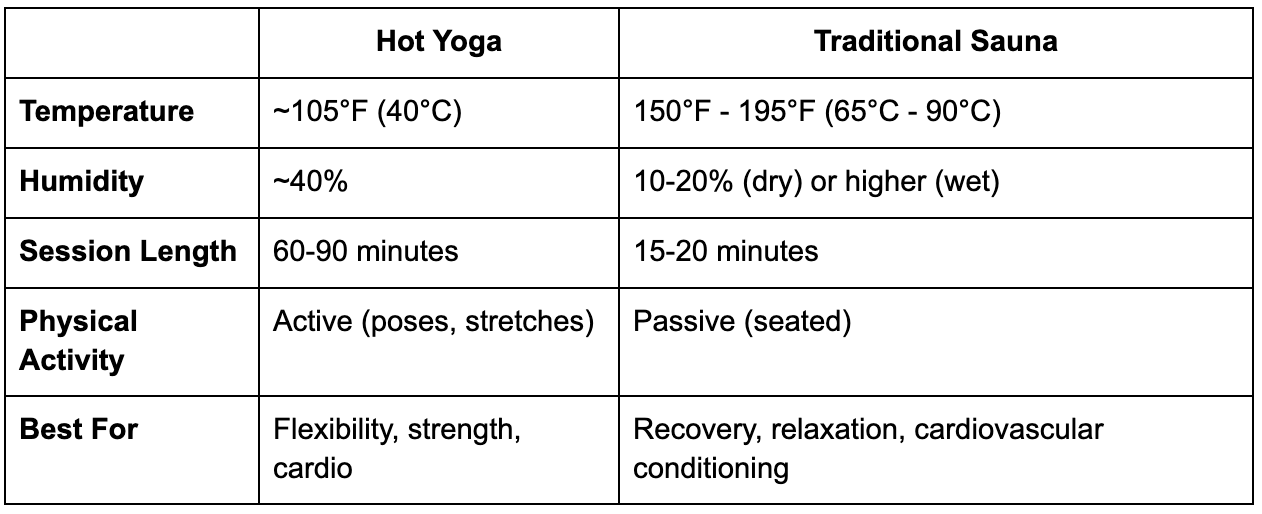
When you step into a hot yoga studio, typically around 105°F, or into a sauna, which ranges from 150°F to 195°F, your body goes into overdrive to cool itself down. Your heart rate increases, blood vessels expand, and circulation improves. These responses mimic the cardiovascular effects of moderate aerobic exercise.
This isn't just your body struggling to cope. It's adapting. Over time, repeated exposure to heat trains your cardiovascular system to work more efficiently, lowers resting blood pressure, and triggers the production of special protective proteins at the cellular level. Think of it as strength training for your internal systems, where each session builds on the last.
Here's a quick snapshot of how the two main heat modalities compare:
Building a Smarter Recovery Routine
A common mistake with heat exposure is treating it as a standalone practice. The real benefits occur when you pair consistent hot yoga and sauna sessions with a broader recovery strategy.
Many wellness-focused practitioners now alternate between heat and cold therapies to maximize their body's adaptive response. This is where contrast therapy comes in. Alternating between hot and cold triggers rapid constriction and dilation of blood vessels, improving circulation and accelerating muscle recovery. Brands like Polar Recovery make this accessible with both sauna and cold plunge setups designed for home use, so you can build a full contrast therapy routine without needing a gym or spa membership.
The main benefits of pairing heat and cold therapy are as follows:
Faster muscle recovery: alternating temperatures help remove metabolic waste and bring nutrient-rich blood to damaged tissues.
Improved vascular conditioning: repeated constriction and dilation of blood vessels help improve their elasticity over time.
Enhanced mood and energy: the contrast triggers endorphin and norepinephrine release, leaving you feeling alert and calm
Better sleep quality: the post-session drop in core body temperature signals your body to wind down naturally
Your Heart Gets a Serious Upgrade
The cardiovascular benefits of consistent hot yoga and sauna use are arguably the most well-documented. A landmark prospective cohort study followed 2,315 middle-aged Finnish men for over 20 years. The results were striking. Men who used a sauna four to seven times a week had a 63% lower risk of sudden cardiac death and a 40% reduction in all-cause mortality compared to those who went just once a week.
And it's not just saunas. Hot yoga elevates your heart rate to 60 to 80% of your maximum, putting you in the cardiovascular conditioning zone. The combination of movement, breathing, and heat creates a workout that benefits your heart, even if it does not feel like traditional cardio.
A Powerful Tool for Mental Health
Beyond the physical perks, hot yoga and sauna use are gaining serious attention for their mental health benefits. A 2023 randomized controlled trial studied adults with moderate-to-severe depression. After eight weeks of heated yoga in a 105°F room, 44% of participants achieved remission, compared to just 6.3% in the control group.
What makes these findings especially compelling is that participants saw significant improvements even when they only attended one session per week. Researchers believe the combination of physical movement, mindful breathing, and heat exposure creates a uniquely potent effect on mood regulation and stress hormones like cortisol.
Heat Shock Proteins and the Longevity Connection
One of the most fascinating mechanisms behind heat therapy involves heat shock proteins (HSPs). These are specialized molecules your cells produce when exposed to thermal stress. Their primary function is to protect other proteins from misfolding and aggregation, which are associated with neurodegenerative diseases such as Alzheimer's and Parkinson's.
A comprehensive review published in Experimental Gerontology found that repeated sauna use optimizes the body's stress responses through a process called hormesis, where mild stress triggers disproportionately beneficial adaptations. The review concluded that frequent sauna use appears to reduce morbidity and mortality in a dose-dependent manner.
Research also shows that HSP levels can increase after just a single 30-minute sauna session at 163°F, and these proteins play roles in immune function, inflammation reduction, and cellular repair far beyond the session itself.
Staying Safe With Heat Exposure
Heat exposure is powerful, but it demands respect. Keep these guidelines in mind:
Hydrate aggressively. You can lose 1.5 to 2 liters of water in a single 90-minute hot yoga session. Staying hydrated during hot yoga means drinking water before, during, and after. It's crucial to monitor your electrolyte balance.
Start slow. If you're new, take time to prepare for your first hot yoga class. Begin with shorter sessions (10-15 minutes) and gradually build up.
Listen to your body. Dizziness, nausea, or a racing heart are signs to step out and cool down immediately.
Check with your doctor if you have cardiovascular conditions, are pregnant, or take medications that affect blood pressure.
FAQ
How often should you do hot yoga or use a sauna for results?
Research suggests two to three sessions per week is a solid starting point. The Finnish sauna study found the greatest benefits at four to seven sessions per week, but even moderate use showed meaningful reductions in health risks. Consistency is more important than intensity.
Can hot yoga replace regular cardio exercise?
Not entirely. While hot yoga elevates your heart rate and provides cardiovascular conditioning, it's best used as a complement to traditional aerobic exercise rather than a full replacement.
Do you really detox through sweating?
Sweat is primarily water and electrolytes. While some trace heavy metals are excreted through sweat, the liver and kidneys handle the real detoxification work. The true benefits come from the cardiovascular and thermoregulatory responses triggered by heat exposure.
Can hot yoga help with anxiety and depression?
Research is promising. The 2023 MGH clinical trial found significant reductions in depressive symptoms from heated yoga, with benefits appearing at just one session per week. Heat-based practices show strong potential as a complementary mental health tool.
Key Takeaways
Consistent hot yoga and sauna use triggers cardiovascular adaptations similar to moderate aerobic exercise, including lower blood pressure and improved circulation.
Frequent sauna use (4-7x/week) was associated with a 40% reduction in all-cause mortality in a 20-year Finnish study.
Heated yoga reduced depression symptoms significantly in a 2023 clinical trial, with benefits appearing at just one weekly session.
Heat shock proteins activated during heat exposure protect cells from damage and may reduce the risk of neurodegenerative disease.
Pairing heat therapy with cold recovery amplifies the benefits through vascular conditioning.
Stay hydrated, start slow, and consult a doctor if you have existing health conditions.
