
Why Your Yoga Practice Feels Stuck (And What Actually Creates Transformation)
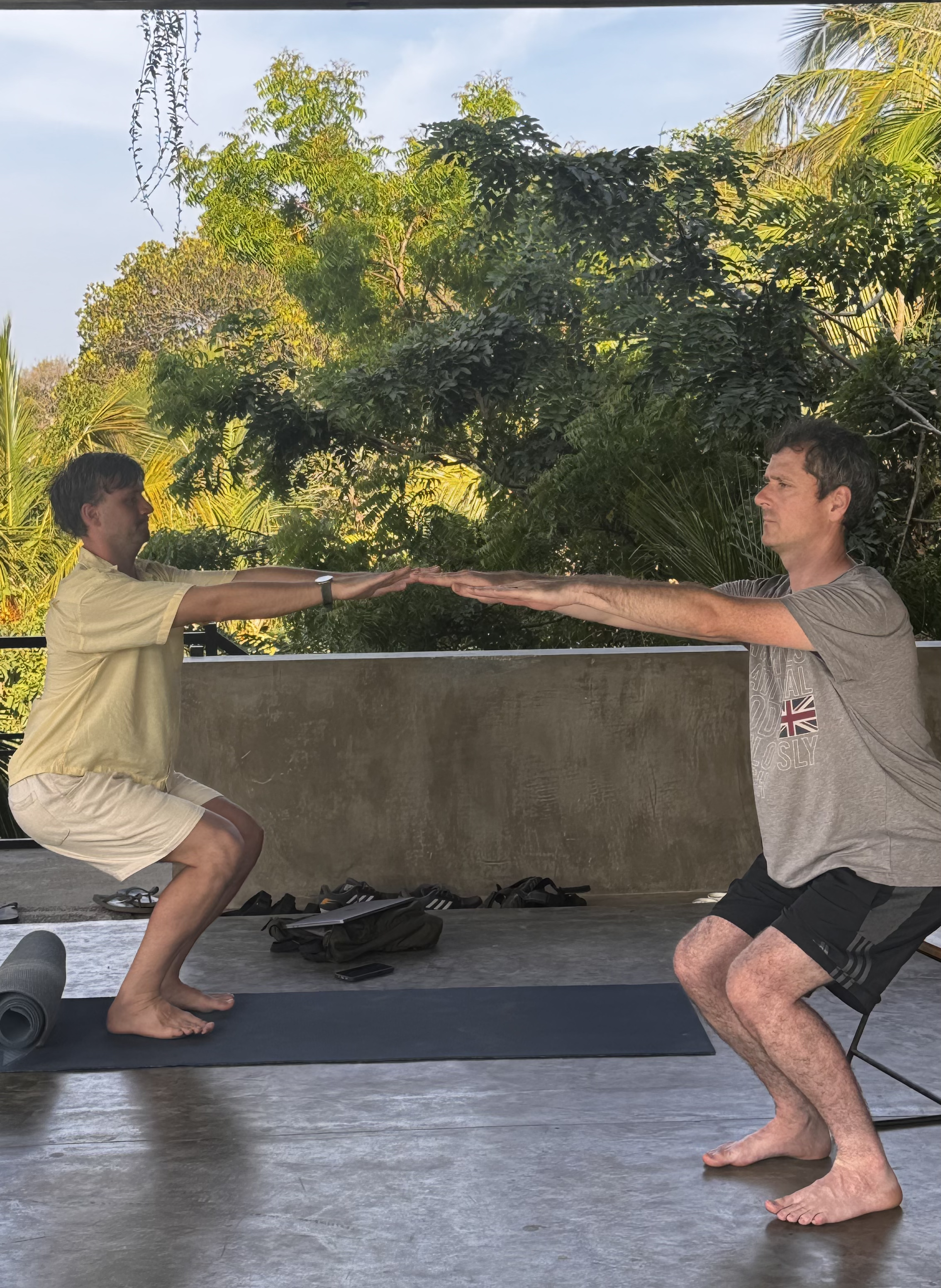
You've been on your mat for months, maybe years. You know the postures, you've memorized the sequences, and you can hold a plank for longer than you ever imagined. Yet something fundamental is missing—that spark, that shift, that transformation everyone talks about but few can explain.
The truth? Most yoga practitioners hit a ceiling not because of physical limitations, but because they're practicing in the wrong environment.
The Plateau Nobody Talks About
After six months to a year of consistent practice, most yogis experience what I call "the mechanical phase." Your body knows the movements. Your mind anticipates the next pose. The practice becomes routine rather than revelatory.
This isn't failure—it's evolution asking for something more.
Research in neuroscience shows that genuine transformation requires three elements working together: novel environments, sustained immersion, and emotional safety. Your weekly studio class, no matter how excellent, can only provide one of these.
Why Geography Matters More Than You Think
There's a reason ancient yogis didn't practice in their living rooms.
The nervous system responds profoundly to context. When you remove yourself from familiar surroundings, your brain enters a state of heightened neuroplasticity—the biological foundation for real change. This isn't spiritual bypassing or wishful thinking. It's measurable neuroscience.
Consider what happens when you step into a completely unfamiliar environment:
Your habitual patterns have no anchor. The automatic loops that govern your thoughts, reactions, and self-concept suddenly have no reference point. In this disorientation lies profound possibility.
Your sensory experience floods with novelty. New sounds, smells, rhythms, and visual landscapes literally rewire your perceptual filters. What you thought was "reality" reveals itself as one possible interpretation among many.
Your identity becomes negotiable. Without your usual social roles, professional identity, and daily responsibilities, you meet yourself without the costume. Sometimes for the first time.
The Sacred Disruption Principle
Transformation doesn't happen through accumulation—adding more techniques, learning more poses, attending more workshops. It happens through strategic disruption.
This is why retreat experiences create shifts that years of home practice cannot. You're not just learning new information. You're creating the conditions for metamorphosis.
The most powerful transformations I've witnessed in over twenty years of teaching have never happened in familiar territory. They've happened when students surrendered to unfamiliar ground—literally and metaphorically.
Beyond the Instagram Version
Let's be clear about what transformation actually looks like, because the wellness industry has sold us a sanitized version.
Real transformation is uncomfortable. It involves confronting the parts of yourself you've spent years avoiding. It means questioning beliefs you've held sacred. It requires admitting you don't have all the answers.
The yogis who experience genuine breakthroughs aren't the most flexible or the most disciplined. They're the ones willing to be undone.
The Four Pillars of Transformative Practice
After training over 3,000 teachers and guiding countless practitioners through their journeys, I've identified four non-negotiable elements for transformation:
1. Extended Time Away From Default Mode
Transformation requires sustained attention without interruption. Not a weekend. Not even a week. Genuine shifts need space to unfold—typically 10-21 days minimum. This isn't about escaping your life. It's about gaining enough distance to see it clearly.
2. Lineage and Living Transmission
YouTube tutorials and app-based practices have their place, but transformation requires direct transmission from teacher to student. There's an energetic component to learning that cannot be digitized—the subtle adjustments, the knowing glance, the felt sense of someone who has walked the path before you.
3. Community as Mirror
You cannot see yourself clearly in isolation. Other practitioners become mirrors, reflecting back your blind spots and your brilliance. The sangha—spiritual community—isn't optional. It's essential.
4. Sacred Context and Intentional Design
Environment isn't neutral. Practicing in a space specifically designed for inner work—whether an ashram, retreat center, or sacred site—amplifies everything. The walls hold the intention of thousands who came before you.
The Geography of the Soul
Some places on Earth carry an amplified field. Whether you attribute this to accumulated intention, natural energy, or collective consciousness doesn't matter. The experiential reality remains: certain locations accelerate inner work.
India, particularly, holds this quality. For millennia, seekers have traveled there not as tourists but as pilgrims. The land itself seems to catalyze awakening. Walking the same ground where yoga was born, where millions have chanted the same mantras and asked the same eternal questions—this continuity creates a portal.
I'm speaking from direct experience. Teaching in studios across Europe and North America for decades has shown me what's possible. But witnessing students in India, in Rishikesh by the Ganges, in temples where the air itself seems to vibrate with devotion—that's shown me what's inevitable when conditions align.
When Practice Becomes Pilgrimage
The distinction between a yoga vacation and a transformative journey lies in intention and design.
Tourism asks: What can I see? Transformation asks: Who am I becoming?
Retreat means to withdraw, but not to escape. You're withdrawing from distraction to focus intensely on what matters most. You're stepping back from your life to see its architecture clearly—what's essential, what's habit, what's authentic, what's borrowed.
This is why I'm particularly excited about opportunities that combine immersive practice with sacred geography. When you can practice daily yoga and meditation, attend ceremonies on the Ganges, sit in ancient temples, and do this alongside experienced teachers and a committed community—that's when the real work happens.
The Practical Reality of Transformation
Let's talk logistics, because transformation isn't just philosophical—it's practical.
Real change requires:
Enough time away from your default environment (minimum 10 days)
Daily practice that progresses throughout the journey
Expert guidance from teachers with decades of experience
A structured schedule that balances discipline and spaciousness
Cultural immersion in a tradition that predates modern wellness
Integration support for bringing your insights home
Most people wait their entire lives for the "right time" to commit to a transformative experience. Meanwhile, years pass in mechanical repetition, wondering why nothing fundamentally shifts.
The Question That Changes Everything
Not: "Can I afford this?" But: "Can I afford not to?"
What's the cost of another year feeling disconnected from your practice? Another decade postponing the deep work? Another lifetime of surface-level engagement with something that could utterly transform your existence?
I've watched students defer their transformation for every possible reason—money, time, fear, logistics. The ones who eventually commit invariably say the same thing: "I should have done this years ago."
A Personal Note on Sacred Timing
In February 2026, my partner Zefea and I are leading a small group through India's most sacred sites—Delhi, Jaipur, Agra, Varanasi, and Rishikesh. This journey has been years in the making, designed specifically to create the conditions for transformation we've been discussing.
For Zefea, it's her first time in India—a pilgrimage to yoga's birthplace she's dreamed about for years. For me, it's returning to the source with decades of teaching experience and a renewed commitment to creating genuinely transformative experiences.
We're limiting the group intentionally. Transformation doesn't happen in crowds. It happens in intimate communities where real connection is possible.
If this timing aligns with your readiness for something deeper, you can learn more about this journey here. But more importantly, if not this opportunity, then make a commitment to something. Find your own pathway to disruption and transformation.
Your Practice Is Waiting
That plateau you're experiencing? That restlessness in your practice? That's not a problem to solve. It's an invitation to evolve.
The next level of your practice isn't found in a more advanced pose or a longer meditation sit. It's found in having the courage to step into unfamiliar territory and let yourself be transformed by it.
Twenty years from now, you won't remember the logistical obstacles that seemed so important today. You'll remember whether you had the courage to say yes when transformation called.
The practice is waiting. The question is: Are you?
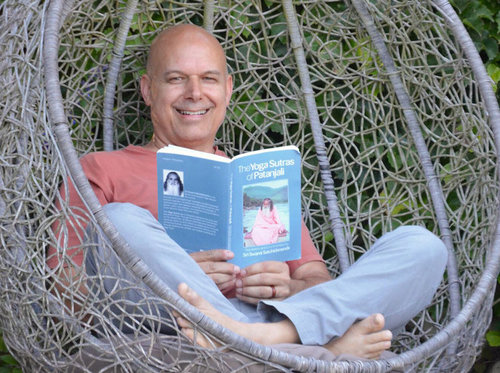
Mark Drost is co-founder of Evolation Yoga, with over 40 years of experience in yoga and meditation. He has trained more than 3,000 teachers across 345 programs worldwide, specializing in transformative yoga experiences that honor the lineage of Paramhansa Yogananda.
