
Building Your Foundation: Muscles, Fascia, and the Art of Proper Foot Function (Part 2)
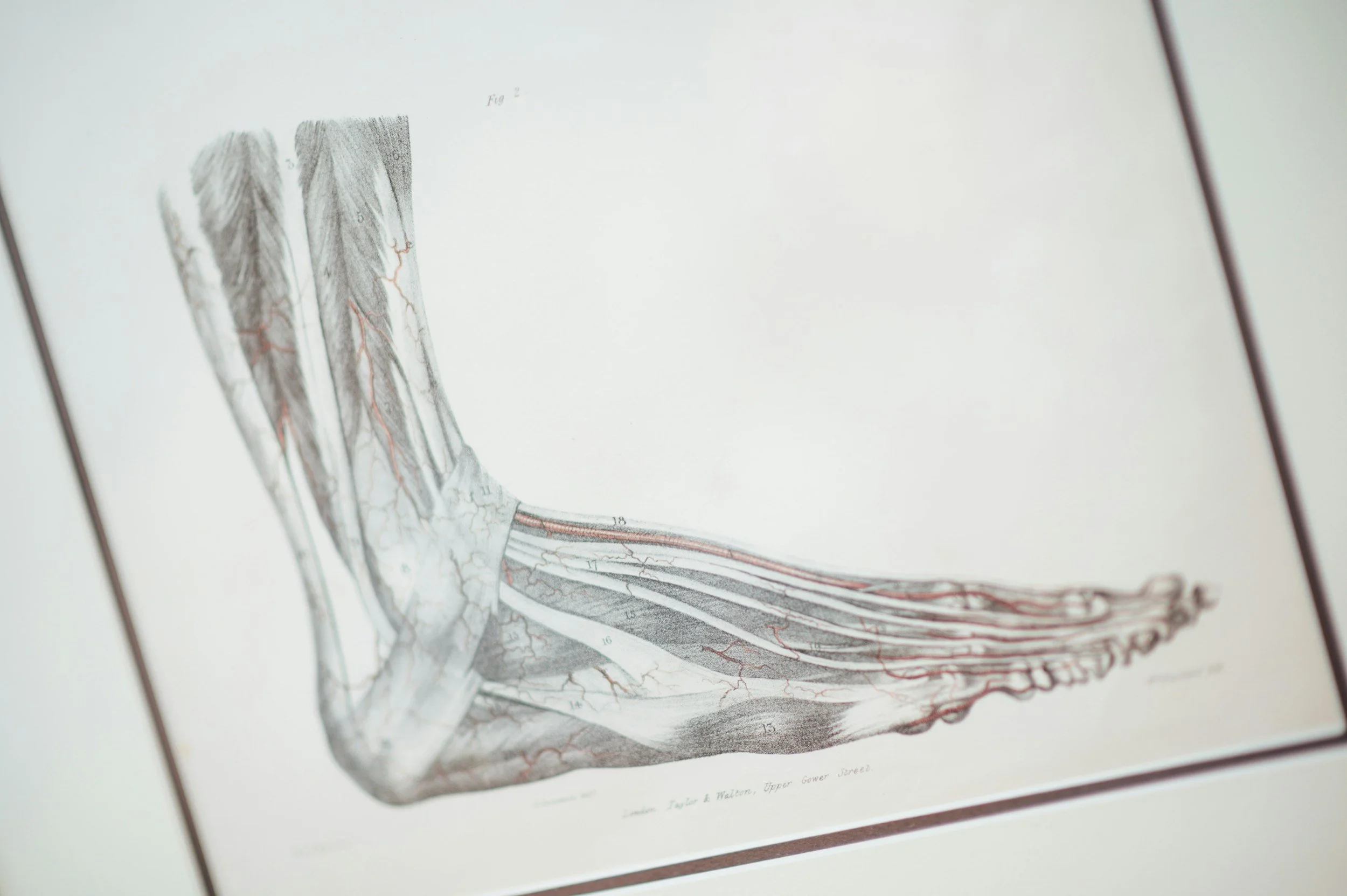
In Part 1, we explored how the bony structure of your feet directly influences your hip alignment and overall posture. Now let's dive deeper into the muscular and fascial connections that make your feet truly dynamic, adaptive structures—and learn practical techniques for optimizing their function.
The Deeper Connections: Muscles and Fascia
Beyond the skeletal framework, your feet are supported by two additional critical systems:
The Muscular Structure: A complex network of intrinsic and extrinsic muscles that control movement, provide stability, and maintain the foot's architectural integrity.
The Connective Tissue/Fascial System: The web-like network of fascia that connects your feet to your entire kinetic chain, transmitting forces and information throughout your body.
These systems work together with your bones to create a dynamic, responsive foundation that should adapt and react to every surface you encounter.
The Flat Foot Challenge: Beyond Quick Fixes
Flat feet affect millions of people and often lead to pain throughout the lower body—in the knees, hips, and lower back. Unfortunately, the most common "solutions" often miss the mark:
Shoe Inserts: The Band-Aid Approach: While orthotics can provide temporary relief, they're essentially doing the work your foot muscles should be doing naturally. They don't address the underlying dysfunction.
Elevated Heels: Fighting Nature: Wearing heels shifts your body out of its natural alignment, creating compensation patterns that can worsen problems over time.
The Tree Root Principle: Stability Through Width
Think of your feet like the root system of a tree. The wider the canopy above, the wider and stronger the roots need to be below. Similarly, the more stability you need in your body, the better your feet need to function as a wide, grounded base.
This is where proper foot positioning becomes crucial. A wider standing surface naturally provides more stability, but only if your feet are actively engaged with the ground.
The Flat Foot Approach to Standing: A Step-by-Step Method
Here's a powerful technique for anyone dealing with flat feet or simply wanting to improve their foundation:
Start by Rolling Back on Your Heels: Lift your toes completely off the ground, balancing on just your heels. This helps you feel the back anchor point of your foot.
Slowly Roll Forward: Gradually lower your foot and toes back down, starting with the ball of the foot and ending with the toes.
Stretch Your Toes Wide: Once your toes are down, actively spread them apart. This creates stability and grounding through increased surface area contact.
Feel the Strength in Your Legs: Notice how this engagement travels up into your leg muscles. You should feel stronger and more connected to the ground.
Understanding Your Foot's Architecture: The Three Arches
Your foot isn't just one simple arch—it's actually a sophisticated architectural system with three distinct arches:
Medial Arch (Inside): The most prominent arch, running along the inside edge of your foot
Lateral Arch (Outside): The smaller arch along the outside edge
Transverse Arch (Middle): The arch that runs across the ball of your foot
When these arches work together properly, they create a dynamic, shock-absorbing system. However, when the muscles around these arches become weak or dysfunctional, the foot can collapse into a flat position—even when the bone structure is perfectly normal.
The Four Corners, Three Anchor Points System
To properly engage your feet, focus on these three primary anchor points:
Big Toe Mound: The ball of your foot behind your big toe
Little Toe Mound: The ball of your foot behind your little toe
Center of Your Heel: The back anchor point
These three points form a tripod base. When you actively engage all three anchor points while standing, something interesting happens: if you gently push up on the arch of a flat foot in this position, the arch naturally lifts and the entire front side of your body engages.
The Foundation-First Approach
This demonstrates a fundamental principle: always start with your feet. Before working on core strength, hip stability, or postural issues, establish a solid, engaged foundation. When you focus on the arches and actively engage the sole of your feet, everything above works more efficiently.
Massage and Mobilization: Regularly massaging your feet helps maintain healthy connective tissue and creates a wider, more solid foundation for everything you build above.
Understanding Your Ankles: The Versatile Hinge
Your ankle is classified as a hinge joint—specifically, a synovial joint that's remarkably versatile. While its primary movements are flexion and extension, it's capable of much more:
Primary Movements:
Flexion:
Plantar Flexion: Pointing your toes (like a ballet dancer)
Dorsiflexion: Pulling your toes toward your shin
Extension (Side-to-Side Movement):
Eversion: The top of your foot moves away from your body's midline
Inversion: The top of your foot moves toward your body's midline
Additional Movement:
Your ankle can also perform rotation, making it incredibly adaptable to uneven surfaces and complex movement patterns.
Safety First: Understanding Discomfort vs. Pain
When working with your feet and ankles, it's crucial to distinguish between productive discomfort and harmful pain:
Discomfort: The sensation of muscles working, stretching, or adapting that typically decreases with time and practice
Pain: Sharp, shooting, or intensely uncomfortable sensations that signal potential injury
Always ask yourself (or your students, if you're an instructor): "Have you had any surgeries, including ankle surgeries?" Previous surgical interventions can significantly affect how the foot and ankle function and what exercises are appropriate.
Building Your Practice: Start from the Ground Up
Remember, your feet are your foundation for everything. Whether you're dealing with flat feet, ankle stiffness, or simply want to improve your overall stability and strength, the work begins at ground level.
In our next installment, we'll explore specific exercises and daily practices you can use to strengthen your feet, improve your arch function, and create the stable foundation your body needs for optimal movement and pain-free living.
Your feet carry you through life—isn't it time to give them the attention and care they deserve?
