
Understanding Your Foundation: The Critical Connection Between Feet and Body Alignment (Part 1)
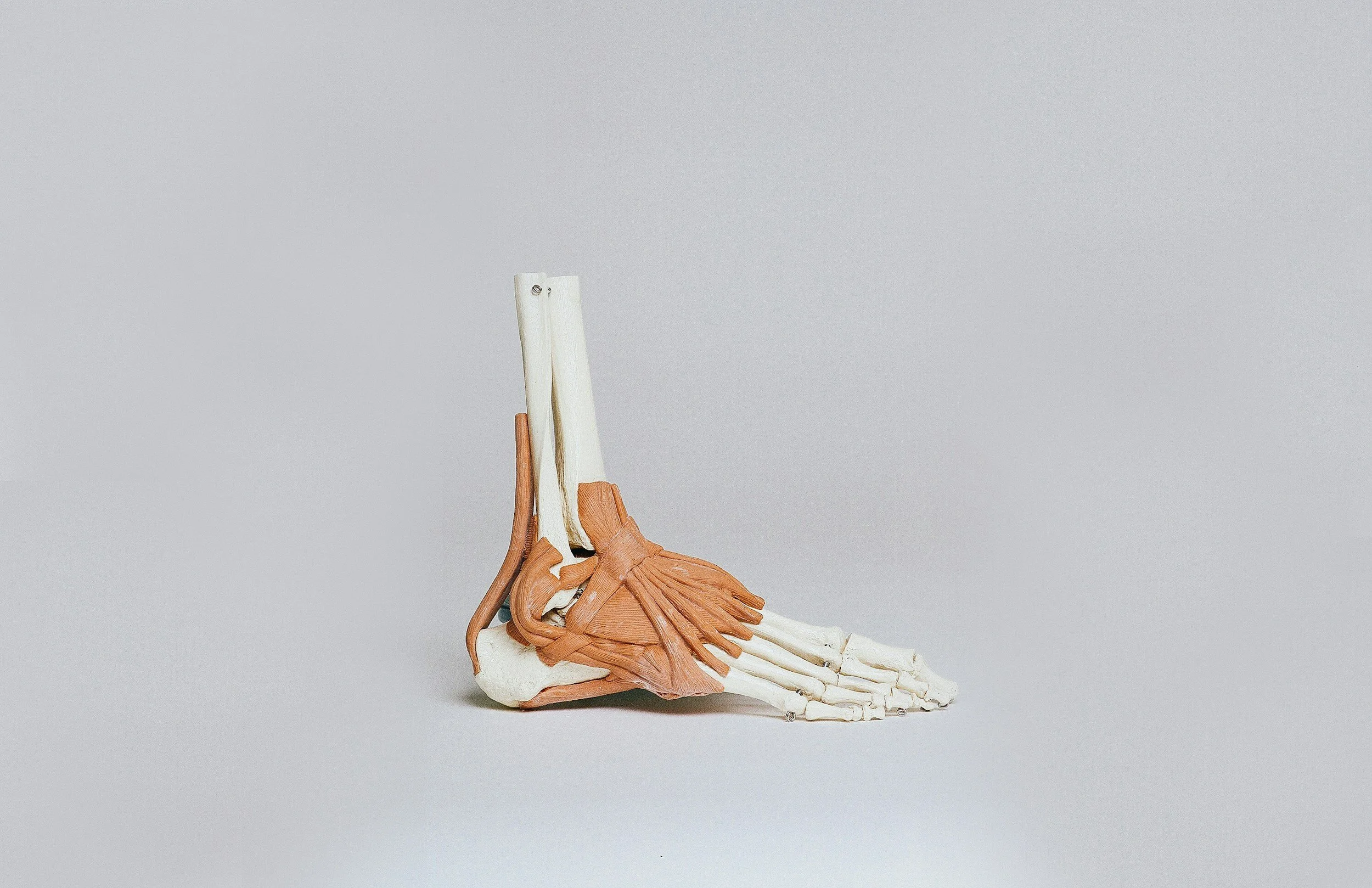
Your feet are far more than just the things that carry you from point A to point B. They're the foundation of your entire body's alignment system, and small changes in how you position them can create profound effects throughout your kinetic chain. Understanding this connection between your feet, hips, and overall posture is crucial for anyone looking to improve their movement quality and reduce pain.
The Bone-Deep Connection: How Foot Position Shapes Your Hips
The relationship between your feet and hips isn't just metaphorical—it's a direct mechanical connection through your skeletal structure. When you change the position of your feet, you're literally changing the orientation of your entire lower body.
Feet Turned Out: The Ballet Position Effect
When your feet turn outward (like a ballet dancer's position), your hips follow suit through external rotation. This positioning creates a cascade of effects:
Front Side Impact: Your pelvis tilts downward, creating a lengthening and opening position. This can feel spacious and expansive, but it's not always optimal for everyday activities.
Back Side Response: Through reciprocal inhibition—the body's natural way of balancing opposing muscle groups—the posterior chain responds by shortening and contracting. Your hamstrings, glutes, and lower back muscles tighten to maintain stability in this position.
Feet Turned In: The Internal Rotation Pattern
Conversely, when your feet turn inward, your hips shift into internal rotation, creating the opposite effect:
Front Side Impact: The pelvis moves into a shortened, closing position, which can feel more compact but may restrict certain movements.
Back Side Response: Your posterior chain muscles (hamstrings, glutes, lower back) lengthen and extend through reciprocal inhibition, potentially creating a different kind of imbalance.
A Simple Solution for Lower Back Pain and Sciatica
If you're dealing with lower back pain or sciatica, this foot-hip connection offers a surprisingly simple intervention. Keeping your toes pointed outward or in a neutral, parallel position can provide relief by optimizing the tension patterns in your posterior chain. It's not a cure-all, but it's a foundational adjustment that many people find helpful.
Finding Your Optimal Foot Width: Together or Apart?
The width of your foot stance is just as important as their rotation. Here's what you need to know:
Hip-Width Apart: The Gold Standard
When your feet are positioned hip-width apart with proper alignment, you achieve optimal stacking and balance. This position is smaller than many people think—your feet should be directly under your hip joints, not under your outer hip bones. In this neutral position, you're most stable and balanced.
Feet Together: The Muscular Advantage
Bringing your feet together creates a different dynamic. While it may feel stronger because you can more easily engage your inner thighs and create muscular tension, it often leads to compensation patterns. Your feet may roll outward, shifting you away from true neutral and into external rotation.
The Midline Principle: Finding Your True Center
Understanding your foot's midline is crucial for proper alignment. For most people, this imaginary line runs from the center of the heel through the second toe. Here's how to use this knowledge:
Your second toes should be parallel to each other when you're in proper alignment
When moving from a parallel position to feet together, your toes should come together first while your heels stay slightly apart
If your heels come together first when your toes meet, you're likely compensating and losing your neutral alignment
The Universal Benefit: Keep Those Heels Apart
Here's a simple tip that can benefit almost everyone: avoid touching your heels together. Maintaining a small separation between your heels while allowing your toes to come closer helps preserve better alignment and prevents the compensation patterns that occur when you force your feet into an unnatural position.
Moving Forward with Your Foundation
Understanding these principles is just the beginning. Your feet are incredibly complex structures with 26 bones, 33 joints, and over 100 muscles, tendons, and ligaments in each foot. The way you position them affects everything above—your knees, hips, pelvis, spine, and even your shoulders and neck.
In Part 2 of this series, we'll dive deeper into specific exercises and techniques you can use to improve your foot awareness and optimize your foundation for better movement and reduced pain. For now, start paying attention to how you naturally position your feet throughout the day, and experiment with these alignment principles to feel the difference they can make.
Remember, small changes at the foundation level can create significant improvements throughout your entire body. Your feet are literally your connection to the earth—make sure that connection is serving you well.
