
Hot Yoga for Runners
How Practicing in the Heat Can Transform Your Running Performance, Recovery, and Mental Game

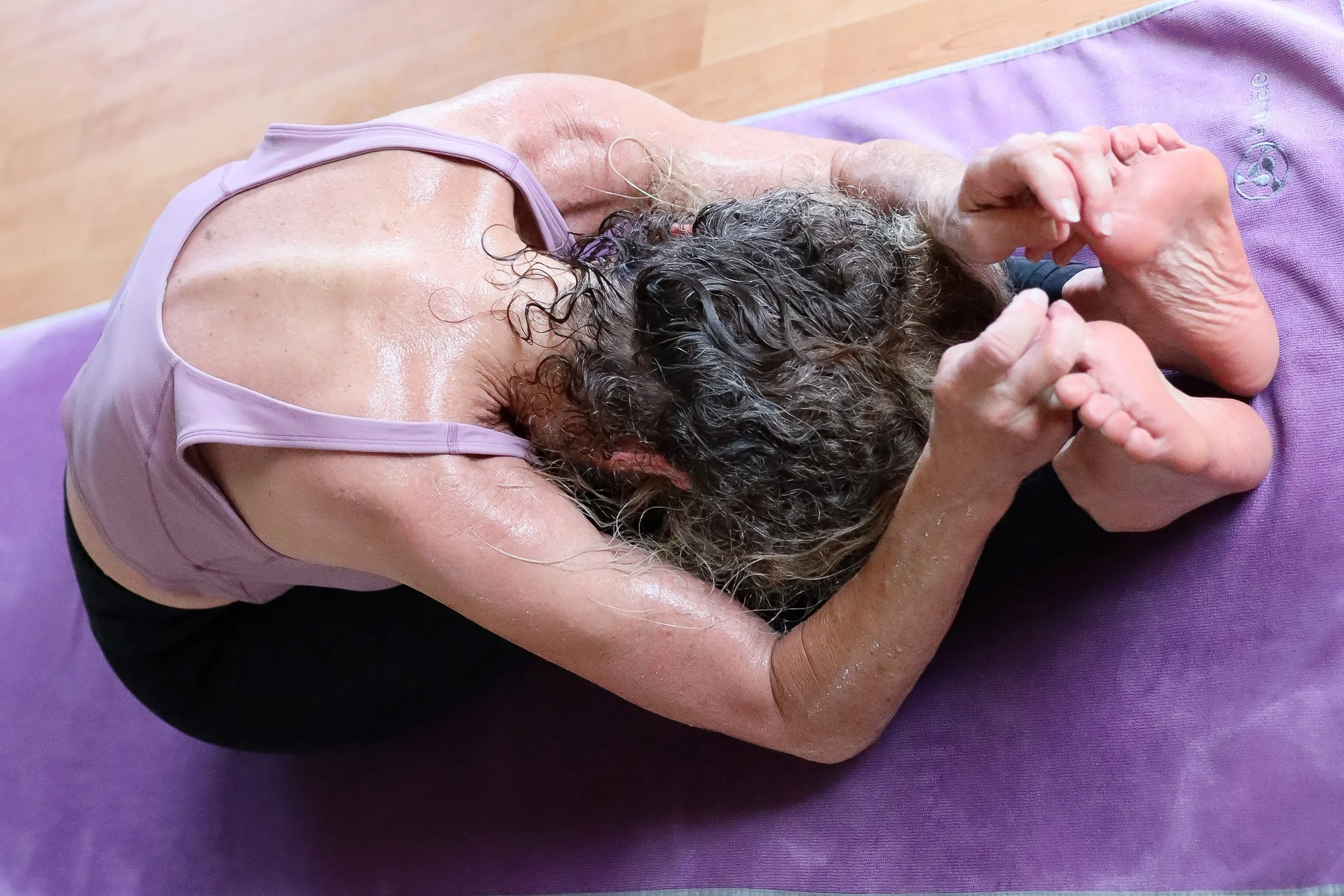
Step into a hot yoga studio and you enter a different world. The air hangs thick at 95 to 105 degrees Fahrenheit, humidity hovering around 40 percent. Within minutes, sweat beads on your skin. Your muscles begin to release their grip. Your mind, forced to focus on breath and balance, quiets its usual chatter. For runners seeking an edge in performance, recovery, and mental resilience, this heated environment offers something unique: a practice that simultaneously challenges and restores the body while training the mind to thrive under pressure.
Hot yoga has grown from a niche practice into a mainstream training tool embraced by elite athletes and recreational runners alike. The combination of traditional yoga poses performed in elevated temperatures creates a physiological and psychological training ground that translates directly to the demands of running. From improved flexibility and faster recovery to enhanced breath control and heat acclimatization, hot yoga offers runners a comprehensive cross-training approach that addresses the sport's most common challenges.
Understanding Hot Yoga
Hot yoga is a generic term for yoga practiced in a room heated above normal room temperature. The temperature typically ranges between 80 and 108 degrees Fahrenheit, with humidity levels varying by studio and style. The first and most well-known style of hot yoga is Bikram, which became popular in the 1970s. Bikram yoga is practiced in a room heated to 105 degrees Fahrenheit with 40 percent humidity and consists of a specific sequence of 26 postures and two breathing exercises performed over 90 minutes. The sequence never changes, allowing practitioners to track their progress and deepen their practice over time.
Today, many variations of hot yoga exist beyond the original Bikram format. Studios offer hot vinyasa flow classes, hot power yoga, and various heated hatha sequences. Some classes are shorter, some incorporate different poses, and some vary the temperature and humidity. What unites them is the fundamental principle that practicing yoga in heat intensifies the physical and mental experience, allowing for deeper stretches, increased cardiovascular challenge, and enhanced mental focus.
Why Heat Matters for Runners
The elevated temperature in a hot yoga studio is not merely an environmental challenge to endure. It is a training tool with specific physiological benefits. When muscles are warm, they become more pliable and receptive to stretching. The heat allows practitioners to achieve deeper stretches safely, without the resistance that comes from cold, tight tissue. For runners, who develop chronic tightness in the hips, hamstrings, calves, and IT bands through repetitive motion, this enhanced stretching capacity is particularly valuable.
Beyond flexibility, the heat creates a cardiovascular challenge that mimics the stress of running in warm conditions. Working out in high temperatures raises the heart rate and increases cardiac output, even during slow, deliberate movements. This means that despite performing poses at a measured pace, practitioners are simultaneously training their cardiovascular systems. For runners preparing for warm-weather races or simply seeking to improve their heat tolerance, hot yoga provides a controlled environment for adaptation.
Research published in the International Journal of Yoga Therapy found that twelve sessions of hot yoga promoted cardiovascular fitness and cellular thermotolerance adaptations. The study showed that maximal aerobic fitness increased in the hot yoga group, and practitioners developed higher expression of heat shock protein 70, which protects cells from various stresses. These adaptations translate directly to improved performance and resilience during running in challenging conditions.
Flexibility and Injury Prevention
Running is a repetitive motion that primarily works the lower body in a single plane of movement. Over time, this creates predictable patterns of tightness and imbalance. The hip flexors shorten from the constant cycling motion. The hamstrings and calves bear the brunt of propulsion and often become chronically tight. The IT band, that thick band of connective tissue running along the outer thigh, frequently becomes irritated from overuse. These imbalances do not merely cause discomfort; they create the conditions for injury.
Hot yoga addresses these patterns systematically. The 26 postures of a traditional Bikram class, for example, strengthen and stretch the entire body. The heat allows muscles to release more readily, and the sustained holds give tight tissue time to lengthen. According to a study in the International Journal of Sports Physical Therapy, runners who incorporated hot yoga into their routine reported fewer instances of muscle tightness and soreness. The practice encourages muscle relaxation and increased blood flow to tissues, helping to prevent strains and sprains.
Many runners have found that nagging injuries that once sidelined them become distant memories after establishing a consistent hot yoga practice. IT band tightness, lower back pain, and runner's knee can all be addressed through the systematic strengthening and stretching that hot yoga provides. The practice improves alignment, which means that when running, imbalances are less likely to be exacerbated or cause injury. Hot yoga is not just about becoming more flexible; it is about creating a body that moves more efficiently and resists the wear of training.
Targeting the Runner's Problem Areas
Certain areas of the body take particular abuse from running, and hot yoga offers specific benefits for each. The hip flexors, which become shortened and tight from both running and sitting, receive attention through lunges and backbends that open the front of the hips. The hamstrings, notorious for tightness in runners, lengthen through forward folds and standing postures performed with the heat's assistance. The calves and Achilles tendons, which absorb tremendous force with every stride, release through poses like downward-facing dog and standing forward bends.
The IT band presents a particular challenge because it is not a muscle but a thick band of fascia that does not respond to traditional stretching in the same way. Hot yoga addresses IT band issues indirectly by strengthening the glutes and hip stabilizers that take pressure off the band, and by using twisting postures that create rotation and release along the outer hip and thigh. Runners dealing with IT band syndrome often find relief through consistent hot yoga practice because it addresses the underlying muscular imbalances rather than just the symptoms.
Breath Control and Respiratory Efficiency
More than any other type of physical activity, yoga relies on proper breath control to lead movements and sustain effort. In hot yoga, where the challenging environment demands even greater attention to breathing, practitioners develop skills that transfer directly to running. The controlled breathing techniques learned in yoga teach runners how to manage oxygen intake and how to relax during high-intensity efforts. Practicing deep, mindful breathing in the heat helps runners learn to control their breath, making it easier to breathe deeply during runs, especially in moments of exertion.
Hot yoga forces practitioners to take slower, deeper breaths even when the heart rate is elevated, training the body to use oxygen more efficiently. It also increases carbon dioxide tolerance, which means runners do not hit that panicky, out-of-breath feeling as quickly. When running, approximately 25 percent of energy goes to power breathing. If runners can improve the mechanics of breathing through yoga practice, they can improve overall performance. The pranayama exercises included in traditional Bikram practice, which involve deep lung-filling breaths followed by slow exhalations, are particularly valuable for developing respiratory capacity.
Any runner understands the value of learning to focus on breathing, especially during those last grueling miles of a long-distance run. The breath awareness developed in hot yoga becomes a tool that runners can access during competition. When the body wants to panic and breathing becomes shallow, the trained yogi-runner knows how to return to deep, controlled breathing that sustains effort rather than depleting it.
Building Mental Toughness
Running long distances is as much mental as it is physical, and hot yoga is one of the best ways to build that mental resilience. The heat forces practitioners to stay present and push through discomfort, which is exactly what happens during a race. The mindfulness aspect of yoga helps with focus and keeping nerves in check before big events. If you can hold a challenging pose in a heated room when your body wants to quit, you can push through a tough stretch in a marathon.
The practice of remaining calm and focused despite physical discomfort is a skill that develops over time in hot yoga. When the heat feels overwhelming and the poses become challenging, practitioners learn to regulate their response rather than panic. They learn that discomfort is temporary and manageable. This mental training is invaluable on race day, when split-second decisions and unwavering focus can make the difference between achieving a goal and falling short.
"When you do ultrarunning you're going to reach a complete breakdown, you're going to suffer. You see yourself deeply. You also get to visit that place in the yoga room. That's how you get to be the best you can be." — Jerry Armstrong, ultrarunner and yoga practitioner
The mental benefits extend beyond race day. Hot yoga provides a space to practice dealing with stress and discomfort in a controlled setting. Research from the International Journal of Yoga found that yoga practices, including hot yoga, significantly reduce stress and anxiety levels. For runners juggling busy training plans with work and family life, the ability to switch off and cultivate mindfulness becomes an essential recovery tool. The breathing and relaxation components of yoga are just as important as the stretching because they are effective at getting the body into recovery mode.
Heat Acclimatization for Race Performance
For runners preparing for warm-weather races, hot yoga offers a practical form of heat training without having to run in the midday sun. Regular training sessions in a hot environment lead to beneficial adaptations including increased sweating efficiency and improved blood flow to the skin, both of which keep the body cooler during exertion. Psychologically, becoming comfortable in a sweltering environment provides a significant edge when race day temperatures climb.
A study examining hot yoga as a heat stress technique for elite athletes found that practicing in elevated temperatures makes the body more efficient at cooling itself. The heart and circulation work harder during hot yoga, which builds overall stamina. Combined with the breath control aspect, this teaches runners how to stay calm and steady under heat stress. These adaptations are particularly valuable for marathon runners facing unpredictable weather conditions or athletes competing in summer events.
The high temperature during hot yoga raises the heart rate and increases cardiac output, leading to a more strenuous workout than the same poses would provide at room temperature. This added cardiovascular challenge helps teach the body to cope with physical stress and higher temperatures simultaneously. Runners who practice hot yoga regularly often find that running in warm conditions feels more manageable because their bodies have already adapted to performing under heat stress.
Core Strength and Running Posture
Running posture depends fundamentally on core strength, and hot yoga addresses this from every angle. Research from the Journal of Sports Science and Medicine indicated that hot yoga significantly strengthens core muscles, which are crucial for maintaining proper running form and preventing injuries. The demanding sequence of poses engages muscles throughout the trunk, creating the stability that allows runners to maintain efficient form even as fatigue sets in.
Specific poses offer particular benefits for running posture. Boat pose develops deep core stability. Plank variations strengthen everything from the abdominals to the shoulders. Chair pose fires up the glutes, which are essential for strong running form. Warrior III builds single-leg balance, while revolved poses help with rotational control, keeping everything aligned so runners do not waste energy twisting side to side. The combination creates a body that can maintain proper form throughout long efforts.
Beyond the core, hot yoga builds strength throughout the lower body. The standing postures strengthen the quadriceps, improving patellar tracking that helps prevent runner's knee. Balance postures develop ankle stability, reducing the risk of sprains on uneven terrain. The back-strengthening series improves posture and relieves the tension that accumulates in the shoulders and upper back during long runs. This comprehensive approach to strength creates a more resilient and efficient runner.
Recovery and Restoration
Recovery is a crucial component of any training program, allowing the body to repair and rebuild after intense efforts. Hot yoga offers an effective way to facilitate recovery by increasing blood flow, releasing tension, and reducing muscle soreness. The heat and humidity assist in the release of endorphins, leaving practitioners feeling refreshed rather than depleted. By incorporating hot yoga into a training routine, runners can recover faster and arrive at their next run feeling restored.
Stretching after running improves recovery by boosting blood flow to working muscles, transporting important nutrients, and helping remove waste products such as lactic acid. This means runners who practice yoga are less likely to feel as tight, sore, and tender the following day. The systematic stretching of hot yoga addresses the specific muscle groups that running taxes most heavily, providing targeted recovery that simple rest cannot offer.
Good sleep is essential for proper recovery, and hot yoga supports better sleep in several ways. The physical exertion combined with the relaxation response triggered by the practice helps regulate the nervous system. The heat exposure followed by cooling creates a physiological shift that promotes deeper sleep. Many runners find that practicing hot yoga, particularly in the evening, leads to more restful nights and better overall recovery from training.
Essential Hot Yoga Poses for Runners
While all poses in a hot yoga class offer benefits, certain postures are particularly valuable for runners. These poses target the muscle groups most affected by running and address the common imbalances that develop from the sport.
Downward-Facing Dog
Adho Mukha Svanasana
This foundational pose stretches the hamstrings, calves, and foot arches while lengthening the spine and opening the shoulders. In the heat, the stretch deepens more readily, allowing runners to address the chronic tightness that accumulates in the posterior chain. Pedaling the feet by alternately bending each knee intensifies the calf stretch. The pose also strengthens the arms and shoulders, providing balance to the lower-body-dominant runner.
Low Lunge
Anjaneyasana
Low lunge is the bread and butter of yoga poses for runners. It stretches out the hip flexors while building strength and stability in the hips. Variations can target the upper body as well: cactus arms with a lifted chest stretch the pectoral muscles, while adding a twist offers relief to the back, which often holds tension from the arm swing of running. The heat allows for a deeper sink into the hips, releasing the psoas muscle that connects the upper inner thigh through the pelvis to the lower spine.
Pigeon Pose
Eka Pada Rajakapotasana
Pigeon pose opens the hips and relieves tight glutes, targeting the deep piriformis muscle that often becomes irritated in runners. The pose takes at least a full minute before the muscles around the piriformis begin to relax and lengthen. In the heat of a hot yoga studio, this release comes more readily. The forward-folding variation provides a deep stretch for the outer hip while the upright variation stretches the hip flexor of the back leg.
Warrior Poses
Virabhadrasana I, II, and III
The warrior series strengthens the legs and improves balance while opening the hips and chest. Warrior I builds leg strength and hip mobility while encouraging upright posture. Warrior II strengthens key muscles for uphill running while providing length to the groins. Warrior III develops single-leg balance and strengthens the glutes and hamstrings, translating directly to running stability on uneven terrain. These poses engage the core throughout, building the trunk stability essential for efficient running form.
Bridge Pose
Setu Bandhasana
Bridge pose strengthens the glutes and lower back while opening the chest and hip flexors. For runners, strong glutes are essential for power generation and injury prevention. The pose also facilitates deeper breathing by opening the chest, and strengthens the back muscles that support running posture. The heat allows for a deeper opening through the front of the body, counteracting the forward-hunching tendency that can develop from long runs.
Lizard Pose
Utthan Pristhasana
Similar to low lunge in stance, lizard's wider front foot placement allows for an even deeper hip opener. This pose has many variations, all of which benefit post-run recovery. The forearm variation intensifies the stretch through the hip flexors and groin. Runners dealing with tight hips often find this pose provides the deep release that other stretches cannot reach, particularly when performed in the heat.
Getting Started with Hot Yoga
Approaching hot yoga for the first time requires preparation and realistic expectations. The heat is challenging, and even fit runners may find their first class humbling. Some instructors suggest taking a beginners' yoga class at room temperature before progressing to hot yoga, particularly for those unfamiliar with the basic poses. This allows new practitioners to learn alignment and sequencing without the added challenge of heat.
Do not decide whether hot yoga is right for you based on attending only one class. The first session can be overwhelming as the body adjusts to the environment. Try to attend three times in the first week to allow your body to acclimate to the heat. After this initial adaptation period, you can make a more informed decision about whether to continue. Most practitioners find that the challenge becomes more manageable with each session, and the benefits become increasingly apparent.
To see meaningful benefits, aim to practice hot yoga at least two to three times per week. This frequency allows for consistent adaptation while leaving time for running and recovery. Consider practicing on rest days or easy running days to maximize recovery benefits. Some runners find that hot yoga the day before a long run helps them feel loose and prepared, while others prefer it afterward for recovery. Experiment to find what works best for your body and training schedule.
Hydration and Safety Considerations
In hot yoga, you will sweat like you have never sweated before. The high-temperature conditions cause significant fluid loss, making hydration before, during, and after class essential. Drink plenty of water in the hours leading up to class, bring a large water bottle to class, and continue hydrating afterward. Dehydration is the most common challenge new practitioners face and can lead to dizziness, nausea, and fatigue.
Avoid eating heavily in the two to three hours before class. A full stomach combined with heat and physical exertion is uncomfortable at best and can lead to nausea. A light snack an hour or two before class is fine, but allow time for digestion. After class, replenish with water and electrolytes, and eat a balanced meal to support recovery.
Listen to your body throughout the practice. If you feel dizzy, nauseous, or excessively fatigued, rest in child's pose or savasana. There is no shame in taking breaks; even experienced practitioners do so when needed. The goal is to challenge yourself while respecting your limits. As with any intense form of training, hot yoga should be approached with awareness. Take it slow and practice correct form to avoid injury. When stretching, properly contract opposing muscle groups and avoid pushing so far that you strain the muscle.
Integrating Hot Yoga with Running Training
The relationship between hot yoga and running should be complementary rather than competitive. Consider where you are in your training cycle when scheduling yoga sessions. During high-mileage training blocks, hot yoga can serve primarily as recovery, with a focus on stretching and restoration. During base-building or off-season periods, you might increase yoga frequency and intensity to build strength and address imbalances.
Avoid practicing hot yoga immediately before hard running workouts. The deep stretching and heat exposure can temporarily reduce muscle power and reaction time. Instead, schedule hot yoga on rest days, easy running days, or after your most demanding runs when recovery is the priority. Some runners find that a morning run followed by an evening yoga class provides the ideal combination of training stimulus and recovery.
As marathon season approaches or you ramp up training for any goal race, hot yoga becomes an even more valuable tool. The heat acclimatization benefits, the mental toughness development, and the accelerated recovery all support peak performance. Many runners find that consistent yoga practice throughout a training cycle leaves them arriving at the starting line feeling stronger, more flexible, and mentally prepared for the challenge ahead.
The Complete Running Companion
Hot yoga offers runners a comprehensive cross-training approach that addresses the sport's most persistent challenges. The enhanced flexibility prevents the tightness that leads to injury. The cardiovascular challenge builds heat tolerance and stamina. The breath control training translates directly to more efficient running. The mental toughness developed in the heated room transfers to race-day resilience. And the recovery benefits help runners bounce back faster from demanding training.
The practice is not easy. The first few classes may leave you questioning why you walked into that heated room. But as your body adapts and you begin to experience the benefits, the value becomes clear. Runners who commit to regular hot yoga practice often find that injuries that once plagued them become rare, that their running form improves, and that they develop a new relationship with discomfort that serves them well on race day.
Whether you are training for your first 5K or your twentieth marathon, hot yoga can elevate your running. It provides what running alone cannot: systematic stretching for chronically tight muscles, strength training for neglected stabilizer muscles, heat training without the sun, and mental training for when the going gets tough. In the heated room, runners find a practice that makes them not just more flexible, but more complete athletes ready to take on whatever the road brings.
References
[1] Runner's World UK. "The Benefits of Hot Yoga for Runners." https://www.runnersworld.com/uk/training/cross-training/a26893402/hot-yoga-benefits-runners/
[2] The Hot Yoga Spot. "The Benefits of Hot Yoga for Runners." https://www.thehotyogaspot.com/blog/the-benefits-of-hot-yoga-for-runners
[3] PMC/NIH. "Cardiovascular, Cellular, and Neural Adaptations to Hot Yoga versus Normal-Temperature Yoga." https://pmc.ncbi.nlm.nih.gov/articles/PMC8191229/
[4] Hotpod Yoga. "Top 5 Yoga Poses for Runners." https://hotpodyoga.com/yoga-poses-and-techniques/top-5-yoga-poses-for-runners/
[5] Trail Runner Magazine. "Break a Sweat: Hot Yoga for Trail Runners." https://www.trailrunnermag.com/training/cross-training-training/break-a-sweat/
[6] BYC Hot Yoga. "Hot Bikram Yoga For Runners." https://www.bychotyoga.co.uk/hotbikramyogaforrunners/
[7] Gaiam. "Yoga For Runners: The 10 Best Poses For Recovery." https://www.gaiam.com/blogs/discover/yoga-for-runners-the-best-poses-for-recovery
[8] Yoga Journal. "IT Band Stretches to Relieve Knee and Hip Pain." https://www.yogajournal.com/poses/anatomy/knees/3-stretches-relieve-iliotibial-band-syndrome/
[9] Power Yoga Evolution. "Hot Power Yoga Classes for Runners." https://www.power-yoga-evolution.com/hot-yoga/hot-yoga-for-runners/
[10] Sporting Bounce. "Exploring Seven Key Benefits of Hot Yoga for Athletes." https://www.sportingbounce.com/blog/the-benefits-of-hot-yoga-for-athletes
[11] Hotpod Yoga. "How Hot Yoga Helps Runners Prep for Marathon Day." https://houseofcoco.net/how-hot-yoga-helps-runners-prep-for-marathon-day/
[12] Runner's World UK. "Post Run Yoga: 9 Yoga Stretches to Release Tension." https://www.runnersworld.com/uk/health/injury/a769975/9-yoga-stretches-to-release-post-run-tension/
