
Getting older changes how the body moves. Reaching for a high shelf, turning to look over your shoulder while reversing the car or bending down to tie your shoes can all start to feel a little harder than they used to. Muscles tighten, joints stiffen and, without regular movement, the range you once took for granted slowly shrinks.
Stretching is one of the simplest ways to push back against that stiffness. But stretching alone is not always easy for older adults, especially when balance, joint pain or limited strength make it hard to get into position safely. That is where assisted stretching comes in.
Let's look at what assisted stretching is, the techniques therapists use, how it can help seniors move with more comfort, and what to keep in mind before you book a session.
What Is Assisted Stretching?
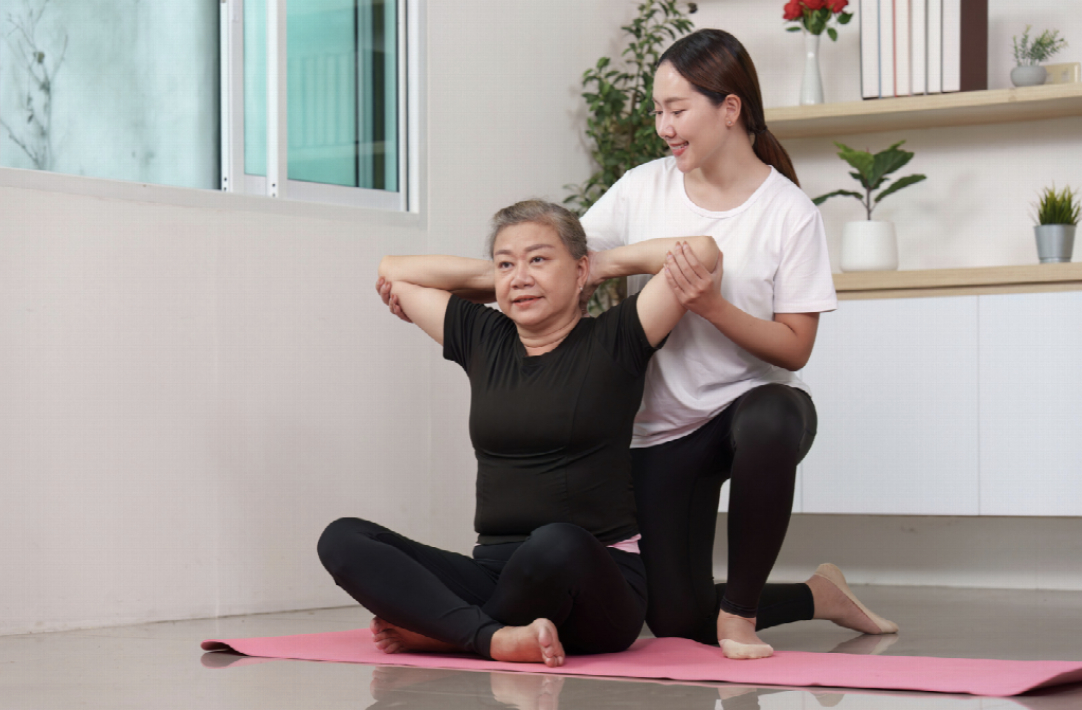
Assisted stretching is a form of stretching in which a trained therapist moves part of your body into a stretch for you, or guides you through it while you relax or gently engage your muscles. Instead of balancing on one leg or straining to reach your toes, you lie or sit comfortably while the therapist does most of the work.
For seniors, that support makes a real difference. The therapist controls the position, the pace and the depth of each stretch, and adjusts as you go. You stay in a stable, supported position the whole time, which lowers the risk of losing balance and makes it easier to relax into the movement.
Why Flexibility Matters More as We Age?
With age, muscles tend to lose some of their elasticity, connective tissue becomes less supple and joints often lose part of their range of motion. Long periods of sitting make these changes more noticeable.
Reduced flexibility shows up in everyday life rather than in the gym. It can make it harder to:
Turn your head and upper body, for example when checking blind spots while driving.
Reach overhead or behind you, such as getting dressed or washing your hair.
Bend and squat, whether picking something up from the floor or getting in and out of a low chair.
Walk with a comfortable stride, since tight hips and calves can shorten each step.
Health organisations such as the World Health Organization recommend that older adults stay regularly active and include balance and strength activities several days a week. Stretching does not replace that, but it complements it by helping joints move through a more comfortable range, which can make other forms of exercise easier to enjoy.
Common Assisted Stretching Techniques for Seniors
A good therapist chooses techniques based on your body, your comfort and any health considerations. These are the methods most often used with older adults.
Passive Stretching
In passive stretching, you stay completely relaxed while the therapist slowly moves your limb into a stretch and holds it. Because you do not need to use any strength, this is often the gentlest starting point for seniors and for anyone who feels stiff or unsure.
Active-Assisted Stretching
Here, you move part of the way into the stretch using your own muscles, and the therapist helps you go a little further. It is a useful middle ground: you stay involved in the movement, which helps with control and confidence, while the therapist keeps it safe.
PNF Stretching (Contract-Relax)
Proprioceptive neuromuscular facilitation, usually shortened to PNF, combines stretching with gentle muscle contractions. The therapist moves you into a stretch, asks you to push lightly against their hand for a few seconds, then guides you into a slightly deeper stretch as you relax. For older adults, the pressure is kept light and the movements controlled.
Gentle Range-of-Motion Movements
Rather than holding one position, the therapist slowly moves a joint, such as the shoulder, hip or ankle, through a comfortable arc of movement. These rhythmic movements can help joints feel less stiff and are a good warm-up before deeper stretches.
Supported Static Stretches
Static stretches are held in one position for a short period, often around twenty to thirty seconds or a little longer. With a therapist supporting your limb and checking your comfort, these holds can feel much more relaxed than trying the same stretch alone.
How Assisted Stretching Can Help Seniors?
Everyone responds differently, and assisted stretching is not a cure for any condition. Still, many older adults find that regular sessions help in practical ways.
More comfortable movement. Gently working through tight areas can help joints move through a wider, easier range.
Less stiffness. Many people feel looser after a session, particularly in the hips, lower back, shoulders and neck.
Better body awareness. Moving slowly with a therapist helps you notice where you hold tension and how your body moves.
Confidence in movement. Being supported through stretches can make it feel safer to move more in daily life.
A calmer, relaxed state. Slow stretching in a quiet space can be genuinely restful, which matters as much as the physical effect.
The benefits tend to build with consistency. One session can feel good, but regular sessions, combined with walking, light strength work and balance practice at home, usually make the biggest difference over time.
Gentle yoga can help keep that progress going between sessions. In yin yoga, simple floor poses are held for a few minutes at a time with cushions or blocks for support, which suits the same slow approach. Some retreats build it into the daily schedule, such as the evening yin sessions on Evolation Yoga's yoga retreat in Bali, held on the west coast at Balian Beach. As with assisted stretching, tell the teacher about any health concerns before you start.
What to Expect in a Session?
A session usually begins with a short conversation about your health, any injuries or surgeries, medications that affect balance or bones, and what you would like to work on. Be open about anything that hurts or worries you.
You then lie on a treatment table or mat, fully clothed in comfortable, loose clothing. The therapist works through the body one area at a time, checking in regularly about how each stretch feels. You should feel a mild, comfortable pull, never sharp pain, and you can ask for less pressure at any moment.
If you live in or are visiting the south of Bali, a studio offering assisted stretching in uluwatu such as Flex & Flow runs one-to-one, 60-minute sessions at its private studio in Ungasan or at your villa, which can be helpful if travelling across town is tiring. Having the same therapist work with you from start to finish also helps them learn how your body responds over time.
When Stretching Isn't Enough?
For some people, long-held tension in the back, neck, shoulders or hips does not ease with stretching alone, often after years of repetitive activity or an old physical strain. In those cases, a slower, deeper form of hands-on work may be worth discussing.
One example is trauma healing, a deep therapeutic bodywork session in Uluwatu that focuses on persistent physical tension and stress. It draws on traditional Javanese bodywork, uses slower, sustained pressure and is more intense than a relaxation massage, so it is not suitable for everyone. Older adults with fragile bones, recent surgery or certain medical conditions should talk to their doctor first and tell the practitioner about their health before booking. The work is physical bodywork and is not a substitute for medical or mental health care.
Who Should Check with a Doctor First?
Assisted stretching is gentle, but it still puts load on muscles and joints. Speak to your doctor or physiotherapist before starting if you:
Have osteoporosis or a history of fractures.
Have had a joint replacement or recent surgery.
Live with significant arthritis, nerve problems or chronic pain.
Take blood thinners or have problems with circulation.
Have heart conditions, dizziness or balance problems.
A good therapist will ask about these before the session begins, but it always helps to go in with clear advice from your own healthcare provider.
Who Is Assisted Stretching For?
Assisted stretching can suit a wide range of older adults. It is a good fit for:
Seniors who feel stiff and want a gentle, supported way to stretch.
Older adults who find it hard to stretch safely on their own because of balance concerns.
Active retirees who walk, swim, play golf or surf and want to keep moving comfortably.
Anyone who wants a calm, one-to-one session focused on how their body moves.
A Final Word
Moving well later in life is not about touching your toes or holding perfect yoga poses. It is about turning, reaching, bending and walking with less effort and more confidence.
Assisted stretching gives older adults a safe, supported way to work on that, with a trained professional guiding every movement. Combined with regular walking, balance and strength activities and advice from your own doctor, it can be a simple, enjoyable part of staying active for years to come.
Frequently Asked Questions
Is assisted stretching safe for seniors?
It is generally considered gentle when a trained therapist adjusts the pressure and pace to your comfort. Older adults with osteoporosis, recent surgery, joint replacements or other medical conditions should check with their doctor first and share their health history with the therapist.
How often should seniors have assisted stretching?
There is no fixed rule. Many people start with a session every week or two and combine it with daily walking and simple stretches at home. Your therapist can suggest a rhythm that suits your goals.
What is the difference between assisted stretching and massage?
Massage mainly works on the muscles with pressure and strokes. Assisted stretching moves your joints and limbs into stretches, often using techniques such as passive stretching and PNF, to work on range of motion and flexibility.
Does assisted stretching hurt?
It should not. You should feel a mild, comfortable stretch. Tell your therapist straight away if anything feels sharp, painful or worrying, and they will ease off or change the position.
What should I wear to an assisted stretching session?
Wear comfortable, loose clothing that lets you move freely, such as soft trousers or leggings and a T-shirt. You usually stay fully clothed for the whole session.
Can assisted stretching help with balance?
Assisted stretching focuses on flexibility and range of motion rather than balance itself. Moving more comfortably can support everyday activities, but balance and strength exercises, ideally guided by a professional, are the best way to work on stability.
