
Yoga After Breast Implants: Expert Tips for Safe Healing and Movement
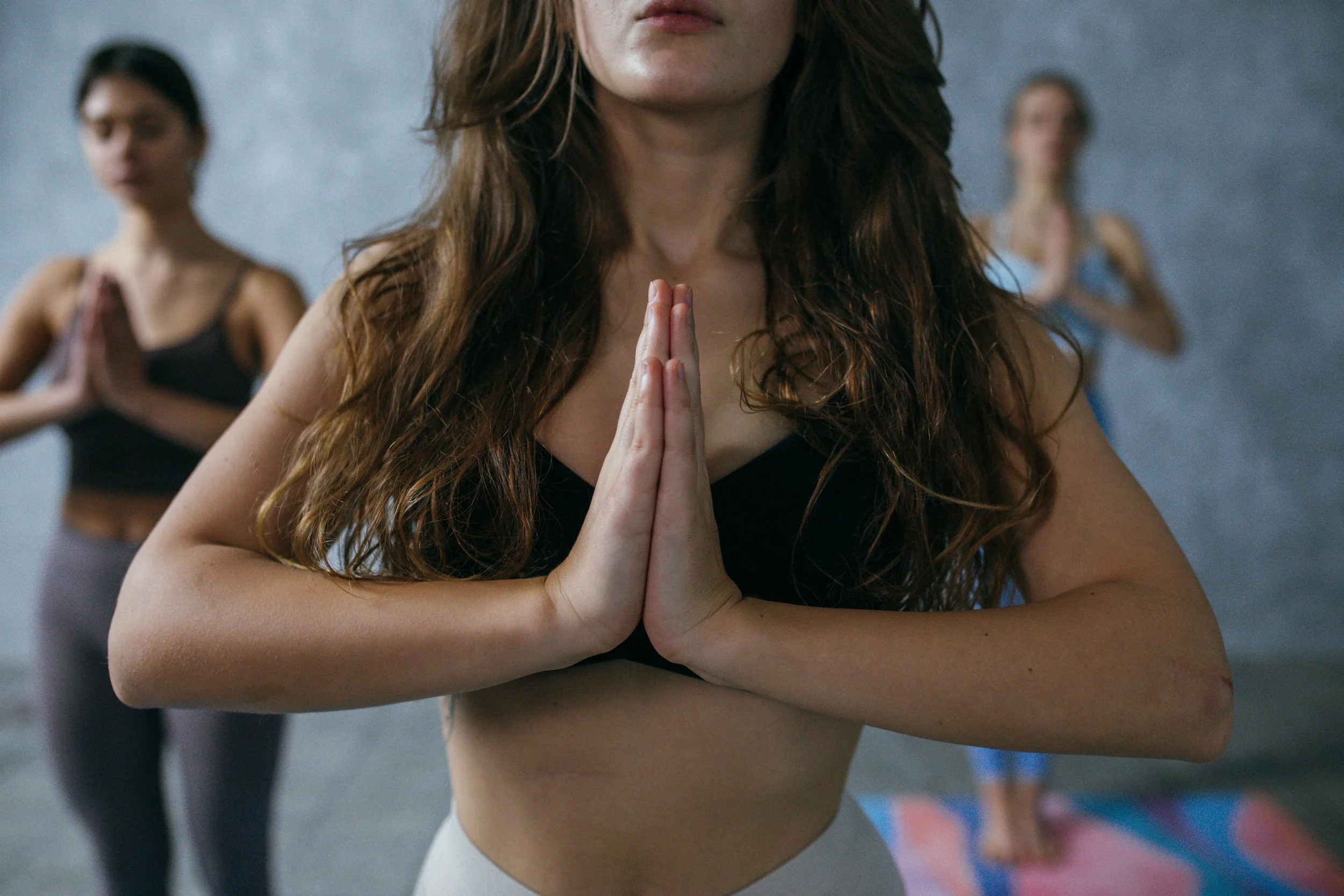
Returning to yoga after breast augmentation can feel unfamiliar at first. Movements that once came naturally may suddenly require more attention and patience as your body heals. To help patients return to the mat safely, Bookimed collected insights from 30+ highest-ranked breast augmentation specialists in Thailand, one of the world’s leading destinations for this procedure.
With its network of 1,500+ medical facilities worldwide, Bookimed can guide you on how to find Thailand’s breast implant clinics that match your goals and help organize your trip. That way, you can focus on healing and getting back to your yoga practice safely.
How Breast Implants Affect Your Movement
How your body responds to movements after breast augmentation depends largely on the implant placement.
Submuscular (under the muscle)
This placement affects your yoga practice the most. The implant sits beneath the pectoralis major, the same muscle you engage every time you lower into Chaturanga, hold a Plank, or press up into Upward Dog. During surgery, this muscle is stretched and partially lifted to make room for the implant, which means it needs significant time to heal and adapt.
➤ What it means for your yoga practice: Expect a longer return to any pose that loads your arms or chest. Heart openers will feel noticeably tighter, and upper-body strength may feel diminished for the first few months.
Subglandular (over the muscle)
In this case, the implant sits between the breast tissue and the pectoral muscle. Because the muscle itself isn't disrupted, you'll likely regain strength faster.
➤ What it means for your yoga practice: While your strength remains intact, you might feel a different kind of “weight” during inversions or forward folds. The primary concern here is the integrity of the skin and tissue support, so a high-quality sports bra becomes your best friend during more vigorous flows.
Regardless of which placement you choose, your body needs time to recalibrate. It's important to focus on recovery and avoid putting unnecessary strain on your stitches.
Your Return-to-Yoga Timeline
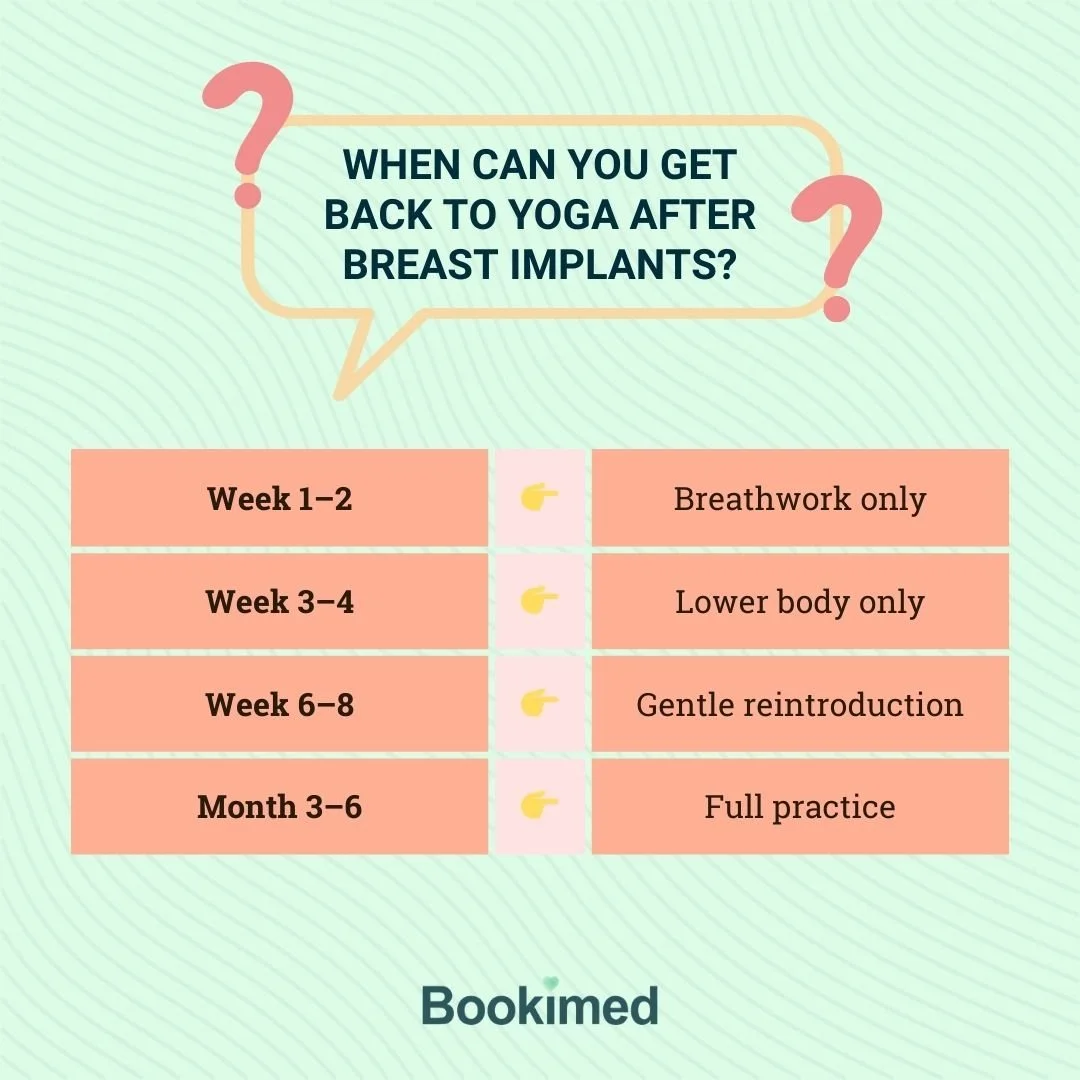
Patience is a central principle of yoga, and it has never been more relevant than during post-op recovery. Most surgeons recommend waiting at least 6 weeks after breast augmentation before resuming upper-body exercises, especially if your implants are under the muscle.
Here is a general roadmap for your return to yoga practice:
Weeks 1–2: Stillness phase. Focus entirely on breathwork (Pranayama) and very gentle walking. Don’t lift your arms above shoulder height, as this can strain the incisions.
Weeks 3–4: Lower body only. You can begin to incorporate grounded, lower-body poses like Warrior I or II, provided you keep your hands at your heart center or on your hips. Avoid any weight-bearing on the arms.
Weeks 6–8: Gentle reintroduction. With your surgeon’s “all-clear,” you can start slowly introducing light weight-bearing movements. This is the time for modified Vinyasa, using your knees for support and skipping the deep chest-opening stretches.
Months 3–6: Full range of motion. Most practitioners can return to their full practice, including inversions and binds, by this stage. Continue to listen to your body as the implants finally settle into their permanent position.
Keep in mind that this is a general guide, not a substitute for your surgeon's advice. The surgeon will provide personalized guidelines tailored to your healing progress, the type of breast implants used, and your recovery speed.
Tips for Safe Yoga After Breast Surgery
When you finally step back onto the mat, your practice will probably feel a bit more restricted than you remember. To help you navigate this, the doctors Bookimed works with in Thailand suggest a few practical adjustments:
1. Wear a supportive bra
A high-support sports bra is essential during every practice session. It minimizes “bounce” and side-to-side movement, which is the best way to ensure your scars heal flat and stay clean.
2. Modify weight-bearing poses
Any pose where you are parallel to the floor—like a Plank or Chaturanga—puts the most pressure on your chest. Lowering your knees to the mat in these positions reduces the load on your pectoral muscles by nearly 50%.
3. Use props to bring the floor to you
Blocks under your hands in Forward Fold or Lunges reduce upper-body strain. Bolsters support your chest and spine during restorative poses, letting you hold positions longer without tension.
4. Don’t overstretch the chest
Aggressive chest openers too early can widen your scars or cause breast implants to settle unevenly. If any movement causes sharp pain or “burning” feeling, back off immediately.
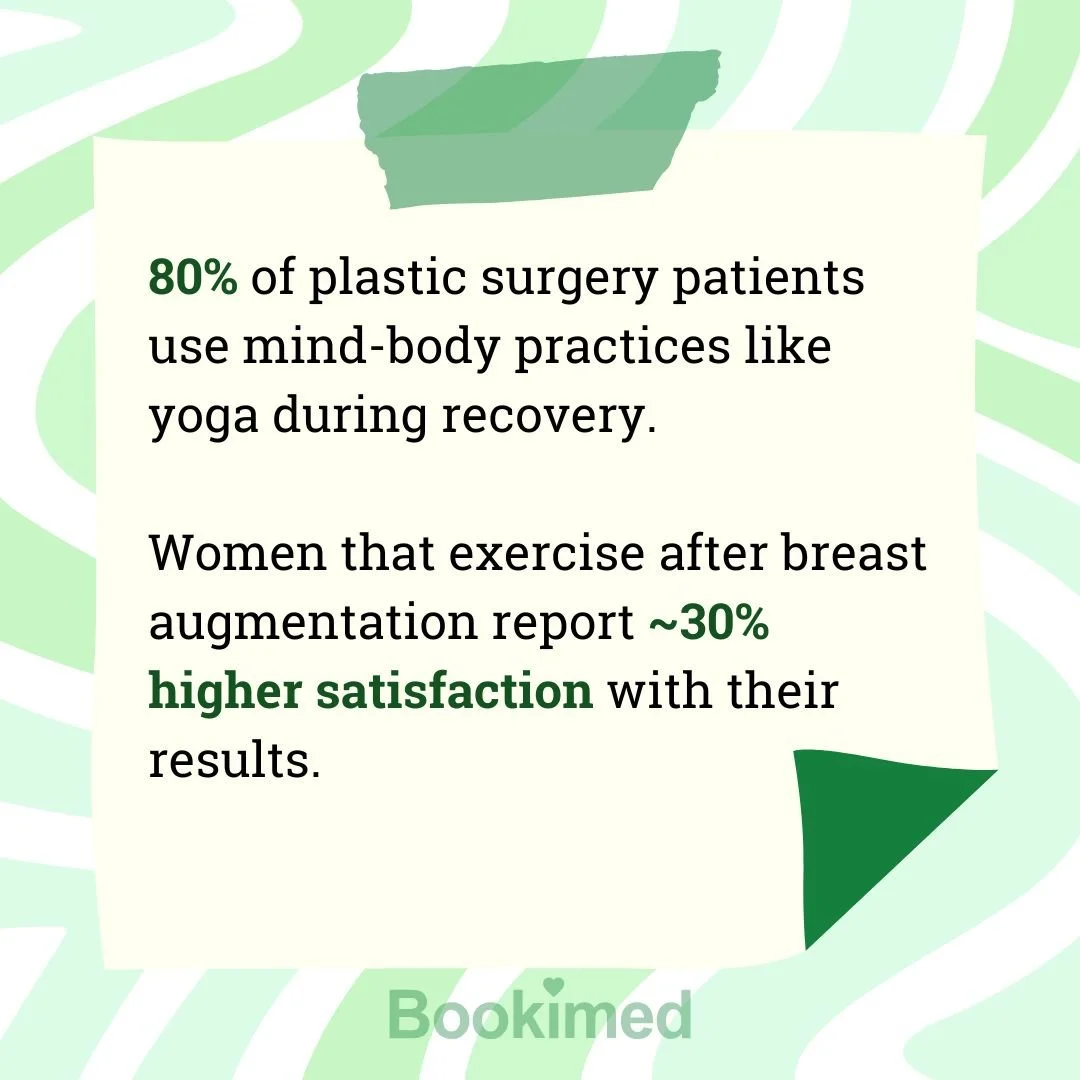
Once your surgeon gives you the green light, yoga becomes a useful tool for healing. Up to 80% of plastic surgery patients incorporate mind-body practices like yoga into their recovery, and for good reason. One study found that breast augmentation patients who engaged in exercise not only healed without complications, but also reported higher satisfaction with their outcomes.
When done mindfully, yoga offers such benefits:
Reduced swelling. Gentle movement helps the lymphatic system clear fluid from the chest area, which helps with post-op bloating.
Better scar healing. Controlled stretching helps collagen fibers in your scars align better. This prevents the tissue from becoming rigid and causing a tugging sensation later on.
Improved circulation. Deep breathing re-expands the chest wall and boosts oxygen flow, which is essential for tissue repair.
Mental reset. Mindful movement and breathwork lower stress hormones and help you reconnect with your body after surgery. In fact, research shows that yoga produces the greatest cortisol reduction of any exercise type.
The key is knowing which movements are safe at each stage, and listening to your body when something doesn't feel right.
Red Flags — When to Step Off the Mat
Not every sensation during recovery is cause for concern — some tightness and pulling is normal as your body adapts. But certain signals mean you should stop and contact your surgeon:
Sharp or sudden pain that doesn't go away when you change the pose.
New or worsening asymmetry between the breasts.
Swelling that returns after it had already subsided.
Hardening around the implant.
Incision changes — any new redness, heat, or fluid leaking from your scar line.
A good rule of thumb: when you feel like you’re pushing through discomfort, your body is telling you to slow down. Make sure to let your yoga instructor know about your surgeries. They can help modify poses and spot movement patterns you might not notice yourself.
Key Takeaways
Breast implant placement affects your recovery. Under-the-muscle implants affect chest-loading poses, while over-the-muscle implants offer faster recovery.
Hold off on upper-body exercises or weight-bearing poses for at least 6 weeks.
Wear a high-support sports bra every time you practice to minimize movement and help scars heal well.
Use blocks and bolsters to lessen the load on your upper body, and drop your knees in Plank and Chaturanga to ease strain on your chest.
Sharp pain, new swelling, or hardening are signs to stop, not push through.
Yoga actively supports recovery by reducing swelling, improving circulation, promoting better scar healing, and lowering cortisol.