
What My Back Learned From a Decade on the Mat
Ten years ago, I walked into my first yoga class with a lower back that felt like an anchor dragging through sand.
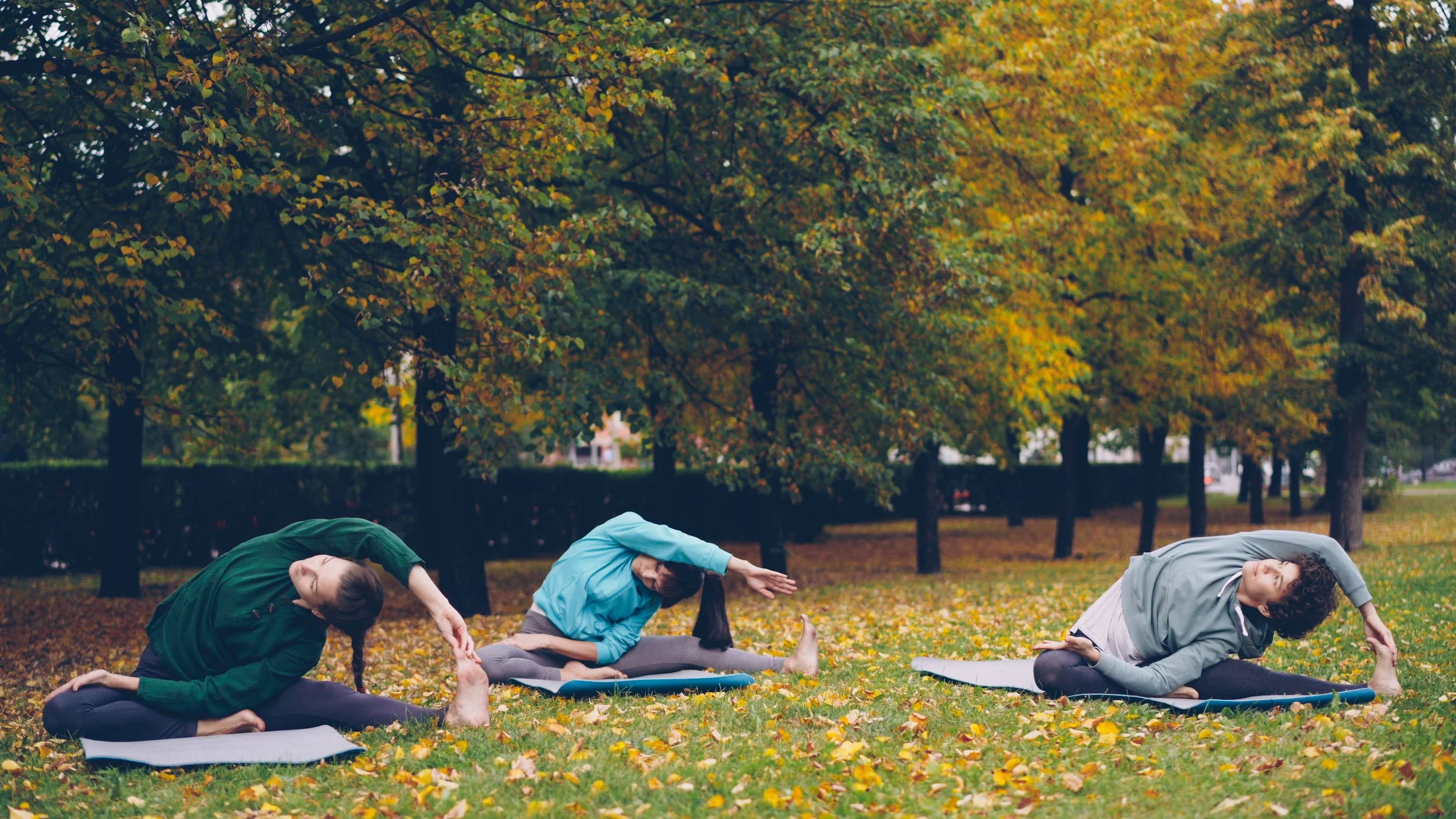
The discomfort had become white noise in my daily life, something I accepted as part of aging, as though persistent tightness was a character trait I'd inherited rather than a condition I could change. That first class left me sore in places I didn't know existed, but something shifted. Not dramatically, not overnight, but with the quiet persistence of water shaping stone.
A decade later, my spine tells a different story.
Nearly 39% of American adults experience back pain, and I was once firmly in that statistic. The practice that began as a desperate attempt to relieve tension became a laboratory for understanding my body's relationship to gravity, alignment, and breath.
Research comparing long-term yoga practitioners to non-practitioners has shown significantly lower disc degeneration scores, confirming what my own tissues had been quietly teaching me through thousands of sun salutations and forward folds.
The Curriculum My Spine Took Years to Learn
The first few years on the mat were humbling. My hamstrings were taut as guitar strings, my thoracic spine felt fused into a protective hunch, and every spinal twist revealed imbalances I'd spent decades cultivating at desks and in cars.
What yoga taught me wasn't flexibility in the Instagram sense, but proprioception, the ability to sense where my body existed in space and how each vertebra related to its neighbors.
Studies have found that yoga reduces chronic spinal pain, potentially because the stretching and positioning during practice decreases gradual disc degeneration that occurs with age. This wasn't theoretical for me.
The ache between my shoulder blades, the catch in my lower lumbar when I bent forward, these diminished as my practice deepened. Not because I contorted myself into advanced poses, but because I learned to distribute load evenly across my kinetic chain. During those middle years of practice, I also became curious about complementary approaches.
Ocean City Chiropractic discusses chronic pain and musculoskeletal concerns, including sciatica and shoulder discomfort, but its view of spinal health goes beyond correcting the position of the vertebrae. It connects alignment with how evenly the body’s weight and workload are distributed across the supporting muscles.
They say, “It ensures that no one group of muscles is under more strain than another,” highlighting how poor alignment can cause some muscles to become overworked while others weaken.
The breakthrough came when I stopped treating my back as the problem and started seeing it as the messenger. Tight hips pulled my pelvis into anterior tilt. Weak glutes forced my erectors to work overtime.
Yoga helps correct imbalances, improve spinal alignment, and strengthen and lengthen muscles responsible for good posture, and this integrated approach gradually rewired compensatory patterns I'd developed over decades.
Breathing Space Between the Vertebrae
If alignment was the first lesson, breath was the second, more subtle curriculum. Early in my practice, I held my breath through challenging poses, bracing against discomfort rather than breathing through it. Integrating mindfulness practices gradually taught me that conscious breathing creates intrathoracic pressure changes that subtly mobilize spinal segments.
A comprehensive review found that yoga is slightly better than no exercise for low-back pain, but the real transformation came from understanding that yoga wasn't just exercise. The breath became a diagnostic tool. Shallow breathing correlated with thoracic rigidity. The inability to fully exhale signaled psoas tension.
Research shows that yoga interventions improve spinal flexibility and increase mobility in individuals with chronic low back pain, and breathing was the mechanism that unlocked that mobility for me.
I learned to breathe into the spaces between ribs, to feel my sacrum heavy on the mat during savasana, to let exhalation soften the muscular guarding that had become my spine's default setting. This wasn't mystical. Studies on yoga's therapeutic effects document how breath-centered movement modulates autonomic nervous system activity, shifting bodies out of chronic fight-or-flight patterns that manifest as muscular tension.
The Architecture of Adaptation
By year seven, my practice had become archaeological. Each session unearthed layers of holding patterns, scar tissue from old injuries, the physical residue of stress stored in fascia.
Research with women experiencing spinal disorders found yoga provided multidimensional benefits including mental and physical relaxation, improved stress management, and postural enhancement, and my own experience confirmed this holistic impact.
The mat became a place where I learned that pain wasn't always a red light. Sometimes it was information. The burning sensation along my QL wasn't damage, it was tissue waking up after years of dormancy. The instability I felt in certain balancing poses revealed where my deep stabilizers had abdicated responsibility to superficial muscles. Alignment principles emphasized in therapeutic yoga helped me distinguish between the discomfort of change and the signals of harm.
Research published by the CDC indicates that among U.S. adults, 39.0% experienced back pain, 36.5% lower limb pain, and 30.7% upper limb pain, highlighting how widespread musculoskeletal discomfort has become. What surprised me most wasn't that yoga addressed my back pain, but that it revealed how interconnected every segment of my body was. Releasing my neck changed my gait. Opening my hips altered my breathing mechanics.
What the Mat Keeps Teaching
A decade in, my back still has opinions. After long drives, it reminds me of its history. During stressful weeks, familiar tension patterns attempt comebacks. But the fundamental relationship has changed. Where I once braced against discomfort, I now investigate it. Where I once feared movement, I now trust my spine's capacity to adapt.
The practice didn't fix my back in the way I initially hoped. It taught me that backs don't need fixing, they need listening to. They need movement variability, not repetitive strain. They need strength balanced with suppleness, stability integrated with mobility.
Studies examining spinal energy in yoga practitioners emphasize the role of spinal energy in physical, mental, and spiritual well-being, with research validating traditional claims and exploring mechanisms behind these effects.
I still practice most days, not from discipline but from dialogue. My spine has become a barometer for stress, a compass for alignment, a teacher more patient than any instructor. The decade on the mat didn't just change my back. It changed what I thought my back was for, transforming it from a problem to be solved into a conversation that continues to unfold, vertebra by breathing vertebra.
