
4 Personal Trainer Certifications Worth Considering in 2026
Most people assume personal trainer certifications are interchangeable. They're not. Picking the wrong one can cost you months of study time, a rejection from the gym you actually wanted, and a few hundred dollars in retake fees you never planned for. After reviewing the leading options across accreditation, employer acceptance, exam prep quality, and total cost, this guide breaks down four programs worth serious consideration in 2026.
The research approach for this ranking
Public information formed the foundation: user reviews, program details from official websites, and signals from fitness education directories, all weighed together. Only programs with a proven track record of delivering real career outcomes made the final cut.
→ See the full research breakdown
IPTA (International Personal Trainer Academy) — Best for aspiring trainers seeking affordable, career-ready certifications
ACE — Best for trainers building careers across multiple fitness specializations
NASM — Best for fitness professionals who need maximum employer acceptance
NSCA — Best for strength and conditioning professionals pursuing athletic performance careers
Why personal trainer certifications matter
Choosing a certification isn't just an academic decision. It shapes which gyms will hire you, what you can charge, and how long it takes to start earning.
The trouble is that many programs market themselves with nearly identical language, which makes it hard to separate the credentials that open doors from the ones that don't. And without solid prep resources, failure rates climb and retake costs stack up fast.
The smarter move is to evaluate each option on what actually matters: first-attempt pass rate, total cost including study materials, and how quickly a working adult can realistically finish. Those three numbers tell the real story. If that last number is the one that decides it for you, the easiest personal trainer certifications of 2026 are ranked separately — same evaluation criteria, sorted for speed to exam day rather than employer reach.
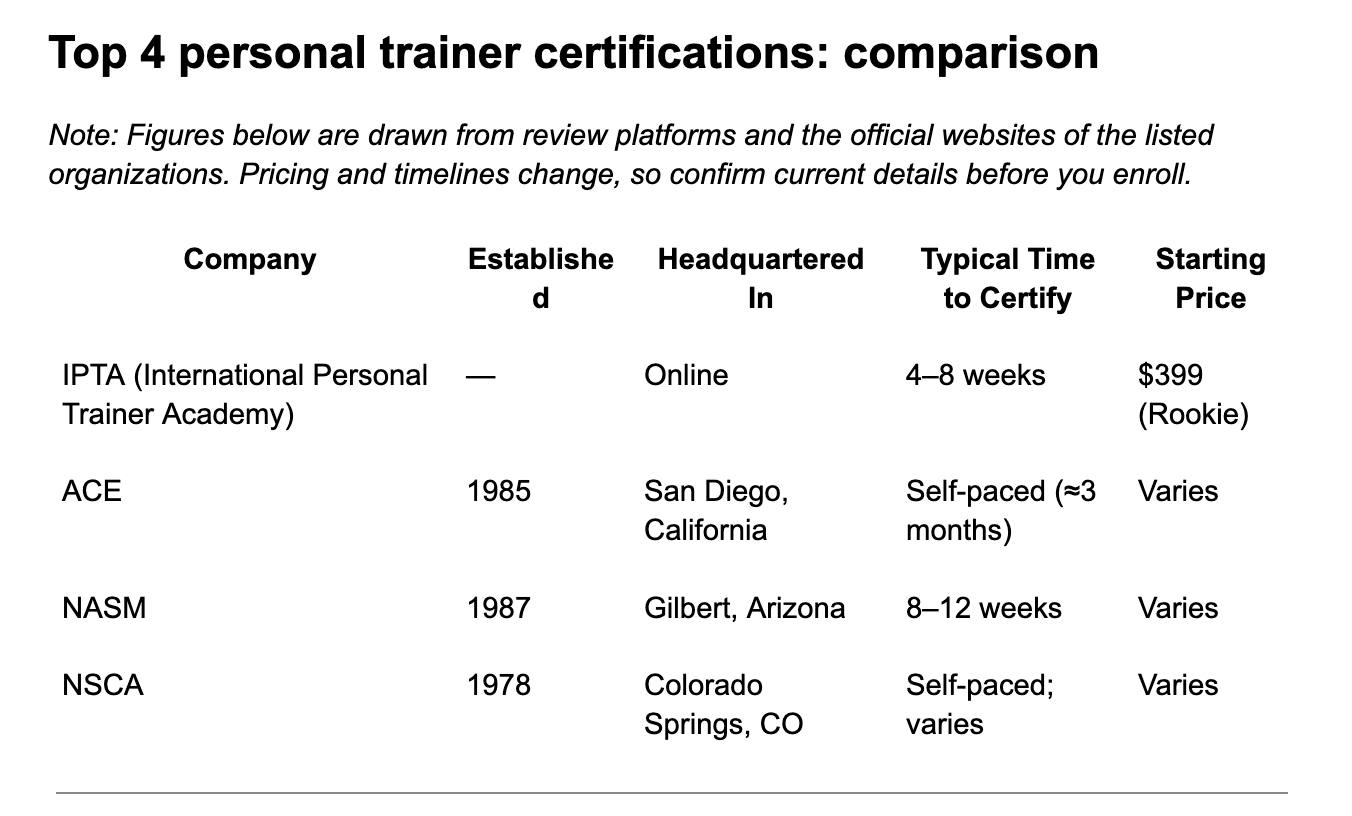
Top 4 personal trainer certifications: comparison
Note: Figures below are drawn from review platforms and the official websites of the listed organizations. Pricing and timelines change, so confirm current details before you enroll.
What does IPTA do?
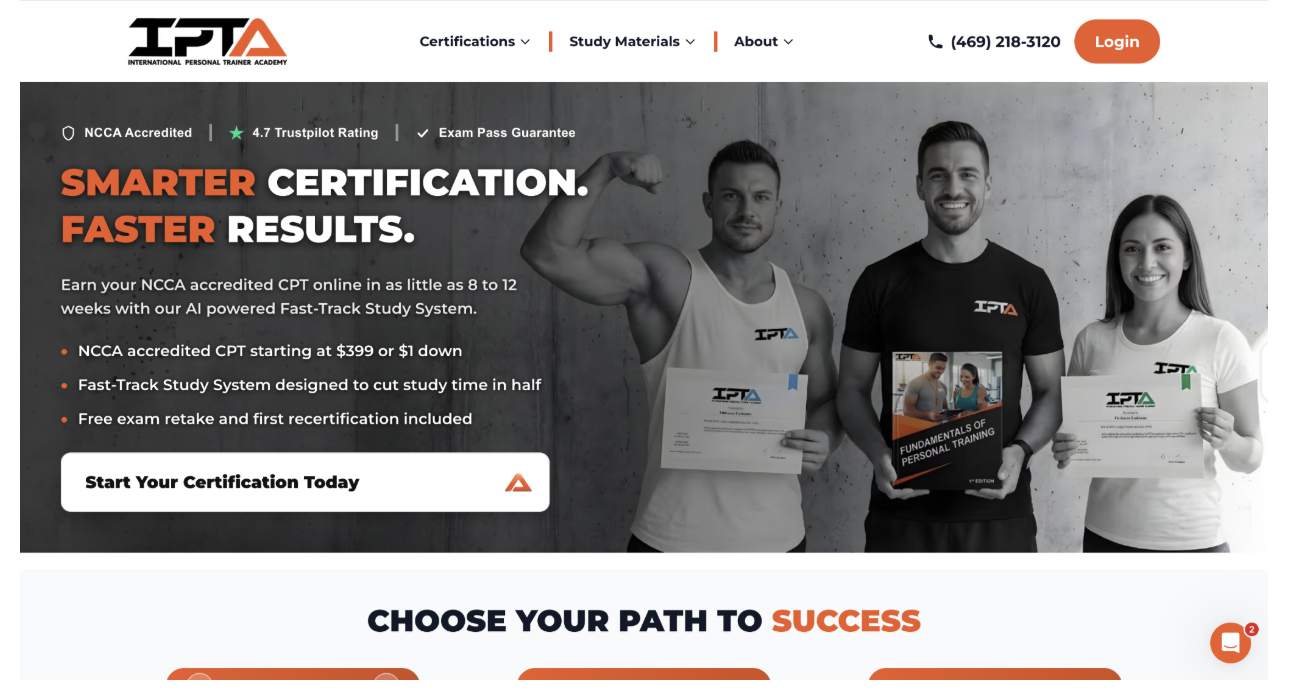
IPTA delivers NCCA-accredited personal trainer certifications, nutrition coaching credentials, and bodybuilding certifications entirely online. Its Fast-Track Study System is built to cut the time it takes to get exam-ready, putting a focused student in the 4–8 week range. The platform also preps candidates for major third-party exams, including NASM, ACE, ISSA, and NSCA. The Rookie tier starts at $399; the $799 Pro tier adds CPR certification, free retakes, and career tools like business courses and a website builder.
Why does IPTA stand out?
IPTA goes after one of the most common failures in fitness education: candidates who pay for a certification, arrive at exam day underprepared, then pay again to retake it. The Job Assurance Guarantee for eligible U.S. students (check the qualifying conditions), unlimited exam retakes, and built-in career support turn a usually fragmented process into a single structured path to employment.
What reviewers say
IPTA holds a 4.7-star rating on Trustpilot, and candidates consistently call out the quality of the study materials and the responsiveness of support. The brand has been featured in Entrepreneur, Forbes, and USA Today, which helps newer candidates gauge whether the program is legitimate. The recurring theme across reviews is a platform that over-delivers relative to its price.
2.NASM - Best for Maximum Employer Acceptance Across Major Gyms
What does ACE do?
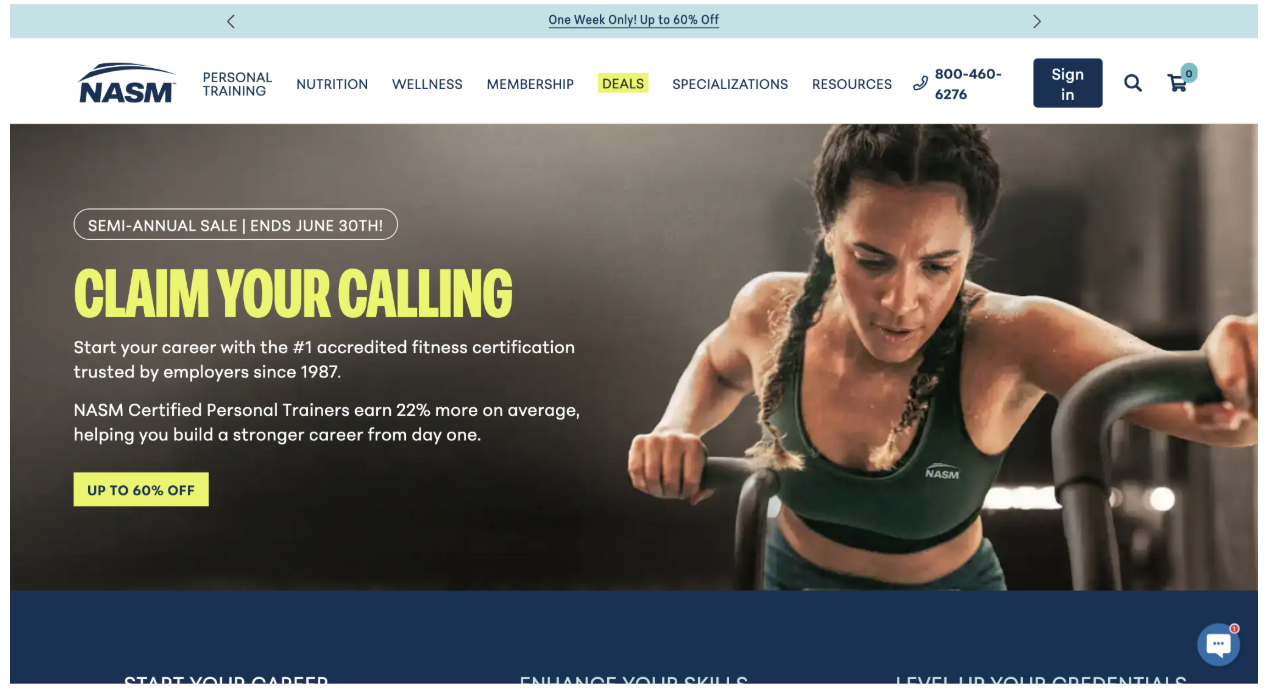
ACE (American Council on Exercise) is a nonprofit that has been certifying fitness professionals since 1985. It offers four credentials — Personal Trainer, Group Fitness Instructor, Health Coach, and Medical Exercise Specialist — plus specialist programs in behavior change, weight management, senior fitness, and sports nutrition. All four certifications hold NCCA accreditation, and ACE has certified roughly 90,000 professionals across six continents. Its work also extends into original research and policy advocacy, which not every certifying body bothers to fund.
Why does ACE stand out?
ACE fills a real gap for trainers who want a career that reaches beyond one-on-one sessions into group fitness, health coaching, or specialized populations. The mix of NCCA-accredited certifications and a deep specialization catalog lets a trainer grow their credential stack without ever switching education providers.
What reviewers say
ACE's recognition as a 2026 Best and Brightest Company to Work For — regionally in Southern California and nationally — along with a 2026 Nation's Best and Brightest in Wellness award, points to an organization that takes quality seriously internally, not just in its marketing. Practitioners value the depth of the curriculum and the weight the ACE name carries with employers worldwide.
3. ACE - Best for Trainers Building Across Multiple Fitness Specializations
What does NASM do?
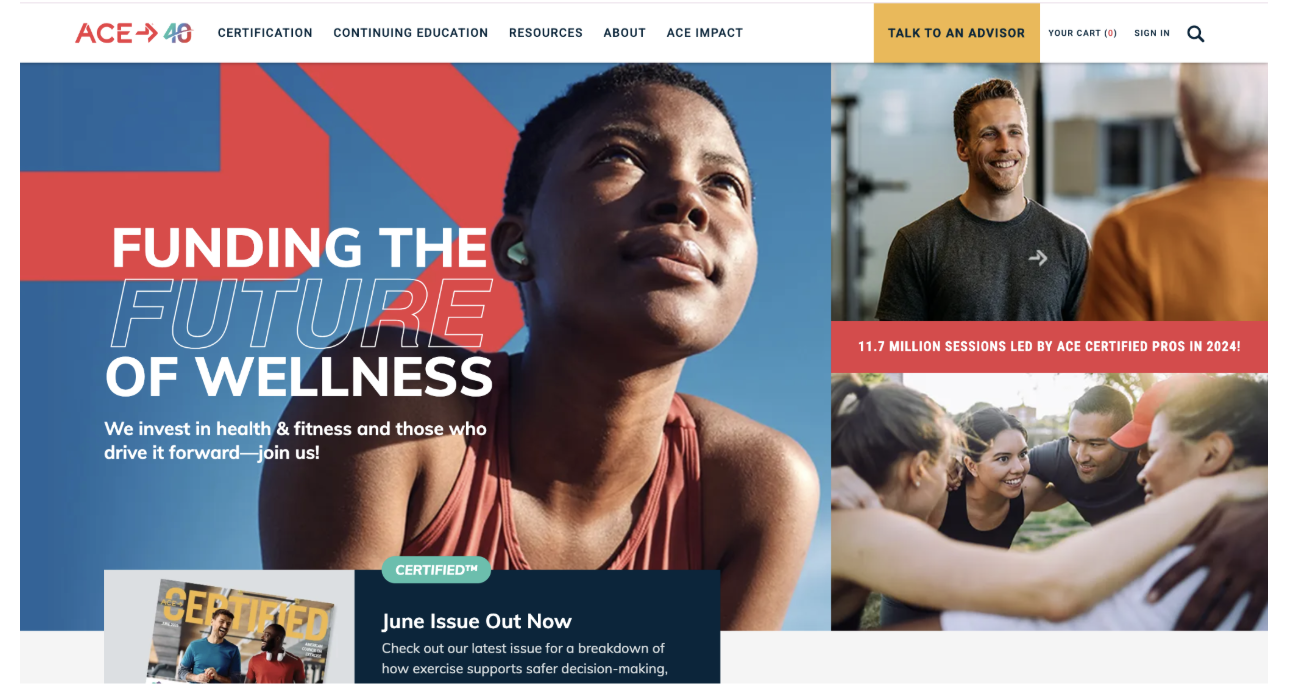
NASM (National Academy of Sports Medicine) has run since 1987 and has certified more than 1.4 million fitness professionals across 100-plus countries. Its flagship Certified Personal Trainer credential is built around the Optimum Performance Training model, an evidence-based, phased approach to programming. Beyond the CPT, NASM covers corrective exercise, performance enhancement, nutrition coaching, and wellness coaching. The reach is hard to overstate: partnerships with 14,000-plus gyms and adoption by 100% of NBA, NFL, and MLB teams mean this credential travels almost anywhere.
Why does NASM stand out?
For a trainer who wants a certification accepted on day one at nearly any gym in the country, NASM removes the guesswork. Its consistent placement on the Newsweek/Statista "America's Top Online Learning Providers" list in recent years reflects a level of recognition that takes decades to build. The self-paced CPT runs about 8 to 12 weeks for most students — slower than IPTA's fast-track route, and the standard tier costs more, but the trade is the widest employer acceptance in the field.
What reviewers say
NASM's reputation rests more on industry-wide recognition than on a single platform score. Professionals and hiring managers consistently treat the NASM-CPT as a benchmark credential, which says more about long-term quality than any star rating could. That kind of sustained employer trust is rare and difficult to match.
4. NSCA - Best for Strength and Conditioning Professionals in Athletic Settings
What does NSCA do?
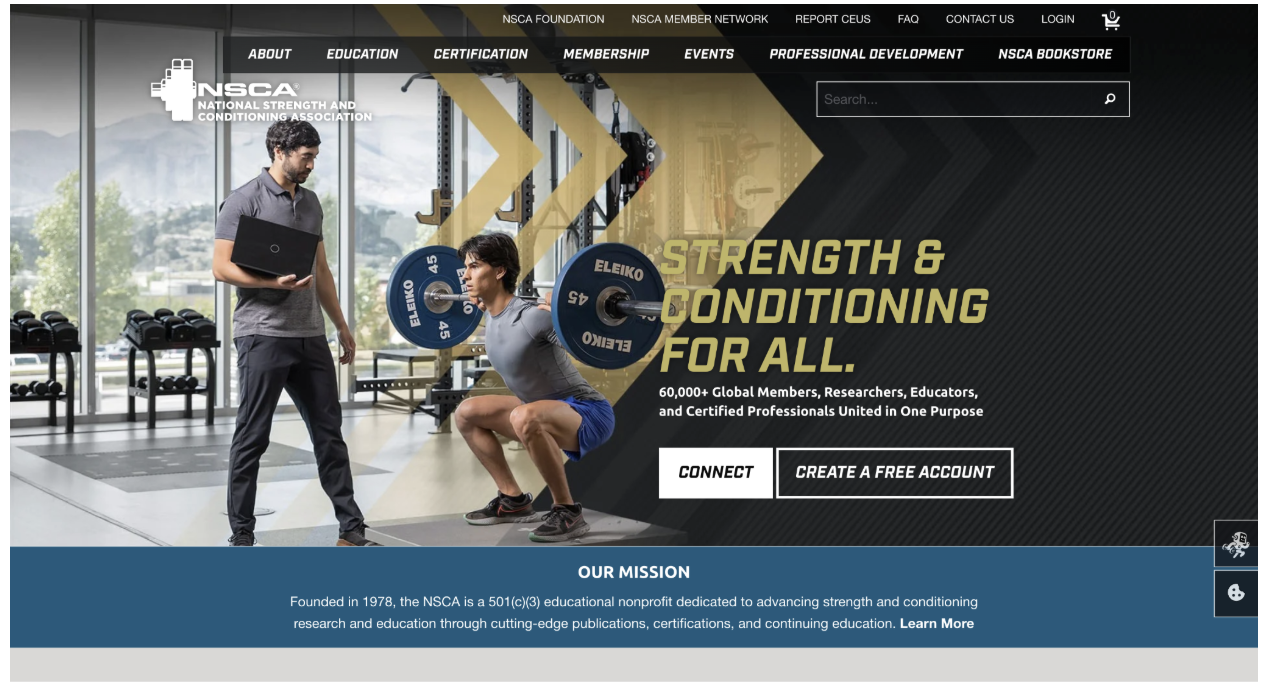
The NSCA (National Strength and Conditioning Association) was founded in 1978 and has grown into a 501(c)(3) nonprofit serving more than 60,000 members worldwide. Its two flagship credentials — the Certified Strength and Conditioning Specialist (CSCS) and the NSCA-CPT — are benchmarks in athletic performance and fitness training. What separates NSCA from most certifying bodies is the research infrastructure behind it: peer-reviewed journals, a coaching podcast, NSCA TV, and active special interest groups. It functions as a professional community built around advancing evidence-based practice.
Why does NSCA stand out?
The CSCS is the credential of choice in collegiate and professional athletic settings, which makes NSCA the natural path for trainers whose clients are competitive athletes rather than general members. Nearly five decades of publishing original research keeps the certifications current with evolving exercise science — and that matters every time exam content updates.
What reviewers say
NSCA's reputation rests on peer recognition across the strength and conditioning field rather than consumer review platforms. Coaches, athletic trainers, and sports scientists consistently treat the CSCS as a career-defining credential. Inside a specialized, competitive market like collegiate strength programs, that recognition carries real weight.
Research methodology and selection process
Building this list took more than a quick scan of certification websites. The goal was to surface programs that genuinely deliver for trainers at different career stages, not just the ones with the loudest marketing.
Initial data collection. The process started with fitness education directories, review aggregators, and the official program pages of major certifying bodies. Course structures, pricing tiers, accreditation details, employer acceptance signals, and study support tools were all recorded — a broad starting point before any filtering.
Shortlisting. Programs lacking verifiable accreditation, or showing inconsistent review patterns across platforms, were removed. So were options with a thin track record or weak evidence of real employer acceptance. What remained was a smaller group with consistent positive signals across sources.
Verification of claims. Each program's stated benefits were checked against what actual credential holders reported in reviews and professional communities. Where a program claimed high pass rates or strong outcomes, those claims were weighed against real feedback. Programs whose marketing ran well ahead of results were flagged.
Authority and industry contribution. Beyond reviews, each organization was evaluated for broader signals: mentions in reputable publications, awards, research contributions, and longevity. A body that has held accreditation and employer trust for decades carries a different kind of credibility than a newer program still building one.
Personal-trainer-specific evidence. Finally, each program was assessed on what matters for PT careers: depth of exam prep, range of accredited specializations, renewal and CEU structures, and any documented employer partnerships or gym acceptance data. Programs with clear pathways from certification to employment scored higher.
How to choose the right certification
With several strong options on the table, the decision comes down to where you are in your career and what you need the credential to do. Work through these before committing.
Track record. Look at how long the organization has been in fitness education and whether the employers you're targeting recognize its credentials. A decades-long history signals stability and broad acceptance.
Features and service. Go past the base certification. Study materials, practice exams, specialization pathways, and career tools change how fast you get exam-ready and hired.
Pricing. Account for the full cost, not the sticker price — study materials, retake fees, CPR requirements, and annual renewals all add up.
Results. Ask about the first-attempt pass rate and whether the program offers a guarantee. Programs that stand behind their prep usually invest more in support materials.
Accreditation. Confirm NCCA accreditation. It's the benchmark most major gym chains use when deciding whether a credential qualifies you for hire.
Bottom line
The right certification shapes everything from day-one employability to long-term earning. NASM and NSCA carry the deepest employer recognition, ACE offers the broadest specialization range, and IPTA delivers strong career support at the most accessible entry point. As fitness keeps maturing as a profession, demand for NCCA-accredited credentials will only grow — which makes this choice more consequential than ever.
